


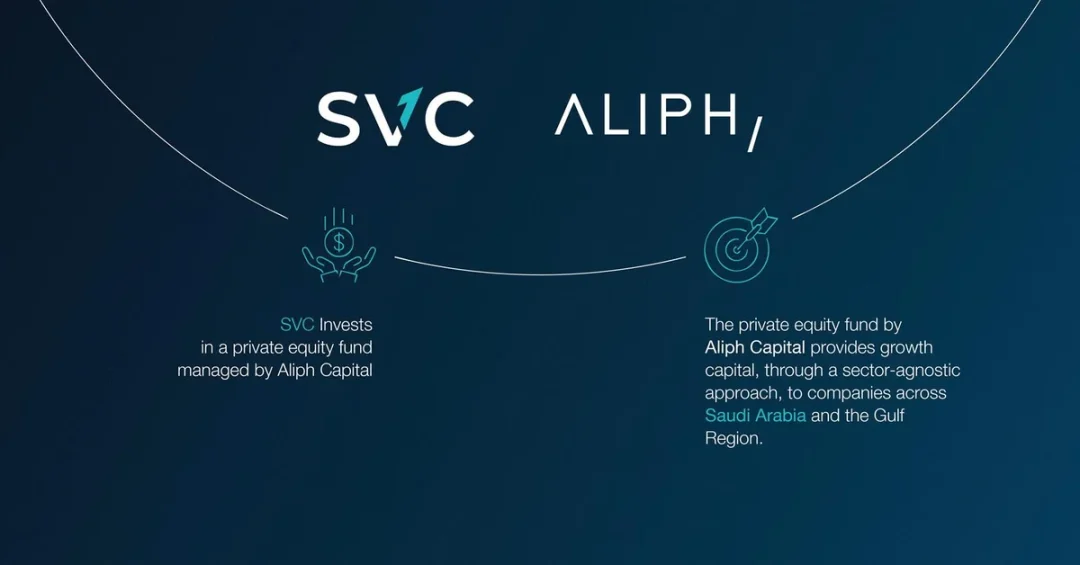
Saudi Venture Capital (SVC) announced on December 4, 2024, that it has invested in Aliph Fund I, a Gulf Cooperation Council (GCC)-focused growth fund managed by private equity firm Aliph Capital, in a move that further strengthens the Kingdom’s expanding private capital ecosystem. The investment, disclosed in a press release issued through the Saudi Press Agency (SPA), forms part of SVC’s Investment in Funds Program and reflects the state-backed venture capital company’s strategy of supporting funds that channel capital into Saudi-based small and medium-sized enterprises (SMEs) with strong growth potential.
The announcement places Saudi Arabia’s institutional investment apparatus squarely behind a fund designed to scale mid-market companies across the GCC through an active ownership model centered on value creation and technology enablement. For international observers tracking the Kingdom’s economic transformation, the deal offers a clear signal that Saudi Arabia is not only attracting global capital but also building the domestic and regional fund structures needed to deploy it effectively. The timing, coming as Saudi Arabia accelerates the diversification of its economy under Vision 2030, underscores how private equity is becoming an increasingly important instrument in the national growth agenda.
Context and Background
Why does a single fund commitment matter in the broader story of Saudi Arabia’s economic evolution? The answer lies in the scale of the Kingdom’s ambition and the financing gap that still exists between its large corporate champions and its fast-growing smaller enterprises. Saudi Venture Capital, established in 2018 as a subsidiary of the Small and Medium Enterprises Bank, was created precisely to bridge that gap by investing in venture capital and private equity funds rather than directly in companies. Through its Investment in Funds Program, SVC acts as an anchor investor, drawing in private capital that might otherwise remain on the sidelines and directing it toward sectors aligned with national priorities.
Aliph Capital, for its part, is a GCC-based private equity firm that has positioned itself as a specialist in mid-market growth investing. Its flagship vehicle, Aliph Fund I, targets companies across the GCC that have moved beyond the startup phase but still require capital, operational expertise, and technological upgrading to reach their full potential. The fund’s active ownership approach means it does not simply provide financing; it works alongside management teams to modernize operations, digitize processes, and prepare businesses for the next stage of growth. That model aligns closely with SVC’s mandate to support SMEs that can become durable contributors to employment, exports, and innovation.
The December 2024 announcement also arrives at a moment when the GCC’s private equity market is maturing rapidly. Regional sovereign wealth funds, family offices, and institutional investors are increasingly allocating to buyout and growth strategies, while governments across the Gulf are streamlining regulations to encourage small and medium-sized companies to list, merge, or scale. Saudi Arabia has been at the forefront of this trend, with a pipeline of reforms designed to make the Kingdom one of the most attractive destinations for private capital in the emerging world.
Key Details of the Investment
What exactly has Saudi Venture Capital committed to, and who is leading the effort on both sides? According to the official announcement, SVC’s investment in Aliph Fund I falls under its Investment in Funds Program, which is designed to support funds that invest in Saudi-based SMEs with growth potential. The program is a core element of SVC’s broader mission to stimulate private investment in the Kingdom’s startup and scale-up landscape, and it has previously backed a range of venture capital and private equity vehicles across technology, healthcare, logistics, and consumer sectors.
Dr. Nabeel Koshak, CEO and board member of Saudi Venture Capital, framed the commitment as part of a deliberate strategy. He said: “Our investment in the private equity fund by Aliph Capital is part of SVC’s Investment in Funds Program, aligning with our strategy to support funds that invest in Saudi-based small and medium-sized enterprises (SMEs) with growth potential.” The statement emphasizes that the objective is not merely financial return but the development of a self-sustaining ecosystem in which Saudi companies can access the capital they need to professionalize, expand, and compete regionally.
Huda Al-Lawati, founder and CEO of Aliph Capital, welcomed SVC as an investor and highlighted the opportunity set in the region. She said: “We are honored to welcome SVC as an investor in Aliph Fund I. The GCC’s SMEs represent fantastic opportunities to create investor value and drive economic growth, particularly when supported by active, hands-on management with a clear strategy of digitization and technology enablement.” Her comments point to a central thesis of the fund: that mid-market companies in the Gulf often underperform their potential not because of weak demand, but because of gaps in management systems, digital infrastructure, and access to growth capital.
Aliph Fund I is described as investing in mid-market companies across Saudi Arabia and the GCC, employing an active ownership model focused on value creation and tech enablement. That means the fund is likely to take meaningful minority or control positions in businesses that have proven their business models but need support to scale. The combination of Saudi institutional backing and regional private equity expertise is intended to give portfolio companies both the capital and the operational know-how to grow.
International and Regional Impact
How will this investment be viewed beyond the Kingdom’s borders? For international investors, the deal reinforces the perception that Saudi Arabia is institutionalizing its support for private markets rather than relying solely on ad hoc government spending. SVC’s willingness to back a GCC-focused fund signals that Saudi capital is prepared to work with regional partners and that the Kingdom sees the broader Gulf market as an integrated opportunity rather than a set of isolated economies. That perspective is consistent with the growing economic integration across the GCC, where companies increasingly operate across multiple member states.
From a regional standpoint, the investment strengthens the role of private equity as a tool for economic diversification. Gulf governments have long recognized that their economies need a vibrant mid-market sector to create jobs and reduce dependence on hydrocarbons. By backing a fund that specializes in mid-market growth, SVC is effectively supporting the development of a segment that is often overlooked by both large buyout firms and early-stage venture capitalists. The fund’s focus on digitization and technology enablement also aligns with the broader regional push toward knowledge-based economies, in which productivity gains come from software, data, and modern management practices rather than from capital expenditure alone.
The announcement may also encourage other institutional investors in the region to consider similar commitments. When a state-backed entity like SVC anchors a fund, it can reduce perceived risk for other limited partners, including pension funds, insurance companies, and family offices. That catalytic effect is one of the reasons SVC’s Investment in Funds Program exists: to use public capital to mobilize private capital, multiplying the total resources available to Saudi and GCC companies. If the model succeeds, it could become a template for other sectors and other countries in the region.
Economic and Strategic Significance
Why should global readers pay attention to a private equity commitment in Riyadh? Because it illustrates how Saudi Arabia is building the financial plumbing that underpins Vision 2030. The Kingdom’s economic transformation depends not only on mega-projects and government spending but also on a functioning ecosystem of banks, funds, and capital markets that can finance businesses at every stage of growth. Private equity funds like Aliph Fund I fill a critical gap between bank lending, which is often collateral-based, and public markets, which are accessible only to the largest and most established companies.
The strategic significance extends to talent and technology transfer. Active ownership models typically involve installing stronger financial controls, upgrading IT systems, and introducing best practices in governance, marketing, and supply chain management. For Saudi SMEs, that kind of support can be transformative, helping them move from informal, founder-dependent operations to professional organizations capable of winning regional contracts and attracting further investment. Over time, these companies can become acquisition targets for larger corporations, list on the Saudi Exchange (Tadawul), or expand into new markets, all of which contribute to the depth and resilience of the national economy.
There is also a macroeconomic dimension. Saudi Arabia has set ambitious targets for the private sector’s contribution to GDP and for foreign direct investment. By improving the availability of growth capital, SVC and its partner funds help create the conditions for private businesses to expand, hire, and export. That, in turn, supports the broader fiscal and economic goals of Vision 2030, including the creation of high-quality jobs for Saudi nationals and the diversification of government revenue away from oil.
Vision 2030 Alignment
How does this single investment connect to the sweeping national blueprint that has reshaped Saudi Arabia’s economy since 2016? Vision 2030 calls for a vibrant private sector, a diversified economy, and a financial system capable of channeling savings into productive investment. Saudi Venture Capital’s Investment in Funds Program is a direct expression of those goals, using state capital to seed and scale the venture and private equity industry. By backing Aliph Fund I, SVC is helping to ensure that Saudi and GCC mid-market companies have access to the patient, hands-on capital they need to grow into national champions.
The partnership also reflects the Kingdom’s broader commitment to regional economic leadership. Saudi Arabia has consistently emphasized that its prosperity is tied to the stability and growth of the GCC as a whole. Investing in a fund that operates across the Gulf reinforces that message and positions Saudi capital as a constructive force in the region’s development. As Vision 2030 enters its decisive phase, with major projects, regulatory reforms, and investment programs accelerating, deals like this one demonstrate that the Kingdom’s transformation is being built not only with concrete and steel but also with the financial institutions and partnerships that will sustain growth for decades to come.
20 Questions
Q1. What did Saudi Venture Capital announce on December 4, 2024?
A1. SVC announced an investment in Aliph Fund I, a GCC-focused growth fund managed by Aliph Capital, as part of its Investment in Funds Program aimed at supporting Saudi SMEs with growth potential.
Q2. What is Saudi Venture Capital?
A2. Saudi Venture Capital is a subsidiary of the Small and Medium Enterprises Bank, established in 2018 to invest in venture capital and private equity funds that support Saudi-based startups and SMEs.
Q3. What is Aliph Fund I?
A3. Aliph Fund I is a growth fund focused on the Gulf Cooperation Council, managed by Aliph Capital, investing in mid-market companies with an active ownership model centered on value creation and tech enablement.
Q4. Who is the CEO of Saudi Venture Capital?
A4. Dr. Nabeel Koshak is the CEO and a board member of Saudi Venture Capital. He described the investment as aligned with SVC’s strategy to support funds backing Saudi SMEs.
Q5. Who is the founder and CEO of Aliph Capital?
A5. Huda Al-Lawati is the founder and CEO of Aliph Capital. She welcomed SVC as an investor and highlighted the opportunities in GCC SMEs supported by active management.
Q6. What is SVC’s Investment in Funds Program?
A6. It is a program through which SVC invests in venture capital and private equity funds that target Saudi-based SMEs with growth potential, aiming to mobilize private capital and build the local ecosystem.
Q7. Which companies does Aliph Fund I target?
A7. Aliph Fund I targets mid-market companies across Saudi Arabia and the wider GCC, focusing on businesses that need capital and operational support to scale and professionalize.
Q8. What does active ownership mean in this context?
A8. Active ownership means the fund works closely with management teams to improve operations, digitize processes, strengthen governance, and create value beyond simply providing capital.
Q9. Why is this investment important for Saudi Arabia?
A9. It strengthens the private equity ecosystem, helps finance SMEs, supports job creation, and advances Vision 2030 goals of economic diversification and private sector growth.
Q10. How does this deal support Vision 2030?
A10. Vision 2030 calls for a vibrant private sector and diversified economy. SVC’s investment in Aliph Fund I helps channel capital to SMEs, supporting those objectives directly.
Q11. What is the significance for the GCC region?
A11. It reinforces regional economic integration by backing a fund that invests across GCC markets, supporting mid-market growth and cross-border business expansion in the Gulf.
Q12. What role do SMEs play in Saudi Arabia’s economy?
A12. SMEs are a key source of employment, innovation, and economic diversification. Supporting them is central to Saudi Arabia’s strategy for sustainable, private-sector-led growth.
Q13. How does technology enablement help portfolio companies?
A13. Technology enablement improves efficiency, data-driven decision-making, and competitiveness, helping mid-market firms scale faster and compete in regional and global markets.
Q14. What is the Small and Medium Enterprises Bank?
A14. It is a Saudi state-backed bank that supports SME financing. Saudi Venture Capital is a subsidiary, focusing on fund investments rather than direct lending to companies.
Q15. Will this investment attract other investors?
A15. Yes. SVC’s participation as an anchor investor can reduce perceived risk and encourage other institutional investors, family offices, and funds to commit capital to similar vehicles.
Q16. What sectors might Aliph Fund I invest in?
A16. While specific sectors are not detailed, the fund targets mid-market companies across the GCC, likely including consumer, industrial, healthcare, logistics, and technology-enabled services.
Q17. How does this compare with SVC’s other investments?
A17. SVC has backed numerous venture capital and private equity funds. This investment adds a growth-stage, GCC-focused private equity vehicle to its expanding portfolio.
Q18. What does this mean for international investors?
A18. It signals that Saudi Arabia is institutionalizing private markets and welcoming regional and global partners, offering opportunities to co-invest alongside state-backed entities.
Q19. When was the investment announced?
A19. The investment was announced on December 4, 2024, through a press release carried by the Saudi Press Agency, confirming SVC’s commitment to Aliph Fund I.
Q20. What is the long-term outlook for Saudi private equity?
A20. With strong government support, a growing SME base, and increasing institutional participation, Saudi private equity is positioned for sustained growth as part of the Kingdom’s Vision 2030 transformation.
Reader Feedback
We value your thoughts. Please share your feedback on this article.
Your feedback helps us improve our coverage.
Related articles
 ZATCA and Egypt Sign Mutual Recognition Agreement on AEO Programs
 ICIEC Leads Effort to Launch Africa-Arab Guarantee Fund
 Saudi-French Investment Forum Concludes in Riyadh
 Saudi Finance Minister Signs Key Tax and Customs Agreements
 UNESCO-Listed Taif Roses Generate SAR64 Million in Investments
 Albudaiwi: GCC-Jordan Economic Ties Rooted in History