


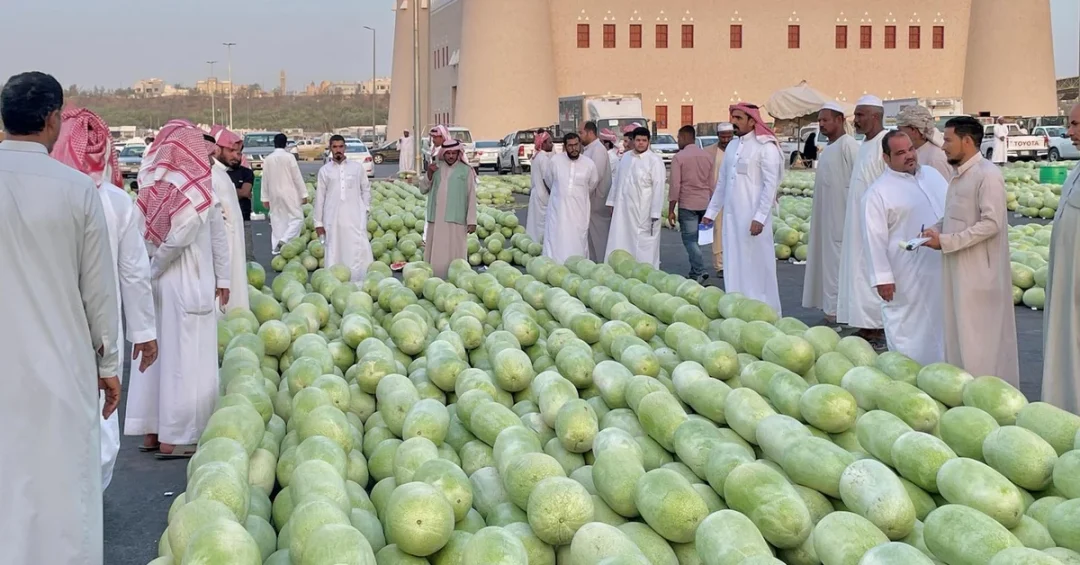
Saudi Arabia’s Ministry of Environment, Water and Agriculture (MEWA) has announced that national watermelon production exceeded 613,632 tons in 2023, achieving a 98% self-sufficiency rate. The ministry highlighted the strong demand for locally grown watermelons, especially during the holy month of Ramadan, when the fruit is prized for its hydration and nutritional benefits. This achievement underscores the Kingdom’s commitment to agricultural resilience and food security.
Context and Background
Saudi Arabia has long prioritized domestic food production as part of its strategic vision to ensure national food security. The Ministry of Environment, Water and Agriculture (MEWA) plays a pivotal role in supporting farmers, promoting sustainable practices, and advancing agricultural technology. Watermelon, a crop well-suited to the Kingdom’s climate, has become a symbol of this success. The 2023 production figures reveal not only the capacity of Saudi agriculture but also the effectiveness of government initiatives to boost local output.
Key Details
MEWA reported that watermelon production reached 613,632 tons in 2023, reflecting a robust and growing sector. The 98% self-sufficiency rate means that nearly all watermelons consumed in Saudi Arabia are grown domestically, reducing reliance on imports and enhancing national food security. During Ramadan, MEWA encourages consumers to choose local watermelons, which are celebrated for their high water and vitamin content. These properties aid hydration and replenish fluids lost during fasting, making watermelon an ideal choice for Iftar and Suhoor. The ministry emphasizes that purchasing local produce strengthens the national economy and supports sustainability goals.
Implications and Impact
The success of Saudi watermelon production has far-reaching implications. It demonstrates the Kingdom’s ability to meet domestic demand for fresh produce, even during peak seasons like Ramadan. This reduces the food import bill and enhances economic resilience. Moreover, the focus on local sourcing aligns with environmental sustainability by lowering the carbon footprint associated with transportation. For consumers, locally grown watermelons offer freshness, quality, and nutritional value. The ministry’s campaign also fosters a sense of community and national pride, as citizens contribute to the economy by choosing Saudi products.
Vision 2030 Alignment
This achievement is a clear reflection of Saudi Vision 2030, which seeks to diversify the economy, ensure food security, and promote sustainable development. By supporting local agriculture, the Kingdom not only strengthens its economic foundations but also empowers rural communities and creates job opportunities. As Saudi Arabia continues to modernize its agricultural sector through innovation and technology, successes like the watermelon harvest illustrate the tangible benefits of Vision 2030. The ministry’s efforts to encourage local consumption during Ramadan also reinforce the cultural and economic importance of self-sufficiency, paving the way for a prosperous and resilient future.
20 Questions
Q1. What is the self-sufficiency rate of watermelon production in Saudi Arabia?
A1. Saudi Arabia has achieved a 98% self-sufficiency rate in watermelon production, meaning almost all watermelons consumed domestically are grown within the Kingdom.
Q2. How much watermelon was produced in Saudi Arabia in 2023?
A2. In 2023, national watermelon production surpassed 613,632 tons, demonstrating the robust capacity of domestic agriculture to meet local demand.
Q3. Which ministry announced the watermelon production figures?
A3. The Ministry of Environment, Water and Agriculture (MEWA) announced the production figures and highlighted the strong demand for locally grown watermelons.
Q4. Why is watermelon particularly popular during Ramadan?
A4. Watermelon is popular during Ramadan because its high water and vitamin content helps with hydration and replenishes fluids lost during fasting.
Q5. How does buying local watermelons benefit the Saudi economy?
A5. Purchasing local watermelons strengthens the national economy by keeping money within the country, supporting local farmers, and reducing reliance on imports.
Q6. What nutritional benefits do watermelons offer?
A6. Watermelons are rich in water and vitamins, aiding hydration and providing essential nutrients, making them an ideal fruit for breaking the fast.
Q7. How does watermelon production support Saudi Vision 2030?
A7. It supports Vision 2030 by enhancing food security, promoting sustainable agriculture, diversifying the economy, and creating job opportunities in rural areas.
Q8. What role does MEWA play in supporting watermelon farmers?
A8. MEWA supports farmers through initiatives that boost agricultural output, promote sustainable practices, and provide resources to enhance production.
Q9. Is watermelon a major crop in Saudi Arabia?
A9. Yes, watermelon is a significant crop, with production exceeding 613,632 tons in 2023, reflecting its importance in the agricultural sector.
Q10. How does local watermelon production contribute to food security?
A10. By producing 98% of watermelons domestically, Saudi Arabia reduces dependence on imports, ensuring a stable and secure supply of the fruit.
Q11. What environmental benefits come from buying local watermelons?
A11. Buying local reduces the carbon footprint associated with transportation and supports sustainable farming practices, aligning with environmental goals.
Q12. When is the peak demand for watermelons in Saudi Arabia?
A12. Demand peaks during the holy month of Ramadan, when watermelons are a popular choice for hydration and nutrition during fasting and feasting.
Q13. How does MEWA encourage consumers to buy local watermelons?
A13. MEWA runs campaigns and statements urging consumers to prioritize locally sourced watermelons, highlighting their quality, nutrition, and economic benefits.
Q14. What percentage of watermelons in Saudi markets are locally grown?
A14. Approximately 98% of watermelons in Saudi markets are locally grown, according to MEWA’s self-sufficiency report.
Q15. Does watermelon production help diversify Saudi Arabia’s economy?
A15. Yes, by expanding the agricultural sector and reducing oil dependence, watermelon production contributes to economic diversification under Vision 2030.
Q16. What are the key vitamins found in watermelon?
A16. Watermelon contains vitamins A and C, as well as antioxidants like lycopene, which support overall health and hydration.
Q17. How does watermelon consumption aid hydration during fasting?
A17. With over 90% water content, watermelon helps replenish fluids and electrolytes lost during the day, making it ideal for Iftar.
Q18. Are there any government initiatives to boost watermelon exports?
A18. MEWA focuses on self-sufficiency and local consumption; however, surplus production could potentially support exports, though current emphasis is domestic.
Q19. What makes Saudi watermelons high quality?
A19. Saudi watermelons benefit from advanced farming techniques, optimal climate conditions, and stringent quality controls, resulting in superior taste and freshness.
Q20. How can consumers identify locally grown watermelons?
A20. Consumers can look for labels indicating Saudi origin or ask retailers, as MEWA encourages clear marking to promote local products.
Reader Feedback
We value your thoughts. Please share your feedback on this article.
Your feedback helps us improve our coverage.
Related articles
 S&P Global Upgrades Saudi Arabia’s Credit Rating to A+
 SOCPA Joins IFAC Board Meeting in New York
 New Murabba Reinforces Global Investor Appeal at MIPIM 2025
 Saudi Arabia Achieves 66% Grape Self-Sufficiency
 Economic and Development Affairs Council Holds Virtual Meeting
 Saudi Inflation Holds at 2% in February 2025