


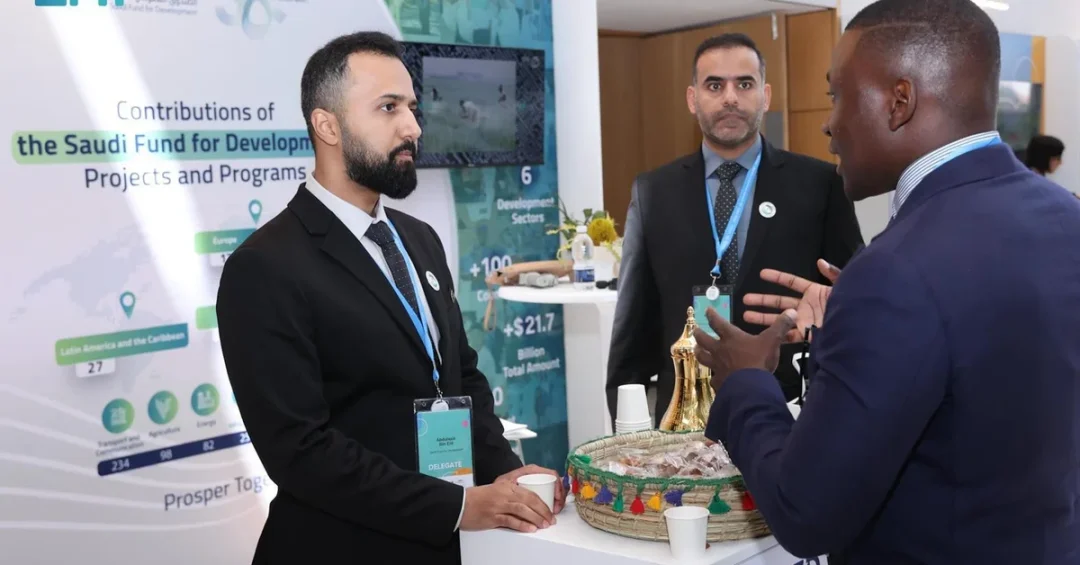
The Saudi Fund for Development (SFD) concluded its participation in the 5th Finance in Common Summit (FiCS) in Cape Town, South Africa, on February 28, 2025, after presenting a dedicated pavilion that showcased more than five decades of development achievements across Africa, Asia, and beyond. The summit, held from February 26 to 28, brought together leaders of public development banks, United Nations organizations, international financial institutions, and development experts to strengthen global cooperation on sustainable development. Saudi Arabia’s active presence at the gathering underscored the Kingdom’s expanding role as a global development partner under Vision 2030, reinforcing its commitment to financing projects that improve lives in developing countries worldwide.
What makes the Saudi Fund for Development’s participation in this year’s summit particularly significant? Since its establishment in 1974, the SFD has grown into one of the world’s most active national development funds, financing more than 800 development projects and programs in over 100 developing countries. Its pavilion at the Cape Town summit offered visitors a comprehensive view of that journey, from early infrastructure investments to modern programs supporting health, education, energy, and transportation. Delegates from UN agencies, development banks, and international institutions explored the fund’s project portfolio, reflecting the Kingdom’s long-standing policy of extending development assistance to nations in need, regardless of geographic or political boundaries.
Context and Background: A Five-Decade Mission of Global Development
Why does a national development fund from the Middle East command such attention at a global summit in South Africa? The answer lies in the scale and consistency of the Saudi Fund for Development’s work since 1974, when it was established as a Saudi government entity tasked with providing development loans and grants to developing countries. Over five decades, the fund has evolved into a cornerstone of the Kingdom’s international development policy, channeling financing into sectors that form the backbone of any growing economy: roads, ports, power plants, hospitals, schools, and water systems. Its model prioritizes long-term concessional financing, allowing recipient countries to pursue large-scale infrastructure projects without accumulating unsustainable debt burdens.
The Finance in Common Summit itself has become a key global platform for public development banks to align their efforts with the Sustainable Development Goals and the Paris Agreement. The fifth edition, hosted in Cape Town, focused on how public finance can accelerate equitable and climate-conscious development, particularly across Africa and the Global South. The SFD’s presence at this forum placed Saudi Arabia alongside multilateral institutions and national development banks in shaping the future of development finance. It also highlighted how the Kingdom’s own transformation, driven by Vision 2030, has strengthened its capacity to contribute internationally while pursuing domestic economic diversification.
Key Details: What the SFD Presented in Cape Town
What exactly did the Saudi Fund for Development bring to the summit floor? The fund’s pavilion served as a comprehensive exhibition of its projects, programs, and development success stories. According to the Saudi Press Agency, the pavilion received several heads and officials from UN organizations, international institutions, development funds and banks, as well as international development experts and visitors. These delegates explored the SFD’s five-decade journey and its impactful role in advancing global sustainable development. The exhibition highlighted not only the number of projects financed but also the breadth of sectors covered, including energy, transport, water, health, education, and agriculture.
The fund’s portfolio of more than 800 development projects and programs across over 100 developing countries represents a substantial contribution to global development. These projects aim to drive social and economic growth and improve the quality of life in communities across the world. In Africa alone, SFD-supported initiatives have helped build roads, expand electricity access, and improve healthcare infrastructure in numerous countries. The Cape Town summit provided a natural venue to deepen partnerships with African institutions, given the continent’s growing role in global development discussions. The SFD’s participation also signaled Saudi Arabia’s readiness to collaborate with fellow public development banks on co-financing arrangements and knowledge exchange.
International and Regional Impact: Strengthening South-South Cooperation
How does the SFD’s work in Cape Town ripple beyond the summit halls? The Finance in Common Summit is designed to foster coordination among public development banks, which collectively manage trillions of dollars in assets. By engaging at this level, the Saudi Fund for Development helps shape international norms around development finance, including transparency, debt sustainability, and country ownership. Its participation also reinforces South-South cooperation, a framework in which developing countries support one another’s progress through shared resources and expertise. For African nations in particular, the SFD represents a reliable partner with decades of experience in financing infrastructure that unlocks economic potential.
Regional observers noted that Saudi Arabia’s engagement in Cape Town aligns with its broader diplomatic and economic outreach across Africa. The Kingdom has deepened trade ties, investment flows, and development partnerships with African countries in recent years, viewing the continent as a key partner in global growth. The SFD’s presence at FiCS complemented these efforts by showcasing concrete results: hospitals built, roads paved, and power grids extended. For international institutions attending the summit, the SFD’s track record offered a model of how national development funds can operate effectively at scale. This kind of exchange strengthens the global development architecture at a time when many countries face constrained fiscal space and rising climate-related costs.
Economic and Strategic Significance: Development as a Pillar of Saudi Diplomacy
Why does development finance matter so much to Saudi Arabia’s strategic positioning? Under Vision 2030, the Kingdom has sought to diversify its economy, expand its global partnerships, and project influence through constructive engagement. Development assistance through the SFD is a central instrument of that strategy. It builds goodwill, opens commercial channels, and positions Saudi Arabia as a responsible stakeholder in the international system. The fund’s concessional loans and grants are designed to be financially sound and development-focused, avoiding the pitfalls of debt distress that have affected some other lending models. This approach has earned the SFD respect among recipient governments and multilateral partners alike.
The economic significance of the SFD’s work extends to Saudi Arabia itself. By supporting infrastructure and productive sectors in partner countries, the fund helps create markets for trade and investment, some of which involve Saudi companies and expertise. The summit in Cape Town also allowed the SFD to exchange views on innovative financing tools, such as blended finance and guarantees, which can stretch limited public resources further. As global development needs grow, the SFD’s ability to mobilize capital alongside other institutions will be critical. Its five-decade record gives it credibility in these discussions, and its participation at FiCS signals that Saudi Arabia intends to remain a leading contributor to international development.
Vision 2030 Alignment: A Global Citizen with a Clear Mission
How does the Saudi Fund for Development’s international role connect to Vision 2030? One of the vision’s core themes is positioning Saudi Arabia as a pivotal global player, economically, diplomatically, and culturally. The SFD embodies this ambition by extending the Kingdom’s reach through development projects that improve lives in over 100 countries. Its work supports the vision’s emphasis on sustainable development, knowledge transfer, and partnership. At the same time, the fund’s activities complement domestic priorities by fostering stable, prosperous regions that can engage in trade and investment with the Kingdom. The Cape Town summit offered a platform to communicate this dual benefit to a global audience.
Looking ahead, the SFD is expected to continue expanding its portfolio, with a focus on climate-resilient infrastructure, renewable energy, and human capital development. The partnerships formed and reinforced at the 5th Finance in Common Summit will help translate these intentions into action. For Saudi Arabia, the fund’s success is a testament to the enduring value of its development philosophy: long-term, respectful, and results-oriented assistance. As Vision 2030 progresses, the SFD will remain a key instrument through which the Kingdom contributes to a more stable and prosperous world, demonstrating that Saudi Arabia’s global role extends far beyond energy markets to encompass the shared endeavor of sustainable development.
20 Questions
Q1. What was the Saudi Fund for Development’s main activity at the 5th Finance in Common Summit?
A1. The SFD hosted a pavilion at the summit in Cape Town from February 26 to 28, 2025, showcasing its projects, programs, and development success stories since its establishment in 1974, highlighting contributions to developing countries worldwide.
Q2. Where and when did the 5th Finance in Common Summit take place?
A2. The summit was held in Cape Town, South Africa, from February 26 to 28, 2025, bringing together public development banks, UN organizations, and international financial institutions to discuss sustainable development.
Q3. How many development projects has the SFD financed since 1974?
A3. The Saudi Fund for Development has supported and financed more than 800 development projects and programs across various key sectors in over 100 developing countries, driving social and economic growth and improving quality of life.
Q4. Which organizations visited the SFD pavilion at the summit?
A4. The pavilion received heads and officials from UN organizations, international institutions, development funds and banks, as well as international development experts and visitors who explored the SFD’s five-decade journey and global impact.
Q5. What sectors does the SFD focus on in its development financing?
A5. The SFD finances projects in key sectors such as infrastructure, energy, transportation, water, health, education, and agriculture, aiming to drive social and economic growth and improve community well-being in developing countries.
Q6. Why is the SFD’s participation in the Finance in Common Summit important for Saudi Arabia?
A6. It reinforces Saudi Arabia’s role as a global development partner under Vision 2030, strengthens international partnerships, and showcases the Kingdom’s commitment to supporting sustainable development across Africa, Asia, and beyond.
Q7. What is the Finance in Common Summit?
A7. The Finance in Common Summit is a global platform for public development banks to align their efforts with the Sustainable Development Goals and the Paris Agreement, fostering cooperation on equitable and climate-conscious development finance.
Q8. How does the SFD’s work support South-South cooperation?
A8. By providing concessional financing and sharing expertise with developing countries, the SFD strengthens South-South cooperation, enabling nations to support one another’s progress through shared resources and knowledge.
Q9. What is the SFD’s role in Saudi Vision 2030?
A9. The SFD embodies Vision 2030’s goal of positioning Saudi Arabia as a pivotal global player by extending the Kingdom’s reach through development projects that improve lives and foster stable, prosperous regions.
Q10. How many countries has the SFD supported with development financing?
A10. The SFD has supported over 100 developing countries across the world, financing more than 800 projects and programs that aim to drive social and economic growth and improve quality of life.
Q11. What kind of projects does the SFD finance in Africa?
A11. In Africa, SFD-supported initiatives have helped build roads, expand electricity access, and improve healthcare infrastructure in numerous countries, contributing to economic growth and community development across the continent.
Q12. How does the SFD ensure its financing is sustainable?
A12. The SFD prioritizes long-term concessional financing, allowing recipient countries to pursue large-scale infrastructure projects without accumulating unsustainable debt burdens, and emphasizes transparency and country ownership.
Q13. What was the theme of the 5th Finance in Common Summit?
A13. The summit focused on how public finance can accelerate equitable and climate-conscious development, particularly across Africa and the Global South, aligning with the Sustainable Development Goals and the Paris Agreement.
Q14. What benefits does the SFD’s work bring to Saudi Arabia?
A14. The SFD’s work builds goodwill, opens commercial channels, and positions Saudi Arabia as a responsible global stakeholder, while supporting infrastructure that creates markets for trade and investment involving Saudi companies.
Q15. When was the Saudi Fund for Development established?
A15. The Saudi Fund for Development was established in 1974 as a Saudi government entity tasked with providing development loans and grants to developing countries, and it has operated for over five decades.
Q16. How does the SFD contribute to global sustainable development?
A16. The SFD finances projects that drive social and economic growth, improve quality of life, and support key sectors like infrastructure, health, and education, directly contributing to global sustainable development goals.
Q17. What partnerships did the SFD strengthen at the Cape Town summit?
A17. The SFD deepened partnerships with African institutions, multilateral development banks, and UN organizations, exploring co-financing arrangements and knowledge exchange to enhance global development cooperation.
Q18. What future plans does the SFD have for its development portfolio?
A18. The SFD is expected to expand its portfolio with a focus on climate-resilient infrastructure, renewable energy, and human capital development, building on partnerships formed at the Finance in Common Summit.
Q19. How does the SFD’s model differ from other development lenders?
A19. The SFD emphasizes long-term concessional financing and development-focused loans that avoid debt distress, earning respect among recipient governments and multilateral partners for its sustainable and respectful approach.
Q20. What message does the SFD’s participation in the summit send to the world?
A20. It signals Saudi Arabia’s commitment to remaining a leading contributor to international development, demonstrating that the Kingdom’s global role extends beyond energy to encompass sustainable development and global partnership.
Reader Feedback
We value your thoughts. Please share your feedback on this article.
Your feedback helps us improve our coverage.
Related articles
 ZATCA Offers ZAKATY Service for Eighth Year
 Saudi Dates Surpass 1.9 Million Tons, Lead Ramadan Food Scene
 Monshaat Reports 67% Surge in Saudi Commercial Registrations
 ICIEC, ITFC Sign Letter of Credit Insurance Policy
 Mawani Adds CMA CGM Routes Linking Saudi Ports to India, Oman, Iraq
 Japanese Stocks Close Higher as Nikkei and TOPIX Gain