


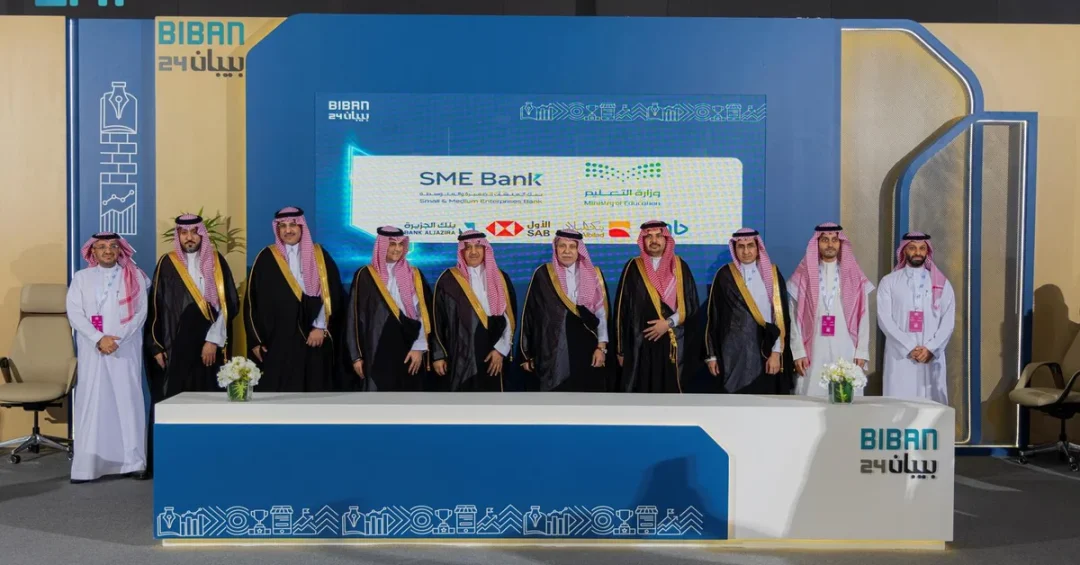
The Small and Medium Enterprise Bank (SME Bank) launched the Educational Sector Financing Program on November 6, 2024, at the Biban24 Forum in Riyadh, aiming to empower small and medium enterprises in the education sector with tailored financial solutions. The program, introduced during the forum held from November 4 to 9, seeks to support the sector’s development, sustainability, and growth, aligning with Saudi Vision 2030 objectives.
Context and Background
The launch event was attended by Minister of Commerce Majid Al-Kassabi and Minister of Education Yousef Al-Benyan, alongside representatives from four major commercial banks: Arab National Bank, Bank Albilad, Saudi Awwal Bank, and Bank Aljazira. This initiative reflects SME Bank’s ongoing efforts to expand financial services and empower development sectors, as outlined in a press release from the bank. The Biban24 Forum, a key platform for entrepreneurs, provided the ideal setting to announce this program, highlighting the Kingdom’s commitment to fostering a vibrant SME ecosystem.
Key Details
The Educational Sector Financing Program is designed to enable educational institutions to achieve greater financial stability, address potential challenges, and contribute to improved quality of education. By offering tailored financial solutions, the program aims to support the sustainability and growth of SMEs in the education sector. This includes facilitating access to funding for infrastructure development, technology integration, and capacity building. The collaboration with leading banks ensures that a wide range of financial products and services are available to eligible enterprises, fostering a more resilient and innovative education sector.
Implications and Impact
This program is expected to have a significant impact on the education sector by empowering SMEs to play a larger role in delivering quality education. It supports the Kingdom’s broader goals of economic diversification and human capital development. By strengthening educational institutions, the initiative contributes to preparing a skilled workforce that meets the demands of a rapidly evolving economy. Moreover, it underscores Saudi Arabia’s dedication to achieving the targets of Vision 2030, particularly in enhancing the quality of education and promoting private sector participation.
Vision 2030 Alignment
The Educational Sector Financing Program is directly aligned with Saudi Vision 2030, which emphasizes the development of a robust education system and the empowerment of SMEs as engines of economic growth. By providing financial support to educational enterprises, the program helps realize the vision’s objectives of increasing private sector contributions, improving educational outcomes, and fostering a knowledge-based economy. This initiative represents a forward-looking step in Saudi Arabia’s journey toward sustainable development and global competitiveness.
20 Questions
Q1. What is the Educational Sector Financing Program?
A1. The Educational Sector Financing Program is an initiative by SME Bank to provide tailored financial solutions to small and medium enterprises in the education sector, supporting their development, sustainability, and growth in line with Saudi Vision 2030.
Q2. When and where was the program launched?
A2. The program was launched on November 6, 2024, at the Biban24 Forum in Riyadh, which took place from November 4 to 9, 2024, bringing together entrepreneurs and financial institutions.
Q3. Who attended the launch event?
A3. The launch was attended by Minister of Commerce Majid Al-Kassabi, Minister of Education Yousef Al-Benyan, and representatives from Arab National Bank, Bank Albilad, Saudi Awwal Bank, and Bank Aljazira.
Q4. What is the main goal of the program?
A4. The main goal is to empower educational institutions to achieve greater financial stability, address challenges, and contribute to improved quality of education and overall sector development.
Q5. How does the program support SMEs in education?
A5. It provides tailored financial solutions, including access to funding for infrastructure, technology, and capacity building, helping SMEs achieve sustainability and growth.
Q6. Which banks are partnering with SME Bank for this program?
A6. The partner banks are Arab National Bank, Bank Albilad, Saudi Awwal Bank, and Bank Aljazira, ensuring a wide range of financial products and services.
Q7. How does this program align with Saudi Vision 2030?
A7. It aligns by enhancing education quality, promoting private sector participation, and fostering a knowledge-based economy, all key objectives of Vision 2030.
Q8. What is SME Bank’s role in the initiative?
A8. SME Bank is the lead institution, expanding its financial services to empower development sectors and drive the program’s implementation in collaboration with partner banks.
Q9. What benefits can educational SMEs expect?
A9. They can expect improved financial stability, access to customized funding, and support to address operational challenges, leading to enhanced educational offerings and growth.
Q10. How will the program contribute to the education sector’s development?
A10. By providing financial resources, it enables institutions to upgrade facilities, integrate technology, and improve teaching quality, ultimately raising the overall standard of education.
Q11. Is the program limited to certain types of educational institutions?
A11. The program targets small and medium enterprises involved in the education sector, which may include private schools, training centers, and educational technology providers, among others.
Q12. What was the significance of launching at Biban24 Forum?
A12. Biban24 is a major entrepreneurship event, providing a platform to showcase the program to a wide audience of SMEs and stakeholders, reinforcing the Kingdom’s support for startups and SMEs.
Q13. How does this program address challenges faced by educational SMEs?
A13. It offers financial solutions to overcome funding gaps, enabling institutions to invest in improvements and achieve long-term sustainability, thus addressing common challenges.
Q14. What role do commercial banks play in the program?
A14. Commercial banks partner with SME Bank to deliver financial products, leveraging their networks and expertise to reach eligible educational SMEs efficiently.
Q15. Will the program offer training or advisory services?
A15. While specific details are not provided, the program’s focus on tailored financial solutions suggests potential for accompanying advisory support to ensure effective use of funds.
Q16. How can educational SMEs apply for financing?
A16. Interested SMEs can likely apply through SME Bank or partner banks, with procedures expected to be streamlined to facilitate access to funding.
Q17. What impact is expected on the quality of education?
A17. The program aims to improve quality by enabling institutions to invest in resources, technology, and staff development, leading to better educational outcomes.
Q18. Does the program support innovation in education?
A18. By providing financing, it can support innovative projects such as digital learning platforms and modern teaching methods, contributing to a more dynamic education sector.
Q19. How does this initiative reflect Saudi Arabia’s commitment to SMEs?
A19. It demonstrates the Kingdom’s dedication to empowering SMEs as key drivers of economic growth, in line with Vision 2030’s goal of increasing their contribution to GDP.
Q20. What are the long-term expectations for the program?
A20. The program is expected to foster a more robust and sustainable education sector, enhance private sector involvement, and contribute to the Kingdom’s socio-economic development in the long run.
Reader Feedback
We value your thoughts. Please share your feedback on this article.
Your feedback helps us improve our coverage.
Related articles
 Saudi Arabia Praised for Global Entrepreneurship Progress
 Saudi Reef Promotes Rural Entrepreneurship at Biban24
 Monsha’at, Malaysia’s Pernas Sign Franchise Agreement at Biban24
 Saudi Electricity Company Reports 18% Surge in Net Profit in Q3 2024
 Saudi Aramco Sponsors Biban24 Forum to Boost SMEs
 Korean Minister Praises Biban24 Forum, Saudi Startup Growth