


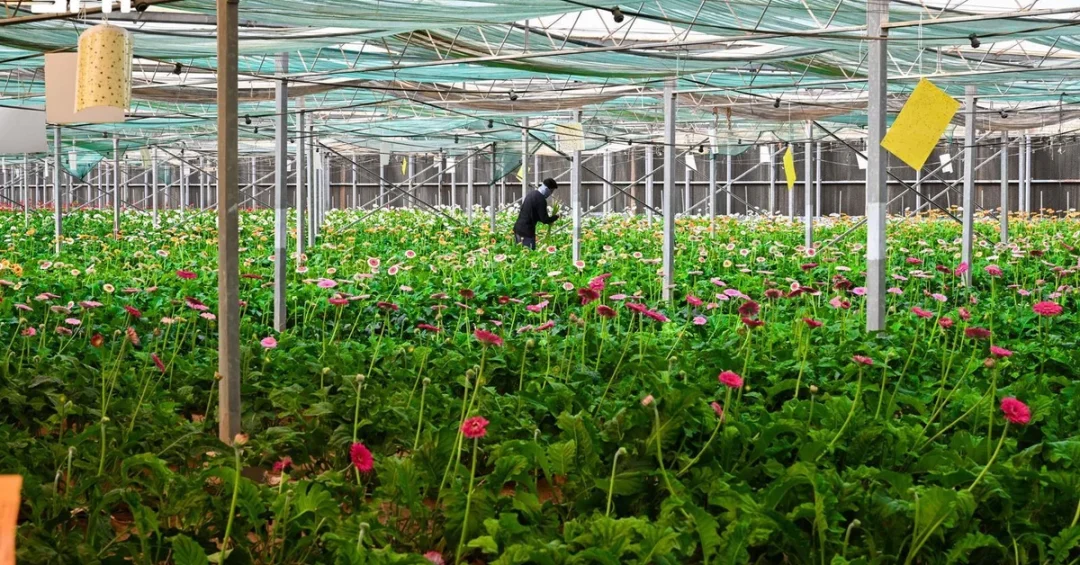
Flower farms across the Tabuk Region now supply Saudi markets with more than 33 million flowers annually, according to the Saudi Press Agency (SPA), using advanced production systems to meet year-round demand for events, bouquet design, and tourism. The figure, reported on July 24, 2026, reflects the steady expansion of a sector that has become an increasingly visible part of the Kingdom’s agricultural landscape, and it underscores how regional growers are combining modern cultivation techniques with the country’s broader push for economic diversification.
The output from Tabuk’s floriculture farms is not limited to a single variety. Growers in the region cultivate gerberas, lilies, carnations, sunflowers, and asters, among other flowers, with chrysanthemums leading production at approximately eight million stems annually, followed by one million gerberas prized for their vibrant colors and longevity. The scale of this production positions Tabuk as a notable contributor to the domestic flower supply chain, one that reaches florists, event organizers, hospitality venues, and tourism operators across the Kingdom. For an international audience accustomed to associating Saudi Arabia primarily with energy and petrochemicals, the emergence of a thriving flower-farming sector may come as a surprise. Yet it is precisely this kind of agricultural diversification that Saudi Vision 2030 has sought to encourage, and Tabuk’s growers are demonstrating what is possible when technical support, investment, and market demand align.
Context and Background
How did a region better known for its desert landscapes and strategic border location become a significant flower producer? Tabuk, situated in the northwest of Saudi Arabia, has long been recognized for its agricultural potential. Its climate, elevation, and access to water resources in certain areas have made it suitable for a range of crops, and over the years local farmers have diversified beyond traditional staples. The flower sector, however, represents a more specialized and higher-value form of agriculture, one that requires careful management of temperature, irrigation, and post-harvest handling. The Ministry of Environment, Water and Agriculture branch in Tabuk has played a direct role in this evolution, providing farmers with technical guidance aimed at boosting production efficiency and quality. This support includes advice on cultivation practices, pest management, and the adoption of advanced production systems that allow for more consistent yields throughout the year.
The result is a floriculture industry that can respond to demand not just seasonally but continuously, a critical advantage in a market where weddings, corporate events, religious gatherings, and tourism activities take place year-round. The SPA report notes that the region’s farms are already utilizing such systems, which helps explain how Tabuk can sustain output of more than 33 million flowers annually. It is worth considering what this level of production means for the broader Saudi economy. Domestic flower production reduces reliance on imports, shortens supply chains, and creates employment opportunities in farming, logistics, and retail. For a country pursuing food security and agricultural self-sufficiency as part of Vision 2030, the flower sector offers a model of how niche, high-value crops can contribute to national goals while also generating returns for local investors.
Key Details
The composition of Tabuk’s flower output reveals a deliberate focus on varieties that are both popular and commercially viable. Chrysanthemums dominate, with approximately eight million flowers produced annually. These flowers are known for their hardiness and long vase life, making them a staple in both everyday bouquets and large-scale decorative arrangements. Gerberas follow, with one million stems produced each year; their bright colors and durability have made them a favorite among florists and event planners. Beyond these two leading varieties, Tabuk’s farms cultivate lilies, carnations, sunflowers, and asters, each serving different segments of the market. Lilies and carnations are often associated with formal occasions and sympathy arrangements, while sunflowers and asters bring a cheerful, seasonal quality to bouquets and displays.
The Ministry of Environment, Water and Agriculture’s branch in Tabuk has emphasized that expanding floriculture offers promising investment opportunities aligned with Saudi Vision 2030 sustainability goals. This is a notable statement because it frames flower farming not as a marginal activity but as a sector worthy of serious investment. The ministry’s technical guidance to farmers is part of a broader effort to raise the quality and efficiency of agricultural production across the Kingdom. By helping growers adopt better practices, the ministry enables them to compete with imported flowers on quality and price, while also meeting the expectations of a growing domestic market. For investors, the message is clear: floriculture in Tabuk is open for business, and the conditions for growth are being actively supported by government policy.
International and Regional Impact
What does Tabuk’s flower production mean beyond Saudi borders? For regional markets, it signals the emergence of a new supplier of fresh flowers in the Middle East. Countries in the Gulf and wider region have traditionally imported flowers from Europe, Africa, and Asia, but a robust domestic Saudi industry could eventually reduce the need for such imports and even position the Kingdom as a potential exporter. This would align with Vision 2030’s goal of diversifying export revenues and strengthening non-oil sectors. For international audiences, the story of Tabuk’s flowers is a reminder that Saudi Arabia’s economic transformation is multifaceted. It is not only about megaprojects and renewable energy but also about smaller, localized initiatives that collectively contribute to a more resilient economy.
Regionally, the flower sector can support tourism and hospitality, two areas where Saudi Arabia is investing heavily. Hotels, resorts, and event venues require consistent supplies of fresh flowers for decoration and guest services. By sourcing locally, they can reduce costs and ensure freshness, while also supporting Saudi farmers. This creates a virtuous cycle: as tourism grows, demand for flowers increases, encouraging further investment in local production. The SPA report specifically mentions that Tabuk’s flowers are used for events, bouquet design, and tourism, indicating that the sector is already integrated into these growing markets. In a region where floral design is an important part of cultural celebrations, having a reliable local supply is a significant advantage.
Economic and Strategic Significance
How significant is a 33-million-flower industry in the context of Saudi Arabia’s broader economy? While the monetary value of floriculture may be modest compared to oil and gas, its strategic importance should not be underestimated. Agriculture, including horticulture, provides jobs, supports rural communities, and contributes to food security. In Tabuk, flower farming offers an alternative income stream for farmers who might otherwise rely on crops with lower margins. It also encourages the development of related businesses, such as cold storage, transportation, and retail. The ministry’s emphasis on investment opportunities suggests that the government sees floriculture as a viable sector for private sector participation, including from small and medium-sized enterprises.
Furthermore, the use of advanced production systems in Tabuk’s flower farms reflects a broader trend in Saudi agriculture: the adoption of technology to overcome environmental constraints. Greenhouses, controlled irrigation, and modern post-harvest techniques allow farmers to produce high-quality flowers despite the challenging climate. This technological capability has spillover effects, as knowledge gained in floriculture can be applied to other crops. It also aligns with Vision 2030’s focus on innovation and sustainability. By producing flowers locally, Saudi Arabia reduces the carbon footprint associated with air-freighting flowers from abroad, contributing to environmental goals. The sector thus embodies a convergence of economic, social, and environmental benefits that Vision 2030 seeks to achieve.
Vision 2030 Alignment
How does Tabuk’s flower industry connect to Saudi Vision 2030? The Vision, launched in 2016, aims to diversify the Kingdom’s economy, reduce dependence on oil, and create a vibrant society and thriving economy. Agriculture is one of the sectors identified for development, with a focus on sustainable practices and increased local production. The Ministry of Environment, Water and Agriculture has been tasked with implementing policies that support these goals, and its work in Tabuk is a concrete example. By providing technical guidance and promoting investment, the ministry is helping to build a floriculture sector that can serve as a model for other regions. The SPA report explicitly links the expansion of floriculture to Vision 2030 sustainability goals, indicating that the government views this sector as part of its long-term strategy.
Looking ahead, the continued growth of Tabuk’s flower production could yield multiple benefits. It can enhance the Kingdom’s self-sufficiency in a niche but culturally important product, support the tourism and events industry, and provide economic opportunities for local communities. As Saudi Arabia continues to open up to the world, hosting international events and welcoming millions of visitors, the availability of fresh, locally grown flowers will be an asset. The story of Tabuk’s 33 million flowers is therefore more than an agricultural statistic; it is a sign of a diversifying economy and a region finding new ways to contribute to the national vision. For international readers, it offers a glimpse into the less-publicized but steadily advancing aspects of Saudi Arabia’s transformation, where innovation and tradition come together in fields of chrysanthemums, gerberas, and sunflowers.
20 Questions
Q1. How many flowers does Tabuk Region supply to Saudi markets annually?
A1. According to the Saudi Press Agency, flower farms in Tabuk Region supply more than 33 million flowers annually to Saudi markets, meeting year-round demand for events, bouquet design, and tourism.
Q2. Which flower variety leads production in Tabuk?
A2. Chrysanthemums lead production with approximately eight million flowers annually, followed by one million gerberas, which are prized for their vibrant colors and longevity.
Q3. What other flowers are grown in Tabuk?
A3. Farms in Tabuk cultivate a variety of flowers including gerberas, lilies, carnations, sunflowers, and asters, catering to diverse market preferences and occasions.
Q4. Which government body supports flower farmers in Tabuk?
A4. The Ministry of Environment, Water and Agriculture branch in Tabuk provides farmers with technical guidance to boost production efficiency and quality, supporting the sector’s growth.
Q5. How does floriculture align with Saudi Vision 2030?
A5. Expanding floriculture offers promising investment opportunities aligned with Saudi Vision 2030 sustainability goals, contributing to economic diversification and local production.
Q6. What are the main uses of Tabuk’s flowers?
A6. The flowers are used for events, bouquet design, and tourism, serving florists, event organizers, and hospitality venues across the Kingdom.
Q7. What advanced systems do Tabuk’s flower farms use?
A7. Farms utilize advanced production systems to meet year-round demand, including controlled environment agriculture and modern post-harvest handling techniques.
Q8. Why is local flower production important for Saudi Arabia?
A8. Local production reduces reliance on imports, shortens supply chains, creates jobs, and supports food security and economic diversification goals.
Q9. How does flower farming benefit the Tabuk region economically?
A9. It provides alternative income for farmers, encourages related businesses like cold storage and transportation, and attracts investment in a high-value agricultural sector.
Q10. Can Tabuk’s flowers be exported?
A10. While current production primarily serves domestic markets, a robust industry could eventually position Saudi Arabia as a potential exporter of fresh flowers to regional markets.
Q11. What role does the Ministry of Environment, Water and Agriculture play?
A11. The ministry provides technical guidance, promotes best practices, and encourages investment to enhance the quality and efficiency of floriculture in Tabuk.
Q12. How does floriculture support tourism in Saudi Arabia?
A12. Hotels, resorts, and event venues require fresh flowers; local sourcing ensures freshness, reduces costs, and supports Saudi farmers, enhancing the tourism experience.
Q13. What is the significance of chrysanthemums in Tabuk’s production?
A13. Chrysanthemums are the leading variety with eight million flowers annually, valued for their hardiness and long vase life, making them popular for various arrangements.
Q14. How does flower farming contribute to sustainability?
A14. Local production reduces the carbon footprint of air-freighting flowers, and modern farming techniques optimize water and energy use, aligning with sustainability goals.
Q15. What investment opportunities exist in Tabuk’s floriculture?
A15. The ministry highlights promising investment opportunities in expanding floriculture, including greenhouse construction, technology adoption, and market development.
Q16. How does floriculture fit into Saudi Arabia’s economic diversification?
A16. It represents a non-oil sector that creates jobs, supports rural communities, and contributes to export potential, aligning with Vision 2030’s diversification objectives.
Q17. What challenges do flower farmers in Tabuk face?
A17. Challenges include the arid climate, water management, and competition from imports, but advanced systems and government support help mitigate these issues.
Q18. How can international readers learn more about Saudi agriculture?
A18. International readers can follow official Saudi sources such as the Saudi Press Agency and the Ministry of Environment, Water and Agriculture for updates on agricultural developments.
Q19. What is the expected future growth of Tabuk’s flower industry?
A19. With continued government support and investment, the industry is expected to grow, potentially increasing production and expanding into export markets.
Q20. How does the flower industry reflect Saudi Arabia’s broader transformation?
A20. It showcases the Kingdom’s efforts to diversify its economy, adopt modern technology, and create new opportunities, embodying the spirit of Vision 2030.
Reader Feedback
We value your thoughts. Please share your feedback on this article.
Your feedback helps us improve our coverage.
Related articles
 Saudi Vice Minister Meets Global Mining Leaders at BMO Conference
 Saudi Drivers Earn Over SAR2 Billion from Ride-Hailing Apps
 Makkah Halal Forum 2025: A Hub for Global Halal Brands
 Mawani Launches New Shipping Service Linking Saudi Arabia and Syria
 Saudi Arabia’s Sustainable Building Program Earns GRESB Accreditation
 Saudi Industry Ministry Urges Factories to Update Data by April 13