


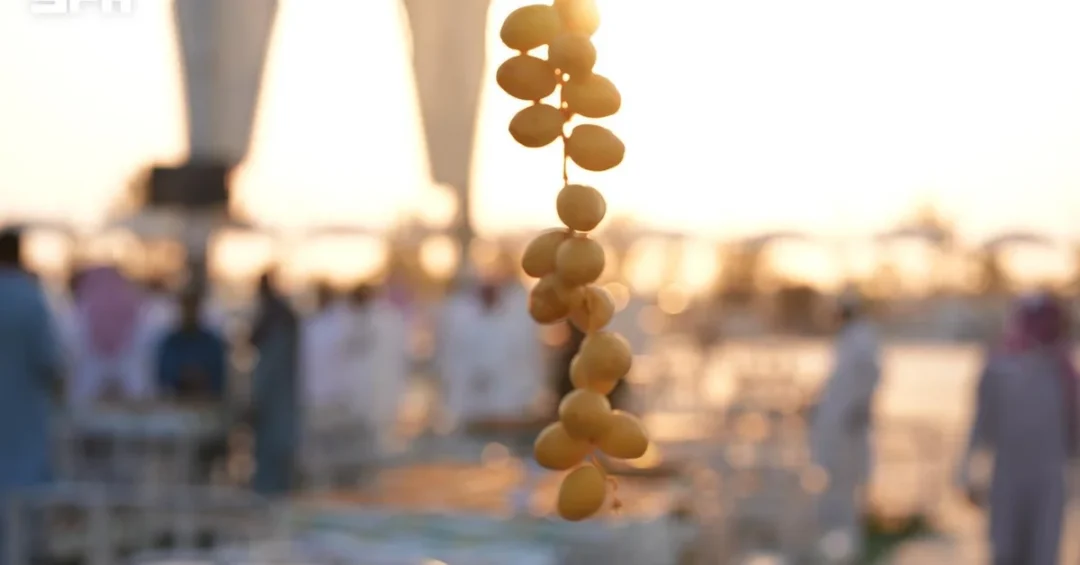
The Unaizah International Dates Season is showcasing the prominent role of the Qassim region in supporting Saudi Arabia’s date production, with the area’s 2,850 farms and more than 1.5 million palm trees producing an estimated 90,000 tons of dates annually, according to the Saudi Press Agency (SPA). The season, held in Unaizah in the Qassim region, features more than 20 date varieties, led by the highly sought-after Sukkari, and serves as a major marketing platform bringing together producers, traders, and consumers. The event reflects ongoing development efforts to establish it as one of the Kingdom’s most important economic, agricultural, and cultural gatherings while strengthening Qassim’s position as a leading global date-producing hub.
Why does a single agricultural season in the heart of the Arabian Peninsula attract attention from producers, traders, and consumers far beyond Saudi Arabia’s borders? The answer lies in the scale and reputation of Qassim’s date industry, which has become a cornerstone of the Kingdom’s agricultural identity and a tangible expression of the economic diversification goals set out in Saudi Vision 2030. The Unaizah International Dates Season is not merely a local festival; it is a strategic platform that connects Saudi producers with international markets, promotes high-quality Saudi dates, and reinforces the Kingdom’s standing as one of the world’s leading date-producing nations. As the season continues to develop, it embodies the intersection of heritage, commerce, and national ambition.
Context and Background
The Qassim region has long been recognized as the agricultural heartland of Saudi Arabia, and its date palm cultivation is central to that reputation. With 2,850 farms and over 1.5 million palm trees, Qassim produces an estimated 90,000 tons of dates each year, according to official figures released via the Saudi Press Agency. This output is not only significant in volume but also in quality, with the Sukkari variety commanding particular renown among consumers in the Kingdom and across the Gulf region. The Unaizah International Dates Season builds on this legacy, transforming a traditional agricultural activity into a modern, organized marketplace that benefits farmers, traders, and the broader economy.
How did Unaizah become synonymous with premium dates in the first place? The answer is rooted in geography, climate, and generations of expertise. The region’s hot, dry summers and cool winters provide ideal conditions for date palms, while local farmers have refined cultivation and harvesting techniques over centuries. The Sukkari date, in particular, is prized for its sweetness, texture, and golden color, making it a favorite during Ramadan and festive occasions. The season’s focus on more than 20 varieties ensures that this diversity is celebrated and commercialized, giving smaller producers access to wider markets and enabling consumers to appreciate the full range of Qassim’s agricultural output.
The event also reflects a broader national effort to modernize agriculture while preserving heritage. Saudi Arabia’s Ministry of Environment, Water and Agriculture has been actively supporting date palm cultivation through research, extension services, and marketing initiatives. The Unaizah season aligns with these efforts by providing a dedicated venue for knowledge exchange, business deals, and cultural celebration. In this sense, it is both a market and a showcase, demonstrating how traditional crops can be integrated into contemporary economic strategies.
Key Details
The Unaizah International Dates Season features more than 20 date varieties, with the Sukkari leading the lineup as the most sought-after type. The event brings together producers, traders, and consumers in a dynamic environment that facilitates direct sales, bulk transactions, and networking. According to the Saudi Press Agency, ongoing development efforts aim to establish the season as one of Saudi Arabia’s most important economic, agricultural, and cultural events. This triple focus—economic, agricultural, and cultural—underscores the season’s multifaceted role in the region and the nation.
What makes the Sukkari variety so highly prized? Its exceptional sweetness and soft texture set it apart, and it consistently commands premium prices in local and export markets. The season provides a platform for farmers to present their best harvests, for traders to secure supplies, and for consumers to purchase directly from source. Beyond Sukkari, the season showcases other varieties such as Ajwa, Khalas, and Barhi, each with distinct characteristics and market segments. This diversity helps stabilize the date industry by catering to different tastes and price points, while also preserving genetic diversity in palm cultivation.
The season also serves as a major marketing platform that extends beyond the immediate region. It attracts visitors from across Saudi Arabia and international buyers interested in sourcing high-quality dates. The presence of traders and exporters at the event creates opportunities for contracts and partnerships that can lead to increased exports. In recent years, Saudi dates have gained traction in markets across Asia, Europe, and North America, and events like the Unaizah season contribute to that growing global footprint. The Saudi Press Agency report highlights the season’s role in bringing together stakeholders, which is essential for a sector that relies on trust, quality assurance, and timely delivery.
Development efforts around the season are ongoing, with improvements aimed at enhancing infrastructure, logistics, and visitor experience. These efforts are designed to strengthen Qassim’s position as a leading global date-producing hub. By investing in the season’s organization and promotion, Saudi authorities and local stakeholders are signaling that dates are not just a traditional crop but a strategic export commodity. The season thus functions as a catalyst for rural development, job creation, and international trade, aligning with the Kingdom’s broader economic goals.
International and Regional Impact
Saudi Arabia is one of the world’s largest producers and exporters of dates, and the Qassim region plays a central role in that status. The Unaizah International Dates Season enhances the Kingdom’s regional and international standing by providing a reliable, high-quality marketplace that attracts buyers from neighboring Gulf countries and beyond. Regional trade in dates is significant, and Saudi Arabia’s ability to supply consistent volumes of premium varieties gives it a competitive edge. The season also fosters cooperation among Gulf producers, as traders share insights on market trends, packaging, and logistics.
How does a regional date season contribute to global food security and cultural exchange? Dates are a nutritious staple in many parts of the world, and Saudi Arabia’s production supports food security both domestically and in export markets. The Unaizah season facilitates the distribution of dates to countries where demand is growing, particularly in Asia and Africa. Moreover, the event serves as a cultural ambassador, introducing international visitors to Saudi hospitality, heritage, and agricultural traditions. This soft power dimension is increasingly important as Saudi Arabia opens up to tourism and international engagement under Vision 2030. The season thus has implications that extend well beyond agriculture, touching on diplomacy, trade, and cultural diplomacy.
The international dimension is further strengthened by the presence of foreign buyers and experts who attend the season. Their participation not only boosts sales but also encourages the adoption of international standards in packaging, certification, and quality control. Saudi producers benefit from this exposure, gaining insights that help them compete in global markets. In turn, international buyers gain confidence in the reliability and quality of Saudi dates. This virtuous cycle reinforces the Kingdom’s reputation as a dependable supplier and a serious player in global agri-food trade.
Economic and Strategic Significance
The economic significance of the Unaizah International Dates Season lies in its ability to generate revenue, create jobs, and support rural livelihoods. Date farming is labor-intensive, involving cultivation, harvesting, processing, and packaging. The season stimulates demand for these activities, providing income opportunities for farmers, workers, and small businesses. Additionally, the event attracts investment in related sectors such as transportation, hospitality, and retail. For Qassim, the season is a major economic driver, and its continued development is expected to amplify these benefits.
Strategically, the season supports Saudi Arabia’s efforts to diversify its economy away from oil dependence. Agriculture, and date production in particular, is a key non-oil sector that contributes to GDP and exports. By promoting dates as a premium product, the Kingdom can capture higher value in international markets. The season also aligns with the National Agriculture Strategy, which aims to enhance food security, sustainable development, and rural prosperity. Furthermore, the event showcases Saudi Arabia’s capabilities in organizing large-scale trade events, which can attract further investment and partnerships.
What role does the private sector play in this ecosystem? Saudi companies involved in packaging, logistics, and export are increasingly partnering with date farmers to bring products to market. The season provides a venue for these collaborations to flourish. Moreover, financial institutions and government agencies offer support through loans, grants, and training programs. This multi-stakeholder approach is characteristic of Vision 2030’s implementation, where public and private sectors work together to achieve national goals. The Unaizah season is a practical example of this synergy, demonstrating how a traditional crop can be transformed into a modern economic asset.
Vision 2030 Alignment
The Unaizah International Dates Season directly supports Saudi Vision 2030 by advancing economic diversification, enhancing non-oil exports, and promoting cultural heritage. Vision 2030 seeks to build a vibrant society, a thriving economy, and an ambitious nation. The season contributes to all three pillars: it strengthens social fabric by celebrating local traditions, boosts the economy through trade and job creation, and demonstrates national ambition by aiming for global leadership in date production. The Saudi Press Agency report explicitly notes that these efforts seek to strengthen Qassim’s position as a leading global date-producing hub while advancing the strategic goals of Vision 2030.
As the season continues to evolve, it will likely play an even greater role in the Kingdom’s agricultural and economic landscape. Plans for expansion, improved infrastructure, and enhanced international marketing are all part of the broader strategy to elevate Saudi dates on the world stage. For international observers, the Unaizah International Dates Season offers a window into Saudi Arabia’s modernization journey—one that respects tradition while embracing innovation. It is a story of how a cherished local product can become a global ambassador for a nation in transformation. In this sense, the season is not just about dates; it is about the future Saudi Arabia is building.
20 Questions
Q1. What is the Unaizah International Dates Season?
A1. It is an annual event in Unaizah, Qassim region, that showcases Saudi Arabia’s date production, bringing together producers, traders, and consumers to promote more than 20 varieties, led by the premium Sukkari date.
Q2. How many farms and palm trees does Qassim have?
A2. According to the Saudi Press Agency, Qassim is home to 2,850 farms and more than 1.5 million palm trees, which together produce an estimated 90,000 tons of dates annually.
Q3. What is the most sought-after date variety at the season?
A3. The Sukkari date is the most sought-after variety, known for its exceptional sweetness, soft texture, and golden color, and it consistently commands premium prices in local and export markets.
Q4. How many date varieties are featured at the season?
A4. The season features more than 20 date varieties, including Sukkari, Ajwa, Khalas, and Barhi, each with distinct characteristics and market segments that cater to different consumer preferences.
Q5. What is the main purpose of the Unaizah International Dates Season?
A5. It serves as a major marketing platform that brings together producers, traders, and consumers, facilitating direct sales, bulk transactions, and networking while promoting Saudi dates domestically and internationally.
Q6. How does the season support Saudi Vision 2030?
A6. It advances economic diversification, enhances non-oil exports, creates jobs, and promotes cultural heritage, aligning with Vision 2030’s goals of a vibrant society and a thriving economy.
Q7. What role does Qassim play in Saudi Arabia’s date production?
A7. Qassim is a leading date-producing region, contributing significantly to the Kingdom’s output with its 2,850 farms and over 1.5 million palm trees, and is recognized for the high quality of its dates.
Q8. Who attends the Unaizah International Dates Season?
A8. The event attracts local and international producers, traders, exporters, consumers, and agricultural experts, all interested in sourcing high-quality Saudi dates and exploring market opportunities.
Q9. What economic benefits does the season bring to the region?
A9. It generates revenue, creates jobs in farming, processing, and logistics, supports small businesses, and attracts investment in sectors such as transportation, hospitality, and retail, boosting the local economy.
Q10. How does the season help Saudi date exports?
A10. By connecting Saudi producers with international buyers, the season facilitates export contracts and promotes Saudi dates in global markets, particularly in Asia, Europe, and North America, where demand is growing.
Q11. What is the significance of the Sukkari date in Saudi culture?
A11. Sukkari dates are a symbol of hospitality and are especially popular during Ramadan and festive occasions, representing the rich agricultural heritage of the Qassim region and Saudi Arabia.
Q12. What development efforts are underway for the season?
A12. Ongoing efforts aim to establish the season as one of Saudi Arabia’s most important economic, agricultural, and cultural events, with improvements in infrastructure, logistics, and international marketing.
Q13. How does the season promote cultural exchange?
A13. It introduces international visitors to Saudi hospitality, heritage, and agricultural traditions, serving as a cultural ambassador that strengthens soft power and people-to-people ties under Vision 2030.
Q14. What government bodies support the date sector in Saudi Arabia?
A14. The Ministry of Environment, Water and Agriculture supports date palm cultivation through research, extension services, and marketing initiatives, while other agencies provide financing and training programs.
Q15. How does the season contribute to food security?
A15. By promoting date production and distribution, the season helps ensure a stable supply of nutritious dates for domestic consumption and export, supporting food security goals in Saudi Arabia and beyond.
Q16. What are the plans for expanding the season’s global reach?
A16. Plans include enhanced international marketing, participation in global trade fairs, and partnerships with foreign buyers to position Saudi dates as a premium product in key markets worldwide.
Q17. How does the private sector participate in the season?
A17. Saudi companies in packaging, logistics, and export partner with farmers, while financial institutions offer loans and grants, creating a multi-stakeholder ecosystem that drives the sector forward.
Q18. What makes Qassim’s climate suitable for date cultivation?
A18. Qassim’s hot, dry summers and cool winters provide ideal conditions for date palms, while generations of local expertise have refined cultivation and harvesting techniques over centuries.
Q19. How does the season reflect Saudi Arabia’s modernization journey?
A19. It combines traditional agriculture with modern trade practices, showcasing how Saudi Arabia respects its heritage while embracing innovation and economic diversification in line with Vision 2030.
Q20. What is the long-term vision for the Unaizah International Dates Season?
A20. The long-term vision is to establish it as a leading global date-producing hub event, strengthening Qassim’s position, boosting exports, and contributing to Saudi Arabia’s economic and cultural goals under Vision 2030.
Reader Feedback
We value your thoughts. Please share your feedback on this article.
Your feedback helps us improve our coverage.
Related articles
 Saudi Reforms Drive Global Competitiveness Under Vision 2030
 Saudi Arabia Issues 1,360 Licenses for Worker Housing
 EXPRO Expands Government ERCAB Options with Riyadh Air
 Over 40 Date Varieties Featured at Al-Khabra Festival in Qassim
 Al-Bukayriyah Date Market 2026: A Bountiful Season Driving Local Economy
 Bukeiriyah Date Market 2026: Strong Season Boosts Qassim Economy