


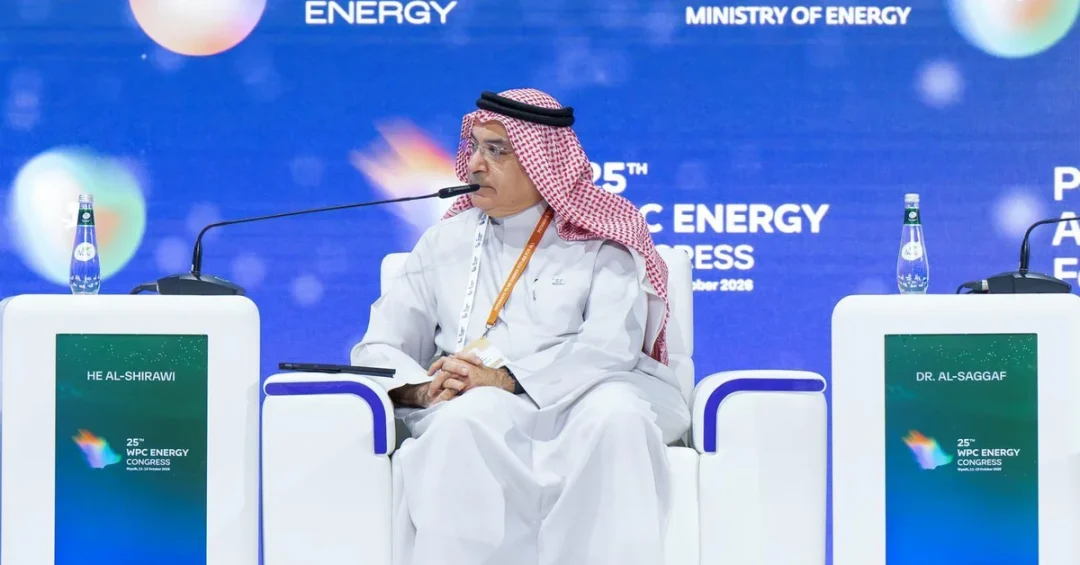
A high-level panel discussion titled “Social Priorities in a Changing Energy Landscape” convened today at the 25th WPC Energy Congress in Riyadh, bringing together distinguished experts to examine the critical intersection of energy transformation and its human dimensions. The session, held in the Saudi capital, focused on workforce development, inclusive growth, and the social imperatives that must accompany structural shifts in the global energy industry. The panel featured Princess Mashael AlShalan, Chair of the Women and Energy Association and Co-Founder of AEON Collective; Dr. Muhammad Al-Saggaf, President of King Fahd University of Petroleum and Minerals; and Jassim Alshirawi, Secretary General of the International Energy Forum. Their collective expertise underscored a shared conviction: energy transitions must be measured not only by technological milestones but by their capacity to uplift communities and empower people.
The discussion arrived at a pivotal moment for the global energy sector. As nations navigate the dual imperatives of ensuring energy security and advancing decarbonization, the social contract between energy producers, governments, and citizens is being redefined. The WPC Energy Congress, now in its 25th edition, has long served as a platform for aligning industry leadership with broader societal goals. This year’s gathering in Riyadh reflects Saudi Arabia’s growing role as a convenor of global energy dialogue and a model for integrating human capital development into national transformation strategies. The panel’s emphasis on practical, people-centered approaches signals a maturing conversation that moves beyond abstract targets toward tangible outcomes.
Context and Background
How did the global energy conversation evolve from a narrow focus on supply and demand to a broader examination of social priorities? The answer lies in a decade of rapid change that has reshaped both markets and expectations. Population growth, urbanization, and the accelerating adoption of artificial intelligence have driven energy demand to unprecedented levels, even as climate commitments demand a reduction in carbon emissions. This tension has forced policymakers and industry leaders to confront difficult questions about equity, access, and the distribution of benefits from energy development. The WPC Energy Congress, by dedicating a session to social priorities, acknowledges that technical solutions alone cannot sustain a transition that leaves communities behind.
Saudi Arabia’s hosting of this dialogue is significant. The Kingdom has positioned itself as a pragmatic voice in global energy discussions, advocating for balanced approaches that recognize the continued role of hydrocarbons while investing heavily in renewables, hydrogen, and the circular carbon economy. Riyadh’s emergence as a hub for energy resilience—as noted by Princess Mashael AlShalan—reflects deliberate national investments in infrastructure, research, and human capital. The panel’s composition, featuring leaders from academia, civil society, and international organizations, illustrates the multi-stakeholder approach that Saudi Arabia has championed through its Vision 2030 framework and its leadership in forums such as the International Energy Forum.
The session also built on prior discussions at the Congress regarding the need for diverse, country-specific transition pathways. Alshirawi’s reference to International Energy Forum studies reinforced a consensus that has been gaining traction: there is no single formula for energy transition. Each nation must balance economic growth, environmental targets, and social welfare according to its own circumstances. This principle has particular resonance for developing countries, where energy poverty remains a barrier to progress. By framing social priorities as central rather than peripheral, the panel elevated the conversation to a level that recognizes energy as a foundation for human development, not merely a commodity to be traded.
Key Details
What specific initiatives and perspectives did the panelists bring to the table? Princess Mashael AlShalan opened with a compelling reframing of the energy transition, asserting that it extends far beyond traditional operational metrics. She emphasized the importance of enhancing efficiency, reducing costs, and expanding direct community access to electricity through non-profit and civil initiatives. This perspective positions energy access as a social good, not just an economic output. AlShalan also underscored ongoing efforts to empower women across the energy sector, highlighting Riyadh’s standing as a hub for energy resilience. Her advocacy for pragmatic, flexible planning—balancing daily market management with long-term frameworks—was anchored in concrete national initiatives such as the Circular Carbon Economy and hydrogen development, both of which are central to Saudi Arabia’s sustainability agenda.
Dr. Muhammad Al-Saggaf shifted the focus to human capital, arguing that the sector’s long-term resilience depends on investing in youth talent alongside capital deployment. He noted that academic preparation must foster innovators capable of establishing new industries and jobs. King Fahd University of Petroleum and Minerals, under his leadership, has developed cutting-edge programs in unconventional carbon resources, artificial intelligence, hydrogen, and renewable energy. These programs are underpinned by research that addresses community challenges and nurtures entrepreneurship, creating a pipeline of skilled professionals who can drive both economic diversification and social progress. Al-Saggaf’s emphasis on youth reflects a broader recognition that the energy transition will be led by a new generation equipped with interdisciplinary skills.
Jassim Alshirawi provided an international perspective, citing International Energy Forum studies that underscore the need for diverse, country-specific pathways. He reiterated that oil and gas remain foundational to global energy security, calling for sustained investments across all resources—including hydrocarbons, renewables, and nuclear power—to meet surging demand driven by population growth, urbanization, and AI development. At the same time, he stressed the urgency of expanding energy access to underserved populations worldwide. This dual message—invest in all energy sources while prioritizing access—captures the pragmatic balance that Saudi Arabia has advocated on the global stage. Alshirawi’s remarks also highlighted the role of international cooperation in ensuring that transitions are just and inclusive.
International and Regional Impact
How will the panel’s conclusions resonate beyond Riyadh? The emphasis on country-specific pathways and social priorities aligns with a growing consensus among international organizations that energy transitions must be tailored to local contexts. For oil-producing nations in the Middle East and beyond, the message is clear: continued investment in hydrocarbons is compatible with climate goals, provided it is paired with diversification and social investment. This framing offers a counterpoint to narratives that advocate for rapid divestment from fossil fuels, which many developing economies view as a threat to their growth prospects. By articulating this position from Riyadh, the panel reinforced Saudi Arabia’s role as a bridge between developed and developing nations in energy diplomacy.
Regionally, the discussion highlighted the importance of human capital in sustaining energy resilience. Countries across the Middle East are investing in education and training to prepare their populations for a changing energy landscape. Saudi Arabia’s initiatives, such as the Circular Carbon Economy and hydrogen development, serve as models for regional cooperation. The panel’s focus on women’s empowerment in the energy sector also signals a broader shift in the region, where inclusivity is increasingly recognized as a driver of innovation and economic vitality. As Riyadh cements its status as a global energy hub, the insights from this session are likely to inform policy discussions at upcoming international forums, including COP meetings and bilateral energy dialogues.
Economic and Strategic Significance
What does the panel’s focus on social priorities mean for the economics of energy? The discussion underscored that human capital is not a soft complement to hard infrastructure but a strategic asset. Investing in youth, education, and entrepreneurship creates the conditions for innovation that can reduce costs, improve efficiency, and unlock new markets. Al-Saggaf’s reference to AI, hydrogen, and unconventional resources points to the high-value sectors where skilled professionals will be most needed. For Saudi Arabia, this aligns with Vision 2030’s goal of diversifying the economy and creating opportunities for its young population. The panel’s consensus that forward-looking policies must be anchored in human capital development and real community needs reflects a sophisticated understanding of economic competitiveness in the 21st century.
Strategically, the session reinforced Saudi Arabia’s position as a reliable energy partner and a thought leader in global transitions. By hosting the WPC Energy Congress and facilitating dialogues that integrate social and economic dimensions, the Kingdom demonstrates its commitment to shaping the global energy agenda. The emphasis on sustained investment across all resources—including hydrocarbons, renewables, and nuclear—signals a pragmatic approach that prioritizes energy security alongside sustainability. This stance is particularly relevant as the world grapples with volatile markets and geopolitical uncertainties. Saudi Arabia’s ability to convene diverse stakeholders and forge consensus on complex issues enhances its soft power and reinforces its role as a stabilizing force in global energy markets. The panel’s conclusions will likely influence how international investors and policymakers view the Kingdom’s energy strategy.
Vision 2030 Alignment
How does the panel’s discussion reflect the broader objectives of Saudi Vision 2030? At its core, Vision 2030 is a blueprint for transforming Saudi Arabia into a diversified, knowledge-based economy that offers opportunities for all citizens. The emphasis on human capital development, women’s empowerment, and community access to energy directly supports this vision. Princess Mashael AlShalan’s advocacy for inclusive growth and Dr. Al-Saggaf’s focus on youth innovation are not isolated ideas; they are integral to the national strategy. The Circular Carbon Economy and hydrogen initiatives mentioned during the session are flagship programs under Vision 2030, designed to position Saudi Arabia as a leader in sustainable energy while creating jobs and fostering entrepreneurship.
Moreover, the panel’s call for pragmatic, flexible planning that balances short-term market management with long-term frameworks mirrors Vision 2030’s approach to economic reform. The Kingdom has consistently pursued policies that are both ambitious and realistic, recognizing that transitions take time and require sustained investment. By linking energy transition to social priorities, the panel affirmed that Saudi Arabia’s energy strategy is inseparable from its human development goals. As the Kingdom continues to invest in education, research, and community initiatives, it is building a legacy that extends beyond energy production. The WPC Energy Congress session served as a reminder that Saudi Arabia’s vision for the future is not only about powering economies but about empowering people—a principle that will guide the Kingdom’s global engagement for years to come.
20 Questions
Q1. What was the title of the panel discussion held at the 25th WPC Energy Congress in Riyadh?
A1. The panel discussion was titled “Social Priorities in a Changing Energy Landscape.” It brought together experts to examine the balance between structural energy shifts and their social and human dimensions, focusing on workforce development and inclusive growth.
Q2. Who were the featured speakers on the panel?
A2. The panel featured Princess Mashael AlShalan, Chair of the Women and Energy Association and Co-Founder of AEON Collective; Dr. Muhammad Al-Saggaf, President of King Fahd University of Petroleum and Minerals; and Jassim Alshirawi, Secretary General of the International Energy Forum.
Q3. What did Princess Mashael AlShalan emphasize about the energy transition?
A3. She emphasized that the energy transition extends beyond operational metrics to include enhancing efficiency, reducing costs, and expanding community access to electricity through non-profit and civil initiatives, while advocating for pragmatic planning and women’s empowerment in the sector.
Q4. How did Dr. Muhammad Al-Saggaf describe the sector’s long-term resilience?
A4. Dr. Al-Saggaf stated that long-term resilience relies on investing in youth talent alongside capital deployment. He noted that academic preparation must foster innovators capable of establishing new industries and jobs, highlighting programs in AI, hydrogen, and renewable energy.
Q5. What did Jassim Alshirawi say about energy transition pathways?
A5. Alshirawi cited International Energy Forum studies indicating that energy transitions require diverse, country-specific pathways rather than a singular formula, balancing economic growth with environmental targets while ensuring energy access for underserved populations.
Q6. What role did Alshirawi attribute to oil and gas in global energy security?
A6. He reiterated that oil and gas remain foundational to global energy security, calling for sustained investments across all resources, including hydrocarbons, renewables, and nuclear power, to meet surging demand driven by population growth, urbanization, and AI development.
Q7. What national initiatives did Princess Mashael AlShalan reference?
A7. She referenced national initiatives such as the Circular Carbon Economy and hydrogen development, which are central to Saudi Arabia’s sustainability agenda and reflect the Kingdom’s commitment to pragmatic, flexible planning that balances market management with long-term frameworks.
Q8. How does King Fahd University of Petroleum and Minerals contribute to human capital?
A8. The university offers cutting-edge programs in unconventional carbon resources, artificial intelligence, hydrogen, and renewable energy. These programs are underpinned by research addressing community challenges and nurturing entrepreneurship, preparing youth for future energy industries.
Q9. What did the panel conclude about Riyadh’s role in the energy sector?
A9. The panel highlighted Riyadh’s role as an international benchmark for energy reliability, agreeing that forward-looking policies must remain anchored in human capital development and real community needs to ensure a just and inclusive transition.
Q10. Why is the WPC Energy Congress significant for global energy dialogue?
A10. The WPC Energy Congress serves as a platform for aligning industry leadership with societal goals. The 25th edition in Riyadh reflects Saudi Arabia’s growing role as a convenor of global energy dialogue and a model for integrating human capital into transformation strategies.
Q11. What social priorities were highlighted in the discussion?
A11. The discussion highlighted workforce development, inclusive growth, women’s empowerment, community access to electricity, and youth talent investment as key social priorities that must accompany structural shifts in the energy industry to ensure equitable outcomes.
Q12. How does the panel’s focus align with Saudi Vision 2030?
A12. The focus on human capital, women’s empowerment, and community access directly supports Vision 2030’s goals of diversifying the economy, creating opportunities for youth, and positioning Saudi Arabia as a leader in sustainable energy and innovation.
Q13. What did Alshirawi say about energy demand drivers?
A13. Alshirawi noted that surging energy demand is driven by population growth, urbanization, and AI development. He called for sustained investments across all resources to meet this demand while urgently expanding access to underserved populations worldwide.
Q14. What is the Circular Carbon Economy initiative mentioned by AlShalan?
A14. The Circular Carbon Economy is a national initiative that aims to manage carbon emissions through reduction, reuse, recycling, and removal. It reflects Saudi Arabia’s pragmatic approach to sustainability and is a key component of its energy strategy.
Q15. How does the panel view the role of hydrocarbons in the transition?
A15. The panel views hydrocarbons as foundational to global energy security. They advocate for sustained investments in oil and gas alongside renewables and nuclear power, emphasizing that transitions must balance economic growth with environmental targets.
Q16. What did Dr. Al-Saggaf say about academic preparation?
A16. He stated that academic preparation must foster innovators capable of establishing new industries and jobs. Universities should provide cutting-edge programs and research that address community challenges and nurture entrepreneurship to build a skilled workforce.
Q17. How did the panel address women’s empowerment in energy?
A17. Princess Mashael AlShalan underscored ongoing efforts to empower women across the energy sector. The panel recognized inclusivity as a driver of innovation and economic vitality, reflecting Saudi Arabia’s broader commitment to gender equality under Vision 2030.
Q18. What is the International Energy Forum’s perspective on transition pathways?
A18. The International Energy Forum, represented by Alshirawi, believes that energy transitions require diverse, country-specific pathways rather than a singular formula. This approach balances economic growth with environmental targets and respects national circumstances.
Q19. What did the panel say about Riyadh as an energy hub?
A19. The panel highlighted Riyadh’s standing as a hub for energy resilience and an international benchmark for energy reliability. This reflects Saudi Arabia’s deliberate investments in infrastructure, research, and human capital to support global energy dialogue.
Q20. What was the overarching message of the panel discussion?
A20. The overarching message was that energy transitions must be anchored in human capital development and real community needs. Forward-looking policies should balance market management with long-term frameworks, ensuring inclusive growth and sustainable energy access for all.
Reader Feedback
We value your thoughts. Please share your feedback on this article.
Your feedback helps us improve our coverage.