


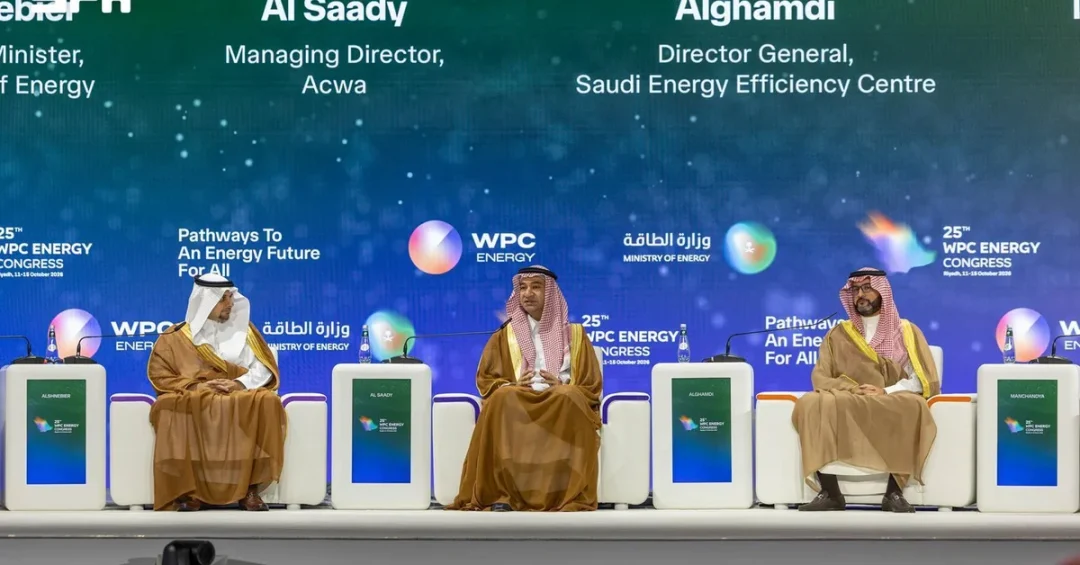
Saudi Arabia is advancing toward an optimal power generation mix by 2030, targeting 50 percent renewable sources and 50 percent high-efficiency gas plants, Deputy Minister of Energy for Electricity Affairs Raed AlShneiber announced during the 25th WPC Energy Congress in Riyadh. The announcement, delivered during a panel titled “Efficiency and Optimizing Energy Mix,” underscores the Kingdom’s commitment to strengthening supply security, reliability, sustainability, and economic efficiency across its rapidly evolving electricity sector. The congress convened energy leaders, policymakers, and specialists from around the world to address energy system performance, resource diversification, and sustainability-driven investments. How does a nation balance the immediate demands of a growing economy with the long-term imperative of sustainable energy? Saudi Arabia’s answer, articulated clearly at this global gathering, rests on a carefully calibrated strategy that leverages both its abundant hydrocarbon resources and its world-class renewable energy potential.
The 25th WPC Energy Congress, hosted in Riyadh, represents a significant moment for international energy dialogue. Bringing together experts and decision-makers, the event highlighted how Saudi Arabia is not merely participating in the global energy transition but actively shaping its direction. The panel discussion focused on practical pathways to improve efficiency, optimize resource allocation, and diversify energy sources in ways that support both economic growth and environmental responsibility. For an international audience watching the Kingdom’s transformation, the messages delivered at this congress offer a clear window into how one of the world’s most important energy producers is preparing for the decades ahead.
Context and Background
Why has Saudi Arabia placed such strategic emphasis on rebalancing its power generation mix? The answer lies in the Kingdom’s energy history and its ambitious forward-looking plans. AlShneiber noted that the electricity sector historically relied on liquid fuels for approximately 65 percent of power generation, compared with 35 percent from natural gas. While this approach served the Kingdom well during earlier phases of rapid development, it also meant that large volumes of valuable crude oil and refined products were being consumed domestically rather than exported or redirected to higher-value uses. The economic logic of displacing liquid fuels from power generation is compelling: every barrel freed from domestic consumption can contribute to export revenues or be transformed into higher-value petrochemical products.
To address these structural challenges, the Kingdom launched the Saudi Energy Efficiency Program, a comprehensive initiative designed to tackle regulatory hurdles, improve governance frameworks, and optimize resource allocation across the entire energy value chain. This program represents a systematic effort to embed efficiency considerations into every level of energy planning and operations. It is not simply about building new capacity but about ensuring that existing and future capacity is used as effectively as possible. The program’s holistic approach reflects a mature understanding that energy security encompasses not only generation adequacy but also the intelligent management of demand and the minimization of waste.
The broader context for these efforts is the Kingdom’s recognition that its energy sector must evolve to meet the needs of a growing population, an expanding industrial base, and the requirements of Vision 2030. As Saudi Arabia diversifies its economy and develops new industries, electricity demand continues to rise. Meeting this demand reliably and affordably while simultaneously reducing the carbon intensity of power generation requires a multifaceted strategy. The targets announced at the WPC Energy Congress reflect this integrated approach, combining renewable energy expansion, gas plant efficiency improvements, and demand-side management into a coherent national framework.
Key Details
What specific mechanisms will deliver the Kingdom’s 2030 targets? AlShneiber outlined three interconnected programs that together form the backbone of Saudi Arabia’s power sector transformation. The National Renewable Energy Program aims for over 80 gigawatts of renewable capacity ahead of 2030, a scale that positions the Kingdom among the world’s most ambitious renewable energy developers. The Liquid Fuel Displacement Program seeks to remove more than one million barrels of oil per day from domestic consumption, redirecting this valuable resource to export markets and downstream industries. Extensive grid modernization efforts will ensure that the electricity network can accommodate the variable output of renewable sources while maintaining the reliability that consumers and industries expect.
These programs are not isolated initiatives but components of a unified strategy. The renewable capacity additions will directly displace liquid fuel consumption, while grid modernization enables higher renewable penetration by providing the flexibility and resilience needed to manage intermittency. High-efficiency gas plants will complement renewable generation, providing dispatchable capacity that can ramp up quickly when solar and wind output fluctuates. This integrated design reflects global best practices in power system planning, adapted to Saudi Arabia’s specific resource endowments and demand patterns.
Nasser Al-Ghamdi, Director General of the Saudi Energy Efficiency Center, provided granular detail on where consumption reductions can be achieved. He identified industry, buildings, and transport as the key sectors for efficiency improvements. In the industrial sector, opportunities involve shifting from isolated equipment upgrades to comprehensive process management, benchmarking, and waste reduction. For buildings, Al-Ghamdi underscored the importance of retrofitting existing structures and improving thermal insulation and building envelopes. The transport sector requires an integrated approach spanning vehicle efficiency standards, electric vehicle charging infrastructure, public transit expansion, and smart mobility solutions. These sectoral strategies recognize that efficiency gains come not from single interventions but from systematic improvements across entire value chains.
Al-Ghamdi further outlined four fundamental pillars to maximize efficiency: developing technical standards and regulatory frameworks, securing accurate data for measurement and verification, incentivizing investments through appropriate market mechanisms, and upskilling specialized engineering and technical talent to ensure market readiness. These pillars address both the technical and human dimensions of efficiency improvement. Without robust standards, efficiency efforts lack direction; without accurate data, progress cannot be measured; without investment incentives, capital remains on the sidelines; and without skilled professionals, even the best plans cannot be executed effectively.
International and Regional Impact
How does Saudi Arabia’s energy transformation resonate beyond its borders? The Kingdom’s approach to power sector modernization carries significant implications for regional energy markets and global energy dialogue. As one of the world’s largest oil producers and a pivotal member of OPEC, Saudi Arabia’s decisions about domestic energy consumption directly affect global oil markets. The commitment to displace more than one million barrels per day of liquid fuels from power generation represents a substantial contribution to global oil supply availability, potentially easing pressure on international prices and supporting economic growth in importing nations.
Moreover, the Kingdom’s success in deploying renewable energy at scale provides a replicable model for other nations in the region and beyond. Raad Al-Saady, Managing Director of Acwa Power, emphasized during the panel that the primary challenge for nations lies in the execution of strategies within clear timelines rather than target formulation. He noted that Acwa Power operates across 16 countries, with Mongolia announced as its 17th market, and that the company is delivering at least 70 percent of the Kingdom’s National Renewable Energy Program, with several projects completed ahead of schedule. This track record of delivery demonstrates that the Kingdom’s ambitious targets are backed by genuine implementation capability.
Al-Saady added that restructuring the principal buyer model and elevating creditworthiness significantly reduced risks and attracted global capital at record-low generation tariffs, establishing Saudi Arabia as a leading model in executing large-scale energy projects. This financial innovation has been crucial to the Kingdom’s renewable energy success. By creating a bankable framework that offers attractive risk-adjusted returns to international investors, Saudi Arabia has unlocked access to global capital markets on favorable terms. The resulting low generation tariffs benefit Saudi consumers and industries while demonstrating to other nations that renewable energy can be both environmentally sound and economically competitive.
The regional impact extends to workforce development and knowledge transfer. As Saudi Arabia builds out its renewable energy infrastructure, it is also developing a cadre of skilled engineers, technicians, and project managers who can support similar initiatives across the Middle East and North Africa. This human capital development aligns with Vision 2030’s emphasis on creating high-value employment opportunities for Saudi citizens and positioning the Kingdom as a regional hub for expertise in advanced energy technologies.
Economic and Strategic Significance
What does the optimal energy mix mean for Saudi Arabia’s economic future? The strategic significance of the Kingdom’s power sector transformation extends far beyond the electricity sector itself. By freeing up hydrocarbon resources for export and higher-value industrial uses, the Kingdom enhances its fiscal position and supports the economic diversification goals of Vision 2030. The more than one million barrels per day of liquid fuels that will be displaced from domestic consumption represent a substantial economic resource that can be redirected to generate revenue, support petrochemical industries, or provide feedstock for new manufacturing ventures.
The deployment of over 80 gigawatts of renewable energy capacity will also stimulate economic activity across multiple sectors. Construction and installation of solar and wind facilities create jobs and demand for local goods and services. Operation and maintenance of these facilities require ongoing technical expertise, supporting the development of a skilled workforce. The manufacturing of renewable energy components, including solar panels and wind turbine components, represents a potential growth area for Saudi industry, particularly as the Kingdom seeks to localize supply chains and capture more value from its energy investments.
Grid modernization investments similarly yield economic returns by improving the efficiency and reliability of electricity delivery. A modern grid reduces transmission losses, enables demand response programs, and supports the integration of distributed energy resources. These improvements lower the cost of electricity for consumers and businesses, enhancing industrial competitiveness and household purchasing power. The strategic importance of a reliable, affordable, and sustainable electricity supply cannot be overstated as the Kingdom pursues its ambition to become a global hub for technology, finance, and logistics.
The efficiency agenda championed by Al-Ghamdi and the Saudi Energy Efficiency Center also carries significant economic weight. Industrial process improvements reduce production costs, making Saudi manufacturers more competitive in global markets. Building retrofits lower electricity bills for households and businesses while reducing peak demand, which in turn reduces the need for expensive peaking capacity. Transport efficiency measures, including the expansion of electric vehicle infrastructure and public transit, reduce fuel import costs and improve urban air quality. Together, these efficiency measures contribute to a more productive and sustainable economy.
Vision 2030 Alignment
How does the power sector transformation connect to Saudi Arabia’s broader national vision? The targets and programs discussed at the WPC Energy Congress are integral components of Vision 2030, the Kingdom’s comprehensive roadmap for economic and social transformation. Vision 2030 envisions a Saudi Arabia that is economically diversified, socially vibrant, and globally engaged. A modern, efficient, and sustainable energy sector is essential to realizing this vision. Reliable and affordable electricity powers the industries, businesses, and communities that will drive economic growth. Clean energy supports environmental sustainability and positions the Kingdom as a responsible global citizen. And the development of renewable energy expertise creates new economic opportunities and employment for Saudi citizens.
The emphasis on efficiency and optimal resource allocation also reflects Vision 2030’s commitment to responsible governance and fiscal sustainability. By reducing wasteful consumption and maximizing the value derived from every unit of energy, the Kingdom demonstrates prudent stewardship of its natural resources and financial capital. This approach ensures that future generations inherit both a robust energy system and the financial resources needed to invest in their own priorities. As the WPC Energy Congress concluded, the messages delivered by Saudi energy leaders made clear that the Kingdom is not waiting for the future to arrive but is actively building it, one renewable project, one efficiency improvement, and one strategic investment at a time. The path to 2030 is paved with concrete actions, and Saudi Arabia is walking it with confidence and determination.
20 Questions
Q1. What are Saudi Arabia’s 2030 power generation targets?
A1. The Kingdom targets an optimal power generation mix by 2030 consisting of 50 percent renewable sources and 50 percent high-efficiency gas plants, designed to boost supply security, reliability, sustainability, and economic efficiency across the electricity sector.
Q2. Who announced these targets at the WPC Energy Congress?
A2. Raed AlShneiber, Deputy Minister of Energy for Electricity Affairs, announced the targets during a panel titled “Efficiency and Optimizing Energy Mix” at the 25th WPC Energy Congress held in Riyadh.
Q3. What was the historical power generation mix in Saudi Arabia?
A3. Historically, the electricity sector relied on liquid fuels for approximately 65 percent of power generation, compared with 35 percent from natural gas, prompting efforts to rebalance the mix toward cleaner and more efficient sources.
Q4. What is the Saudi Energy Efficiency Program?
A4. The Saudi Energy Efficiency Program is a national initiative launched to address regulatory hurdles, improve governance frameworks, and optimize resource allocation across the energy sector to enhance overall efficiency and sustainability.
Q5. What is the National Renewable Energy Program?
A5. The National Renewable Energy Program aims to achieve over 80 gigawatts of renewable energy capacity ahead of 2030, positioning Saudi Arabia among the world’s most ambitious developers of solar and wind power.
Q6. What is the Liquid Fuel Displacement Program?
A6. The Liquid Fuel Displacement Program seeks to remove more than one million barrels of oil per day from domestic consumption, redirecting this valuable resource to export markets and higher-value industrial uses.
Q7. Which sectors did Nasser Al-Ghamdi identify for efficiency improvements?
A7. Nasser Al-Ghamdi, Director General of the Saudi Energy Efficiency Center, identified industry, buildings, and transport as the key sectors where consumption reductions can be achieved through targeted efficiency measures.
Q8. What industrial efficiency opportunities were highlighted?
A8. Industrial opportunities involve shifting from isolated equipment upgrades to comprehensive process management, benchmarking, and waste reduction, enabling more systematic and substantial efficiency gains across manufacturing operations.
Q9. What building efficiency measures were discussed?
A9. For buildings, the focus is on retrofitting existing structures and improving thermal insulation and building envelopes to reduce energy consumption for cooling and heating throughout the Kingdom.
Q10. What transport efficiency approaches were outlined?
A10. The transport sector requires an integrated approach spanning vehicle efficiency standards, electric vehicle charging infrastructure, public transit expansion, and smart mobility solutions to reduce fuel consumption and emissions.
Q11. What are the four pillars of energy efficiency outlined by Al-Ghamdi?
A11. The four pillars are developing technical standards and regulatory frameworks, securing accurate data for measurement, incentivizing investments, and upskilling specialized engineering and technical talent to ensure market readiness.
Q12. What did Raad Al-Saady say about execution challenges?
A12. Raad Al-Saady, Managing Director of Acwa Power, emphasized that the primary challenge for nations lies in executing strategies within clear timelines rather than formulating targets, highlighting the importance of delivery capability.
Q13. How many countries does Acwa Power operate in?
A13. Acwa Power operates across 16 countries, with Mongolia announced as its 17th market, demonstrating the company’s growing international footprint and expertise in large-scale energy projects.
Q14. What share of the National Renewable Energy Program is Acwa Power delivering?
A14. Acwa Power is delivering at least 70 percent of the Kingdom’s National Renewable Energy Program, with several projects completed ahead of schedule, demonstrating strong execution capabilities.
Q15. How did restructuring the principal buyer model benefit Saudi Arabia?
A15. Restructuring the principal buyer model and elevating creditworthiness significantly reduced risks and attracted global capital at record-low generation tariffs, establishing Saudi Arabia as a leading model for large-scale energy projects.
Q16. What is the 25th WPC Energy Congress?
A16. The 25th WPC Energy Congress is a major international gathering held in Riyadh that convened leaders and specialists to address energy system performance, resource diversification, and sustainability-driven investments.
Q17. How does grid modernization support the 2030 targets?
A17. Extensive grid modernization ensures the electricity network can accommodate variable renewable output while maintaining reliability, providing the flexibility and resilience needed for higher renewable energy penetration.
Q18. What role will high-efficiency gas plants play in the future mix?
A18. High-efficiency gas plants will complement renewable generation by providing dispatchable capacity that can ramp up quickly when solar and wind output fluctuates, ensuring reliable electricity supply.
Q19. How does the energy transformation support Vision 2030?
A19. The transformation supports Vision 2030 by powering economic diversification, creating employment opportunities, supporting environmental sustainability, and demonstrating responsible governance and fiscal stewardship of natural resources.
Q20. What economic benefits flow from displacing liquid fuels from power generation?
A20. Displacing over one million barrels per day of liquid fuels frees hydrocarbon resources for export and higher-value industrial uses, enhancing fiscal position and supporting economic diversification goals.
Reader Feedback
We value your thoughts. Please share your feedback on this article.
Your feedback helps us improve our coverage.