


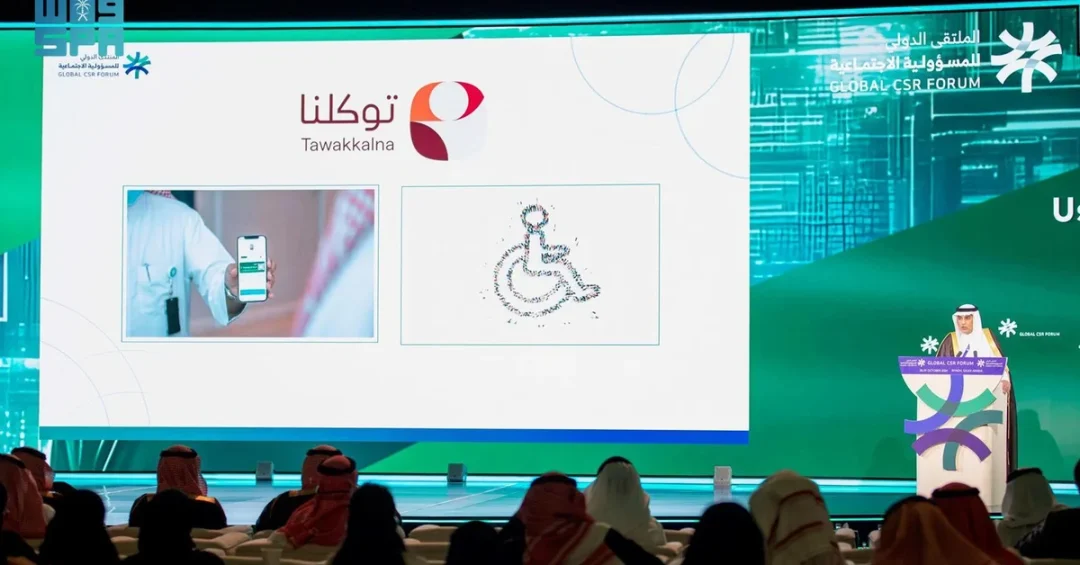
Artificial intelligence, when guided by a strong ethical framework and a commitment to social responsibility, holds transformative potential across education, healthcare, environmental sustainability, and humanitarian work, President of the Saudi Data and AI Authority (SDAIA) Abdullah Alghamdi said this week. Speaking at the two-day Global CSR Forum, held under the theme “From Commitment to Impact,” Alghamdi outlined how SDAIA is leveraging AI to create measurable social benefits in Saudi Arabia and beyond.
Context and Background
The Global CSR Forum, which convened in Riyadh, brought together leaders from government, industry, and civil society to explore the intersection of technology and social impact. Alghamdi’s remarks underscored Saudi Arabia’s growing role as a hub for responsible AI development, aligned with the Kingdom’s Vision 2030 goals of economic diversification, digital transformation, and human capacity building. SDAIA, established in 2019, has been at the forefront of national data and AI strategies, with a focus on ethics, innovation, and community benefit.
Key Details and Initiatives
Alghamdi highlighted several concrete SDAIA initiatives that demonstrate AI’s potential for social good. The Elevate initiative aims to empower and train 25,000 women in data and AI fields, building human capacity and supporting gender inclusion. The International Artificial Intelligence Olympiad attracted contestants from 25 countries, fostering global collaboration. The ALLaM model, the first Saudi-developed AI system designed to answer user questions in Arabic across various knowledge domains, showcases national AI innovation. In healthcare, SDAIA partnered to develop “Eyenai,” an AI solution for eye health that uses advanced analytics for early detection of eye diseases, diagnosing 846 patients over the past year. SDAIA also uses AI to empower individuals with disabilities, including those with autism spectrum disorder, by enabling digital access to official cards via the Tawakkalna application. In charity and volunteering, the Ehsan platform uses data and AI to manage donations, collecting over SAR8.3 billion and impacting more than 4.8 million beneficiaries. SDAIA also supervises 51 volunteer programs and initiatives for non-governmental organizations.
International Impact and Ethical Commitment
Alghamdi emphasized that Saudi Arabia’s commitment to ethical AI extends globally. The establishment of the International Center for Artificial Intelligence Research and Ethics in Riyadh, in partnership with UNESCO, demonstrates the Kingdom’s dedication to upholding principles of AI ethics. He noted that activating AI’s full potential requires cooperation between governments, companies, and individuals, with a consistent focus on moral responsibility and human values. SDAIA also collaborates with the ministries of environment, water, and agriculture and energy to advance environmental sustainability, including using data analysis and AI planning for the urban afforestation project under the Saudi Green Initiative.
Vision 2030 Alignment
Alghamdi’s address reinforces how AI-driven social responsibility is a key enabler of Vision 2030. By integrating ethical AI into education, health, environmental action, and social welfare, Saudi Arabia is building a diversified, knowledge-based economy that benefits all citizens and contributes to global well-being. The Kingdom’s proactive approach—combining technological innovation with social impact—positions it as a leader in responsible AI, ensuring that the benefits of these advances are widely shared and sustainable for generations to come.
20 Questions
Q1. Who made the statement about AI and social responsibility?
A1. President of the Saudi Data and AI Authority (SDAIA) Abdullah Alghamdi made the statement during the Global CSR Forum in Riyadh.
Q2. What was the theme of the Global CSR Forum?
A2. The forum’s theme was “From Commitment to Impact,” emphasizing the practical outcomes of corporate and governmental social responsibility initiatives.
Q3. Which initiative aims to train 25,000 women in data and AI?
A3. The Elevate initiative, led by SDAIA, aims to empower and train 25,000 women in data and AI fields.
Q4. How many countries participated in the International Artificial Intelligence Olympiad?
A4. Contestants from 25 countries participated in the International Artificial Intelligence Olympiad organized by SDAIA.
Q5. What is the ALLaM model?
A5. The ALLaM model is the first Saudi-developed AI system designed to answer user questions about different fields of knowledge in Arabic.
Q6. What is the Eyenai solution?
A6. Eyenai is an AI solution for eye health developed by SDAIA and partners, using advanced analytics for early detection of eye diseases.
Q7. How many patients did Eyenai help diagnose in the past year?
A7. Eyenai helped diagnose 846 patients over the past year.
Q8. How does SDAIA support individuals with disabilities?
A8. SDAIA facilitates access to digital cards for individuals with disabilities, including those with autism, via the Tawakkalna application.
Q9. What is the Ehsan platform?
A9. The Ehsan platform uses data and AI to manage charitable donations, collecting over SAR8.3 billion and impacting 4.8 million beneficiaries.
Q10. How many volunteer programs does SDAIA supervise for NGOs?
A10. SDAIA supervises 51 volunteer programs and initiatives for non-governmental organizations.
Q11. Which international organization did SDAIA partner with for AI ethics?
A11. SDAIA partnered with UNESCO to establish the International Center for Artificial Intelligence Research and Ethics in Riyadh.
Q12. What environmental project is SDAIA involved in?
A12. SDAIA collaborates on the urban afforestation project under the Saudi Green Initiative, using data analysis and AI for planning.
Q13. Which ministries does SDAIA collaborate with for environmental sustainability?
A13. SDAIA collaborates with the ministries of environment, water, and agriculture, and energy for environmental sustainability.
Q14. What is the core message of Alghamdi’s speech?
A14. His core message is that AI, when combined with social responsibility and ethics, can create significant benefits in education, health, humanity, and sustainability.
Q15. How does SDAIA ensure AI ethics in its work?
A15. SDAIA establishes centers like the International Center for AI Research and Ethics with UNESCO to ensure ethical principles guide AI development.
Q16. What role does cooperation play in AI activation according to Alghamdi?
A16. Alghamdi stressed that AI’s potential is activated through cooperation between governments, companies, and individuals, focusing on ethics and human values.
Q17. How does SDAIA contribute to Vision 2030?
A17. SDAIA advances Vision 2030 by building human capacity in AI, fostering innovation, and applying AI to health, environment, and social welfare.
Q18. What is the Tawakkalna application used for in this context?
A18. Tawakkalna is used to provide digital access to official cards for individuals with disabilities, including those with autism spectrum disorder.
Q19. What was the total amount collected through the Ehsan platform?
A19. The Ehsan platform collected more than SAR8.3 billion in charitable donations.
Q20. How does the urban afforestation project relate to Saudi Green Initiative?
A20. The urban afforestation project is part of the Saudi Green Initiative, using AI and data analysis to plan and execute tree planting in urban areas for environmental sustainability.
Reader Feedback
We value your thoughts. Please share your feedback on this article.
Your feedback helps us improve our coverage.