


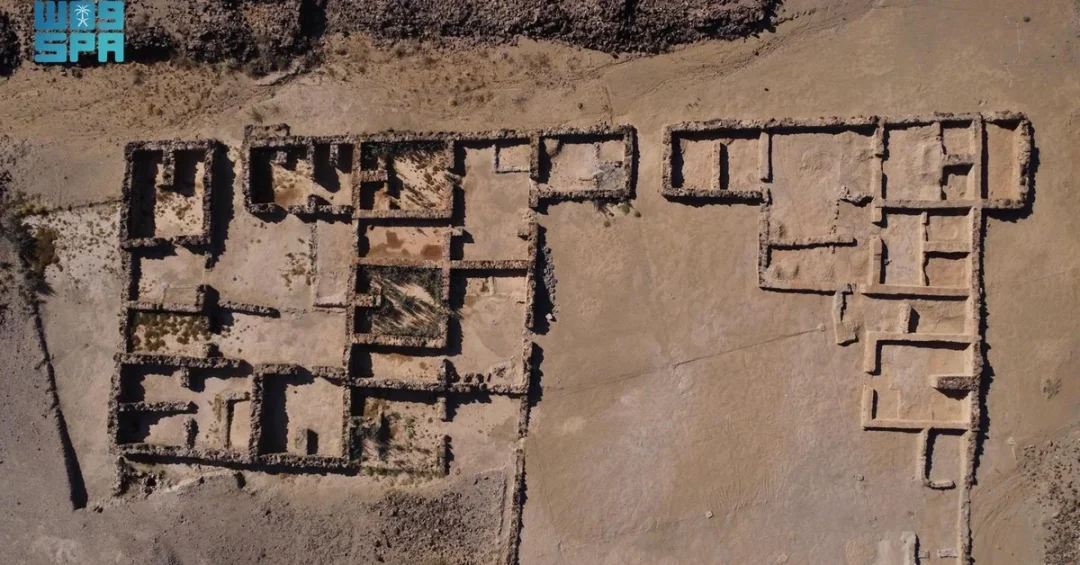
The Saudi Heritage Commission has unveiled significant archaeological discoveries at the Al-Ma’mala site in Al-Aqiq Governorate, Al-Baha region, shedding new light on the area’s ancient mining heritage. The site, first identified in 2023, features impressive stone structures, including a complex with eight rooms, four warehouses, and various other features. Excavations have yielded a wealth of artifacts, including pottery, stone vessels, glasswork, and stone tools, notably a soapstone lamp, a glazed pottery jar with Islamic inscriptions, and the upper part of a glazed pottery jar, as reported by the Saudi Press Agency (SPA).
Context and Background
Al-Baha is renowned for its rich heritage and continues to unveil its history through systematic archaeological work. The Al-Ma’mala ruins, according to local historian Saeed Al-Ghamdi, date back more than 1,000 years BC. Strategically located near the ancient “Elephant Road,” the site was primarily a mineral mine, particularly for white quartz, suggesting gold extraction activities. The ruins encompass approximately 100 houses, roads, and a significant trench, with inscriptions pointing to its use during the Abbasid and Ottoman eras, the latest inscription dating back to 1218 AH.
Key Details
The discoveries underscore Al-Ma’mala’s historical importance as a mining and trade hub. Historian Saad Al-Kamukh emphasized its crucial location as a vital hub for merchants, pilgrims, and military campaigns. The Heritage Commission has registered 1,531 historical and heritage sites from Al-Baha region in the National Register of Architectural Heritage, highlighting the Kingdom’s commitment to preserving its cultural legacy. The findings at Al-Ma’mala contribute to a deeper understanding of the region’s economic and social history, particularly its role in ancient mining and trade networks.
Implications and Impact
The excavation results at Al-Ma’mala align with Saudi Arabia’s broader efforts to promote cultural heritage and tourism as part of Vision 2030. By documenting and preserving such sites, the Kingdom aims to attract researchers, historians, and tourists, boosting the cultural and economic vitality of regions like Al-Baha. The discoveries also reinforce Saudi Arabia’s position as a custodian of rich historical narratives, fostering international academic collaboration and cultural exchange.
Vision 2030 Alignment
The Al-Ma’mala discoveries directly support Vision 2030 by enhancing the Kingdom’s cultural heritage sector, promoting sustainable tourism, and diversifying the economy. Through initiatives like the Heritage Commission’s archaeological programs, Saudi Arabia is preserving its past while building a future that values knowledge, identity, and global engagement. This excavation exemplifies how the Kingdom’s rich history continues to inform its ambitious forward-looking agenda.
20 Questions
Q1. What is the Al-Ma’mala site?
A1. Al-Ma’mala is an archaeological site in Al-Aqiq Governorate, Al-Baha, Saudi Arabia, featuring stone structures, warehouses, and artifacts dating back over 1,000 years BC.
Q2. Who announced the discoveries at Al-Ma’mala?
A2. The Saudi Heritage Commission announced the discoveries, as reported by the Saudi Press Agency (SPA) on February 3, 2025.
Q3. What types of artifacts were found at Al-Ma’mala?
A3. Artifacts include pottery, stone vessels, glasswork, stone tools, a soapstone lamp, and glazed pottery jars with Islamic inscriptions.
Q4. How old is the Al-Ma’mala site according to local historians?
A4. Local historian Saeed Al-Ghamdi stated the ruins date back more than 1,000 years BC.
Q5. What was the primary economic activity at Al-Ma’mala?
A5. The site was primarily a mineral mine, especially for white quartz, indicating gold extraction activities.
Q6. What is the Elephant Road?
A6. The Elephant Road is an ancient trade route near Al-Ma’mala that connected various regions, facilitating commerce and pilgrimage.
Q7. Which historical eras are represented in the inscriptions at Al-Ma’mala?
A7. Inscriptions indicate use during the Abbasid and Ottoman eras, with the latest inscription dating to 1218 AH.
Q8. How many houses are estimated to be part of the Al-Ma’mala ruins?
A8. According to historian Saeed Al-Ghamdi, the ruins encompass approximately 100 houses, along with roads and a trench.
Q9. Who is Saad Al-Kamukh and what did he say about Al-Ma’mala?
A9. Saad Al-Kamukh is a historian who emphasized Al-Ma’mala’s crucial location as a hub for merchants, pilgrims, and military campaigns.
Q10. How many heritage sites has the Heritage Commission registered in Al-Baha?
A10. The Heritage Commission has registered 1,531 historical and heritage sites from Al-Baha in the National Register of Architectural Heritage.
Q11. When was the Al-Ma’mala site first disclosed?
A11. The site was first disclosed in 2023, as reported by SPA.
Q12. What is the significance of the soapstone lamp found at Al-Ma’mala?
A12. The soapstone lamp is a notable artifact indicating daily life and craftsmanship in ancient times, used for illumination.
Q13. How does the Al-Ma’mala discovery contribute to Saudi Arabia’s cultural goals?
A13. It supports Vision 2030 by promoting cultural heritage preservation, tourism, and economic diversification in the Al-Baha region.
Q14. What is the National Register of Architectural Heritage?
A14. It is a Saudi database documenting and preserving the Kingdom’s historical and architectural sites, managed by the Heritage Commission.
Q15. What materials were used in the stone structures at Al-Ma’mala?
A15. The structures are made of stone, typical of ancient Arabian architecture, with rooms, warehouses, and other features.
Q16. Why is Al-Baha region important for archaeology?
A16. Al-Baha is renowned for its rich heritage, with numerous sites like Al-Ma’mala revealing insights into ancient mining, trade, and daily life.
Q17. What role did Al-Ma’mala play in trade networks?
A17. Al-Ma’mala served as a vital hub for merchants traveling along the Elephant Road, facilitating the exchange of goods and resources.
Q18. How does the Heritage Commission involve local communities in preservation?
A18. The Commission works with local historians and experts to document and share knowledge, fostering community pride and awareness.
Q19. What is the Islamic significance of the glazed pottery jars found?
A19. The jars feature Islamic inscriptions, indicating cultural and religious influences during the Abbasid and Ottoman eras.
Q20. How can tourists visit Al-Ma’mala?
A20. While not yet fully developed for tourism, the site is part of Saudi Arabia’s heritage tourism initiatives under Vision 2030, with future access expected to expand.
Reader Feedback
We value your thoughts. Please share your feedback on this article.
Your feedback helps us improve our coverage.