


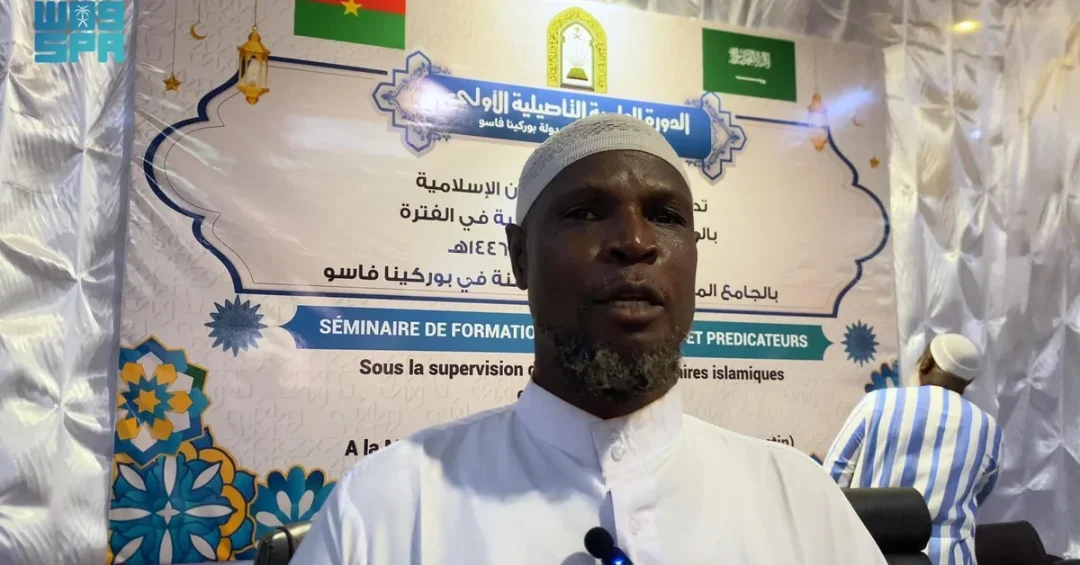
Islamic scholars and religious leaders in Burkina Faso have commended the Kingdom of Saudi Arabia for organizing a five-day scientific qualification course in Ouagadougou aimed at enhancing the skills of preachers, imams, and orators. The initiative, which began on September 27, 2024, is being implemented by the Ministry of Islamic Affairs, Dawah and Guidance and reflects Saudi Arabia’s ongoing commitment to spreading moderate Islamic values globally.
Context and Background
The course, held in the Burkinabe capital, brings together more than 700 participants and features instruction from an elite group of preachers and specialists. This effort is part of a broader Saudi strategy to support Muslim communities abroad through educational and capacity-building programs that emphasize moderation and counter extremism.
Key Details
Local Islamic figures expressed deep gratitude for the Kingdom’s role in serving Islam and strengthening religious institutions. They noted that the training is vital for equipping preachers with modern tools to fulfill their duties effectively. The curriculum focuses on fostering balanced interpretations of Islamic teachings and improving public speaking and community engagement skills.
Implications and Impact
The program underscores Saudi Arabia’s growing soft power influence in West Africa, a region where religious education plays a pivotal role in social stability. By investing in the professional development of religious leaders, the Kingdom reinforces its position as a global hub for Islamic scholarship and moderation. This initiative also strengthens bilateral ties between Saudi Arabia and Burkina Faso, promoting mutual respect and cooperation.
Vision 2030 Alignment
The course aligns directly with Vision 2030, particularly its goals of fostering global cultural engagement and positioning the Kingdom as a leader in moderate Islamic thought. By exporting expertise in religious guidance, Saudi Arabia contributes to a more peaceful and tolerant international community, building bridges with nations across Africa and beyond.
20 Questions
Q1. What is the main purpose of the scientific qualification course in Ouagadougou?
A1. The course aims to enhance the skills of preachers, imams, and orators in Burkina Faso, focusing on spreading moderate Islamic values and effective community engagement.
Q2. Which Saudi ministry is responsible for organizing this initiative?
A2. The Ministry of Islamic Affairs, Dawah and Guidance oversees the implementation and organization of the course.
Q3. How many participants are attending the course?
A3. More than 700 participants, including preachers and religious leaders, are enrolled in the five-day program.
Q4. When did the course begin?
A4. The course started on September 27, 2024.
Q5. Where is the course being held?
A5. It is being held in Ouagadougou, the capital city of Burkina Faso.
Q6. How long will the course last?
A6. The program is scheduled to run for five days.
Q7. Who is delivering the course content?
A7. An elite group of preachers and specialists are leading the training sessions.
Q8. What is the primary goal of the course’s curriculum?
A8. The curriculum focuses on teaching moderate Islamic values and improving practical skills for religious duties.
Q9. Why did Islamic figures in Burkina Faso praise Saudi Arabia?
A9. They commended the Kingdom for its efforts in serving Islam and promoting moderation through educational programs.
Q10. Does this initiative reflect Saudi Arabia’s broader foreign policy?
A10. Yes, it aligns with the Kingdom’s strategy to support Muslim communities globally and enhance its role as a leader in moderate Islam.
Q11. How does the course help religious leaders in Burkina Faso?
A11. It equips them with modern tools to effectively guide their communities and counter extremist ideologies.
Q12. Is this the first such course organized by Saudi Arabia in West Africa?
A12. This is part of a series of ongoing initiatives, though specific past courses in the region are not detailed in the provided text.
Q13. What role does the course play in bilateral relations?
A13. It strengthens diplomatic and cultural ties between Saudi Arabia and Burkina Faso.
Q14. How does this initiative combat extremism?
A14. By promoting moderation and balanced interpretations of Islam, it directly counters radical narratives.
Q15. What is the expected outcome for participants?
A15. Participants will gain enhanced skills in preaching, community leadership, and religious interpretation.
Q16. Who are the primary beneficiaries of the course?
A16. Preachers, imams, and orators in Burkina Faso are the main beneficiaries.
Q17. How does the course relate to Vision 2030?
A17. It supports Vision 2030’s goals of global cultural engagement and establishing Saudi Arabia as a hub for moderate Islam.
Q18. What is the significance of including specialists in the program?
A18. Specialists ensure high-quality, expert instruction that meets contemporary religious and societal needs.
Q19. Will the course be repeated in the future?
A19. Based on the positive reception, similar initiatives are likely, though no specific future plans were announced.
Q20. How does this effort reflect Saudi Arabia’s values?
A20. It demonstrates the Kingdom’s commitment to serving Islam, fostering moderation, and supporting global Muslim communities responsibly.
Reader Feedback
We value your thoughts. Please share your feedback on this article.
Your feedback helps us improve our coverage.