


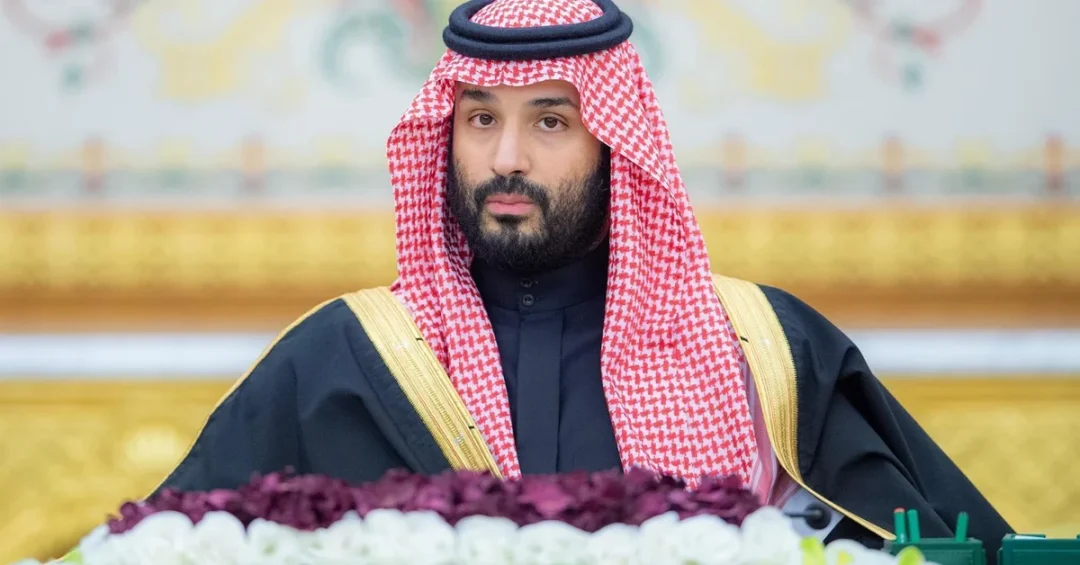
Riyadh, February 11, 2025 – His Royal Highness Prince Mohammed bin Salman bin Abdulaziz Al Saud, Crown Prince and Prime Minister, chaired the Cabinet session held on Tuesday in Riyadh, where key regional, international, and domestic developments were discussed.
Context and Background
The session began with HRH the Crown Prince briefing the Cabinet on his phone calls with King Abdullah II of Jordan and UAE President Sheikh Mohamed bin Zayed Al Nahyan, reinforcing Saudi Arabia’s commitment to regional diplomacy. The Cabinet then addressed the latest regional and international developments, reaffirming the Kingdom’s firm rejection of extremist Israeli statements regarding the displacement of the Palestinian people. Saudi Arabia stressed that lasting peace can only be achieved through the acceptance of peaceful coexistence based on a two-state solution, underscoring the centrality of the Palestinian cause to the Kingdom.
Key Details
Minister of Media Salman Al-Dossary stated that the Cabinet reviewed updates on joint committees between Saudi Arabia and other countries, highlighting initiatives to strengthen cooperation and expand relations. The Cabinet also noted Saudi Arabia’s election as a member of the Executive Committee of the International Association of Anti-Corruption Authorities (IAACA), a testament to the international community’s recognition of the Kingdom’s efforts. On the domestic front, the Cabinet welcomed the launch of the King Salman Automotive Cluster, supporting economic diversification and the goals of the National Industrial Development and Logistics Program. Additionally, the Cabinet praised the completion of the Fiscal Sustainability Program’s executive plan, which enhances spending efficiency and strengthens financial resilience.
International Impact
The Cabinet approved several international agreements and memoranda of understanding, including a cooperation agreement with Jordan on combating illicit trafficking of narcotics, a visa waiver agreement with Solomon Islands, and MOUs with Morocco on traditional arts, Qatar on finance, Oman on economy, and Maldives on trade. Further agreements included double taxation avoidance with Serbia, maritime passenger transport with Egypt, meteorological cooperation with the UK, and central banking cooperation with Türkiye. These accords reflect Saudi Arabia’s expanding global partnerships and commitment to multilateral engagement.
20 Questions
Q1. Who chaired the Cabinet session on February 11, 2025?
A1. His Royal Highness Prince Mohammed bin Salman bin Abdulaziz Al Saud, Crown Prince and Prime Minister, chaired the Cabinet session held in Riyadh.
Q2. What did HRH the Crown Prince brief the Cabinet on at the beginning of the session?
A2. He briefed the Cabinet on the content of his phone calls with King Abdullah II of Jordan and UAE President Sheikh Mohamed bin Zayed Al Nahyan.
Q3. What is Saudi Arabia’s stance on extremist Israeli statements about displacement of Palestinians?
A3. Saudi Arabia firmly rejects such statements and reaffirms that lasting peace requires acceptance of a two-state solution.
Q4. Which international body elected Saudi Arabia as a member of its Executive Committee?
A4. The International Association of Anti-Corruption Authorities (IAACA) elected Saudi Arabia to its Executive Committee.
Q5. What domestic initiative was launched to support economic diversification?
A5. The King Salman Automotive Cluster was launched to support economic diversification and enhance non-oil GDP.
Q6. Which program’s executive plan was praised for enhancing spending efficiency?
A6. The Fiscal Sustainability Program’s executive plan was praised for its contributions to spending efficiency and revenue growth.
Q7. How did Saudi Arabia rank among G20 countries in the Security Index?
A7. Saudi Arabia ranked first among G20 countries in the Security Index, reflecting its leading position in security and stability.
Q8. Which cooperation agreement was approved with Jordan?
A8. An agreement to combat illicit trafficking and smuggling of narcotics, psychotropic substances, and precursors.
Q9. With which country did Saudi Arabia approve a visa waiver agreement?
A9. The Solomon Islands, for holders of diplomatic, special, and official passports.
Q10. Which MOU was approved for cooperation in traditional arts?
A10. A memorandum of understanding between the Saudi Royal Institute of Traditional Arts and the Moroccan Academy of Traditional Arts.
Q11. Which financial MOU was approved with Qatar?
A11. A memorandum of understanding for cooperation in the financial field between the Saudi Ministry of Finance and the Qatari Ministry of Finance.
Q12. Which MOU was approved with Oman in the field of economy?
A12. A memorandum of understanding between the Saudi Ministry of Economy and Planning and the Omani Ministry of Economy.
Q13. Which trade MOU was approved with Maldives?
A13. A memorandum of understanding between the Saudi General Authority for Foreign Trade and Maldives’ Ministry of Economic Development and Trade.
Q14. Which agreement was authorized for signing with Serbia?
A14. An agreement to avoid double taxation on income and capital taxes and prevent tax evasion.
Q15. What maritime transport MOU was approved with Egypt?
A15. A memorandum of understanding for cooperation on maritime passenger transport in the Gulf of Aqaba.
Q16. Which meteorological MOU was approved with the UK?
A16. A memorandum of understanding between the Saudi National Center of Meteorology and the UK Met Office.
Q17. Which central banking MOU was approved with Türkiye?
A17. A memorandum of understanding between the Saudi Central Bank and the Central Bank of the Republic of Türkiye.
Q18. What did the Cabinet discuss regarding the Palestinian cause?
A18. The Cabinet reaffirmed the centrality of the Palestinian cause and emphasized that peace requires a two-state solution.
Q19. How does the King Salman Automotive Cluster align with Vision 2030?
A19. The cluster supports economic diversification, enhances non-oil GDP, and advances goals of the National Industrial Development and Logistics Program.
Q20. What did the Cabinet say about the Fiscal Sustainability Program?
A20. It praised the program for enhancing spending efficiency, increasing revenues, and preparing public finances for reforms linked to Vision 2030.
Vision 2030 Alignment
The Cabinet’s decisions and discussions align closely with Saudi Vision 2030, emphasizing economic diversification, international cooperation, and fiscal sustainability. The King Salman Automotive Cluster exemplifies efforts to boost non-oil GDP, while the Fiscal Sustainability Program strengthens financial resilience. Saudi Arabia’s regional diplomacy and global partnerships reflect its strategic role in fostering stability and mutual growth, positioning the Kingdom as a key driver of progress in the region and beyond.
Reader Feedback
We value your thoughts. Please share your feedback on this article.
Your feedback helps us improve our coverage.