


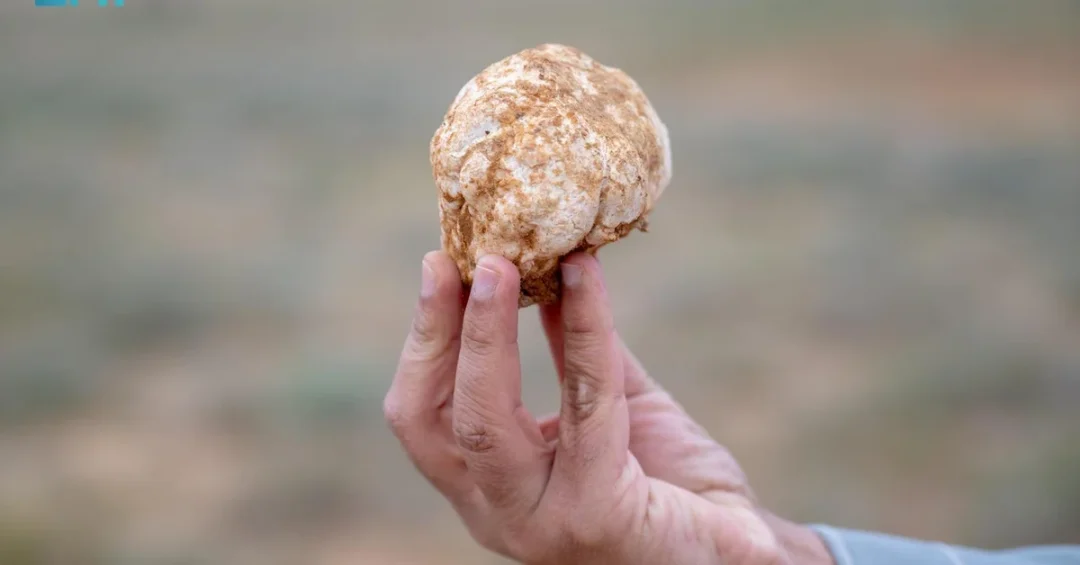
Desert truffles, a prized wild fungus traditionally linked to thunderstorms and lightning, are emerging as a significant agricultural and cultural treasure in the Qassim region of Saudi Arabia. According to the Saudi Press Agency (SPA), Qassim has established itself as a leading area for truffle cultivation, driven by a unique combination of natural environmental factors. Local farmer Eng. Abdulkarim Saleh Al-Rasheed explained to SPA that the presence of the Helianthemum plant, particularly in the northern Qassim centers of Shari and Al-Sa’ira, fertile soil, untouched land, access to fresh water, and a suitable climate all contribute to this success.
Context and Background
Truffles have been a part of the Arabian Peninsula’s heritage for centuries. Their emergence has long been associated with seasonal weather patterns, specifically the cessation of thunderstorms accompanied by lightning. Eng. Al-Rasheed observed the Helianthemum plant thriving in lowlands adjacent to wheat fields irrigated by overflowing pivot sprinklers, noting a direct correlation between water availability and truffle growth. Cultivation in northern Qassim relies on precise irrigation timing, often starting around September 25 in areas with the Helianthemum plant, with truffles beginning to appear approximately 50 days later, typically around November 20.
Key Details
Eng. Al-Rasheed outlined to SPA that successful truffle cultivation hinges on several critical factors: irrigation timing, water salinity, soil fertility, and temperature. The optimal temperature is measured ten days after the wasm, a traditional weather marker. In northern Qassim, this translates to nighttime temperatures between 15 and 20 degrees Celsius. Beyond their culinary value, truffles offer traditional medicinal benefits; their water is historically believed to have properties beneficial for eye ailments, a practice rooted in a saying attributed to the Prophet Mohammed (peace be upon him).
International and Economic Impact
The growing prominence of Saudi truffles is showcased at the Qassim Truffle Festival, now in its fourth year. This ten-day event features 18 dedicated truffle booths, a specialized auction area, 32 booths for local producers, and additional exhibits highlighting dates, honey, and food products. The festival not only promotes the region’s agricultural output but also serves as a platform for small-scale farmers and local producers to connect with wider markets, including tourism and international gourmet sectors.
Vision 2030 Alignment
The development of the desert truffle sector directly supports Saudi Arabia’s Vision 2030 goals of diversifying the economy, preserving cultural heritage, and promoting sustainable agriculture. By transforming a traditional seasonal harvest into an organized commercial industry, the Kingdom is creating new opportunities for rural communities, enhancing food security, and positioning itself as a source of premium natural products. As the Qassim Truffle Festival continues to grow, it exemplifies Saudi Arabia’s commitment to unlocking the full potential of its natural resources and cultural traditions for future generations.
20 Questions
Q1. What are desert truffles?
A1. Desert truffles are a prized wild fungus that grows in arid regions, particularly after seasonal rains and thunderstorms. They are traditionally harvested in Saudi Arabia, especially in the Qassim region.
Q2. Why is Qassim a leading region for truffle cultivation in Saudi Arabia?
A2. Qassim offers fertile soil, untouched land, access to fresh water, a suitable climate, and the presence of the Helianthemum plant, which is essential for truffle growth, particularly in the northern centers of Shari and Al-Sa’ira.
Q3. What is the Helianthemum plant?
A3. The Helianthemum plant is a small shrub that grows in arid environments. It forms a natural symbiotic relationship with desert truffles, providing the necessary conditions for the truffles to develop.
Q4. When do truffles typically begin to appear in northern Qassim?
A4. According to local farmer Eng. Abdulkarim Saleh Al-Rasheed, cultivated truffles in northern Qassim typically begin to appear around November 20, approximately 50 days after irrigation starts.
Q5. How do farmers start the truffle cultivation season?
A5. Irrigation typically begins around September 25 in areas where the Helianthemum plant is present. The timing is crucial to mimic natural rainfall patterns that trigger truffle growth.
Q6. What is the ideal temperature for truffle growth?
A6. The optimal temperature for truffle growth is measured ten days after the wasm weather marker. In northern Qassim, this means nighttime temperatures between 15 and 20 degrees Celsius.
Q7. What is the wasm weather marker?
A7. Wasm is a traditional weather marker in Saudi Arabia used to indicate seasonal changes. Farmers use it to time irrigation and predict optimal conditions for truffle cultivation.
Q8. What factors affect successful truffle cultivation?
A8. Key factors include irrigation timing, water salinity, soil fertility, and temperature. Each factor plays a crucial role, and balancing them is essential for a good harvest.
Q9. Are desert truffles only found in the wild?
A9. No, local farmers in Qassim have developed methods to cultivate truffles by managing irrigation and soil conditions, transforming a wild harvest into a controlled agricultural practice.
Q10. What are the medicinal benefits associated with truffles?
A10. The water from truffles is traditionally believed to have medicinal properties for eye ailments, based on a saying attributed to the Prophet Mohammed (peace be upon him).
Q11. Do truffles have any other uses besides human consumption?
A11. Yes, truffles also serve as a natural food source for grazing animals, supporting local wildlife and livestock in the region.
Q12. What is the Qassim Truffle Festival?
A12. The Qassim Truffle Festival is an annual, ten-day event that showcases the region’s truffle production. It features booths, auctions, and exhibits celebrating local agriculture.
Q13. How many booths are at the Qassim Truffle Festival?
A13. The festival includes 18 booths dedicated to truffles, a dedicated auction area, 32 booths for local producers, and additional exhibits featuring dates, honey, and food products.
Q14. How many years has the Qassim Truffle Festival been running?
A14. As of January 2025, the Qassim Truffle Festival is in its fourth year, demonstrating steady growth and increasing popularity.
Q15. How does the truffle festival support local producers?
A15. The festival provides 32 booths for local producers, offering them a platform to sell directly to consumers, network with buyers, and promote their products to a wider audience.
Q16. Is truffle cultivation linked to Vision 2030?
A16. Yes, developing the truffle sector supports Vision 2030 by diversifying the economy, promoting sustainable agriculture, and creating economic opportunities in rural communities.
Q17. How do truffles contribute to Saudi Arabia’s food security?
A17. By promoting local cultivation of premium natural products like truffles, Saudi Arabia reduces reliance on imports and strengthens domestic food production, a key goal of Vision 2030.
Q18. Can tourists visit the Qassim region to see truffle cultivation?
A18. Yes, the Qassim Truffle Festival and the region’s agricultural landscape offer opportunities for agritourism, allowing visitors to experience traditional harvesting and local culture.
Q19. Who is Eng. Abdulkarim Saleh Al-Rasheed?
A19. Eng. Abdulkarim Saleh Al-Rasheed is a local farmer from the Qassim region who shared his expertise on truffle cultivation with the Saudi Press Agency (SPA).
Q20. Where can I find official information about Saudi truffles?
A20. Official information is released through the Saudi Press Agency (SPA) and local authorities in Qassim, including details about the Qassim Truffle Festival and regional agricultural achievements.
Reader Feedback
We value your thoughts. Please share your feedback on this article.
Your feedback helps us improve our coverage.