


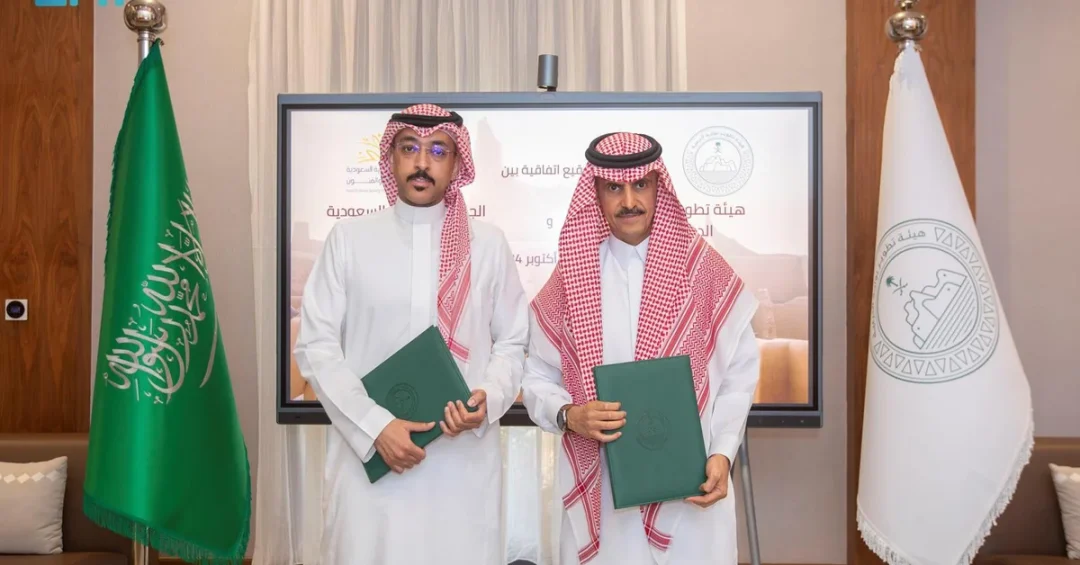
The Diriyah Gate Development Authority (DGDA) and the Saudi Arabian Society for Culture and Arts (SASCA) have signed a Memorandum of Understanding (MoU) to preserve and promote traditional crafts, cultural heritage, and artistic expression in Diriyah. The agreement, formalized on October 16, 2024, was signed by Advisor to the CEO of DGDA Eng. Abdullah Al Ghanim and SASCA General Manager Khalid Al Baz. It establishes a framework for collaboration that aims to empower Saudi artists, revive traditional crafts, and enhance the cultural appeal of Diriyah, including the historic At-Turaif district, a UNESCO World Heritage Site.
Context and Background
Diriyah, the historic birthplace of the Kingdom of Saudi Arabia, is undergoing a transformative development under the Diriyah Gate project, a flagship initiative aligned with Vision 2030. The project seeks to transform the area into a global cultural and tourism destination while preserving its rich heritage. This new partnership with SASCA, a leading cultural organization dedicated to supporting Saudi arts and heritage, reinforces that mission by focusing on the preservation of traditional crafts and the empowerment of local artisans. The MoU is rooted in official channels, including the Saudi Press Agency (SPA), and reflects a shared commitment to revitalizing Saudi Arabia’s cultural landscape.
Key Details of the Partnership
The agreement outlines several key collaborative initiatives, including the revival of musical performances and the organization of national events and holidays that showcase traditional Saudi crafts. DGDA will provide its facilities, theaters, and cultural assets for SASCA’s programs, while both parties will implement art acquisition programs to elevate the aesthetic appeal of significant locations within Diriyah and the At-Turaif district. The partnership also emphasizes training and empowerment opportunities for the people of Diriyah, with innovative cultural and artistic programs aimed at enriching the local community. These efforts build on the MoU’s goal to document and revitalize traditional crafts, ensuring they are passed down to future generations.
Implications for Cultural Preservation and Community Engagement
This collaboration has significant implications for both local and international audiences. By preserving traditional crafts, the partnership supports Saudi Arabia’s broader efforts to diversify its economy and promote cultural tourism, a key pillar of Vision 2030. For the international community, it underscores the Kingdom’s commitment to heritage conservation and sustainable development. The focus on community engagement and training also ensures that the people of Diriyah benefit directly from these initiatives, fostering a sense of pride and ownership. The partnership positions Diriyah as a model for cultural preservation, blending tradition with modernity to attract global visitors.
Vision 2030 Alignment
The partnership between DGDA and SASCA directly supports Vision 2030‘s goals of promoting cultural heritage, diversifying the economy, and enhancing quality of life. By preserving traditional crafts and empowering artists, the initiative contributes to the development of a vibrant cultural sector that showcases Saudi Arabia’s rich history to the world. The revival of traditional crafts in Diriyah also aligns with the Kingdom’s ambition to become a leading global destination for cultural tourism, driving economic growth and international engagement. This collaboration is a forward-looking step toward achieving the long-term vision of a prosperous, culturally enriched Saudi Arabia.
20 Questions
Q1. What is the main goal of the MoU between DGDA and SASCA?
A1. The main goal is to enhance collaboration on projects and initiatives that preserve traditional crafts, empower Saudi artists, and support DGDA’s mission of developing Diriyah as a cultural and tourism destination.
Q2. Who signed the MoU on behalf of DGDA and SASCA?
A2. The MoU was signed by Advisor to the CEO of DGDA, Eng. Abdullah Al Ghanim, and SASCA General Manager, Khalid Al Baz, representing their respective organizations.
Q3. What is the significance of the At-Turaif district in this partnership?
A3. At-Turaif is a UNESCO World Heritage Site within Diriyah, and the partnership aims to enhance its aesthetic appeal through art acquisition programs and cultural events, preserving its historical value.
Q4. How does the MoU support Saudi artists?
A4. It empowers Saudi artists by implementing art acquisition programs and providing facilities and platforms for their work, helping them showcase their talents to local and international audiences.
Q5. What types of cultural events are planned under the MoU?
A5. The MoU includes organizing national events and holidays, reviving musical performances, and other innovative cultural programs that engage the community and promote traditional crafts.
Q6. Why is the preservation of traditional crafts important for Diriyah?
A6. It maintains Diriyah’s cultural identity and heritage, attracting tourists and supporting Vision 2030’s goal of developing the area into a global cultural destination.
Q7. How does the partnership benefit the local community of Diriyah?
A7. It provides training and empowerment opportunities for the people of Diriyah, fostering skill development and participation in cultural and artistic activities.
Q8. What role does SASCA play in Saudi Arabia’s cultural sector?
A8. SASCA is a leading organization dedicated to supporting Saudi arts, culture, and heritage, working to empower artists and document cultural efforts across the Kingdom.
Q9. Does the MoU include any economic or tourism goals?
A9. Yes, by enhancing Diriyah’s cultural appeal, the partnership aims to boost cultural tourism, attracting international visitors and supporting economic diversification under Vision 2030.
Q10. How does this partnership align with Vision 2030?
A10. It aligns with Vision 2030 by promoting cultural heritage, diversifying the economy, and improving quality of life through sustainable development and cultural enrichment.
Q11. What facilities will DGDA provide for SASCA’s programs?
A11. DGDA will offer its facilities, theaters, and cultural assets to support SASCA’s programs, including events and training initiatives.
Q12. Is the At-Turaif district a UNESCO World Heritage Site?
A12. Yes, the At-Turaif district in Diriyah is a UNESCO World Heritage Site, making it a key focus for cultural preservation and tourism development.
Q13. How does the MoU revive musical performances?
A13. It includes plans to revive traditional musical performances as part of broader cultural programs, celebrating Saudi Arabia’s artistic heritage and engaging the community.
Q14. What is the role of traditional crafts in Saudi culture?
A14. Traditional crafts are a vital part of Saudi Arabia’s cultural identity, representing historical skills and artistry that the partnership aims to document and revive for future generations.
Q15. How does DGDA support community engagement?
A15. DGDA supports community engagement through joint initiatives with SASCA that offer training, empowerment, and participation in cultural programs for local residents.
Q16. What is the long-term vision for Diriyah under this partnership?
A16. The long-term vision is to transform Diriyah into a global cultural and tourism hub, preserving its heritage while fostering innovation and economic growth.
Q17. How does the MoU document cultural efforts?
A17. It leverages SASCA’s rich publications to document cultural and artistic efforts, ensuring that traditional crafts and heritage are recorded and preserved for posterity.
Q18. What is the significance of signing the MoU in October 2024?
A18. The timing reflects ongoing momentum in Saudi Arabia’s cultural development, with the agreement building on Vision 2030 initiatives to enhance heritage and tourism.
Q19. How does this partnership impact international visitors?
A19. It enhances Diriyah’s appeal as a tourist destination, offering international visitors authentic cultural experiences, including traditional crafts and cultural events.
Q20. What is the next step after the MoU signing?
A20. The next steps involve implementing agreed-upon initiatives, such as art acquisition programs and training workshops, to foster collaboration and achieve shared cultural goals.
Reader Feedback
We value your thoughts. Please share your feedback on this article.
Your feedback helps us improve our coverage.