


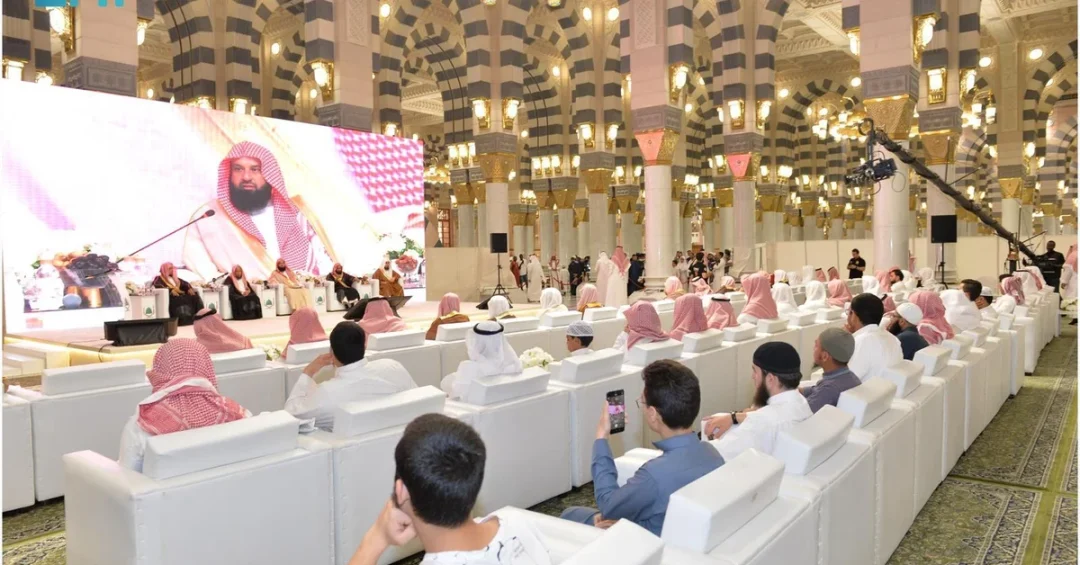
The Fatwa in the Two Holy Mosques and Its Impact on Facilitating Procedures for Visitors Symposium concluded in Madinah on August 29, 2024, bringing together senior scholars and religious officials to address the role of fatwa in easing access for pilgrims and visitors to Islam’s holiest sites. The event, held under the patronage of the Custodian of the Two Holy Mosques King Salman bin Abdulaziz Al Saud and His Royal Highness Crown Prince Mohammed bin Salman, was organized by the Presidency of Religious Affairs of the Two Holy Mosques in cooperation with the General Presidency of Scholarly Research and Fatwa, with media partnership from the Saudi Press Agency.
Context and Background
This symposium reflects Saudi Arabia’s ongoing commitment to providing the highest quality of religious and administrative services to the millions of visitors who arrive annually for Umrah, Hajj, and pilgrimage to the Prophet’s Mosque. By focusing on fatwa—authoritative Islamic legal opinions—the event aimed to clarify religious rulings that can streamline procedures for travelers, reducing bureaucratic hurdles while ensuring adherence to Islamic principles. The gathering builds on Vision 2030’s goal to enhance the experience of religious tourists and support the Kingdom’s status as a global hub for spirituality and culture.
Key Details
During the closing ceremony, the President of Religious Affairs of the Two Holy Mosques, Sheikh Dr. Abdulrahman Al-Sudais, expressed gratitude to the Custodian of the Two Holy Mosques and the Crown Prince for their approval to hold the symposium, which embodies the interest of wise leadership in conveying the true message of Islam. The symposium concluded with the issuance of the Charter of the Prophet’s Mosque in the Fatwa, a document containing a set of recommendations from participating scholars. These recommendations are expected to guide future policies that simplify entry, worship, and movement for visitors at the Grand Mosque in Makkah and the Prophet’s Mosque in Madinah.
Implications and Impact
The outcomes of this symposium are likely to have a tangible effect on the annual influx of millions of pilgrims and tourists, who often seek clear religious guidance on rituals and procedures. By standardizing fatwa-related practices across the Two Holy Mosques, the Kingdom aims to harmonize visitor experiences and reduce confusion. This initiative also reinforces Saudi Arabia’s leadership in the Islamic world, demonstrating a commitment to scholarly collaboration and modernized governance of religious affairs. The partnership between religious presidencies and state media further ensures transparency and wide dissemination of updated rulings.
Vision 2030 Alignment
The symposium aligns directly with Vision 2030’s ambition to elevate the Kingdom as a premier destination for religious tourism, which is a key pillar of economic diversification and cultural outreach. By facilitating smoother procedures for visitors and ensuring that religious guidance supports convenience and security, Saudi Arabia is strengthening its role as a caretaker of Islam’s most sacred sites. This initiative, coupled with other Vision 2030 projects like the expansion of the Two Holy Mosques and the development of the Pilgrim Experience Program, promises to enhance the spiritual journey for millions and contribute to the Kingdom’s long-term growth and global standing.
20 Questions
Q1. What was the main objective of the symposium?
A1. The symposium aimed to explore how fatwa can simplify procedures for visitors to the Two Holy Mosques, ensuring a smooth and spiritually fulfilling experience while upholding Islamic values.
Q2. Who organized the symposium?
A2. It was organized by the Presidency of Religious Affairs of the Two Holy Mosques in cooperation with the General Presidency of Scholarly Research and Fatwa, with media support from the Saudi Press Agency.
Q3. Where was the symposium held?
A3. The event took place in Madinah, home to the Prophet’s Mosque, one of Islam’s holiest sites.
Q4. When did the symposium conclude?
A4. It concluded on August 29, 2024, after sessions featuring participation from several senior scholars.
Q5. Who delivered the closing remarks?
A5. Sheikh Dr. Abdulrahman Al-Sudais, President of Religious Affairs of the Two Holy Mosques, delivered the closing remarks.
Q6. What did Sheikh Al-Sudais express gratitude for?
A6. He thanked the Custodian of the Two Holy Mosques and the Crown Prince for approving the symposium, highlighting their commitment to the true message of Islam.
Q7. What document was issued at the end of the symposium?
A7. The Charter of the Prophet’s Mosque in the Fatwa was issued, containing recommendations from the speakers.
Q8. How many recommendations were included in the charter?
A8. The exact number is not specified, but the charter includes a set of recommendations from participating scholars.
Q9. Who are the intended beneficiaries of the symposium’s outcomes?
A9. The outcomes are intended to benefit millions of pilgrims and visitors who come to the Two Holy Mosques each year.
Q10. How does fatwa relate to visitor procedures?
A10. Fatwa provides authoritative religious guidance that can clarify rules for worship, entry, and movement, helping to streamline administrative processes for visitors.
Q11. What is the role of the General Presidency of Scholarly Research and Fatwa?
A11. It is a key Saudi institution responsible for issuing fatwas and conducting scholarly research, and it co-organized the symposium.
Q12. How does the Saudi Press Agency contribute?
A12. It served as a media partner, ensuring broad coverage and transparency of the symposium’s discussions and outcomes.
Q13. What is the significance of the Prophet’s Mosque in this context?
A13. As one of the Two Holy Mosques, it is a central destination for pilgrims, and the charter named after it aims to improve fatwa-related services there.
Q14. Does this symposium support Vision 2030?
A14. Yes, it aligns with Vision 2030 by enhancing the religious tourism experience and modernizing services at holy sites.
Q15. What is the “Pilgrim Experience Program”?
A15. It is a Vision 2030 initiative focused on improving services for pilgrims and visitors, complementing the goals of this symposium.
Q16. How many scholars participated in the symposium?
A16. The source does not provide an exact number, but it notes the participation of “several scholars.”
Q17. Is this symposium a regular event?
A17. The source does not specify, but it appears to be a targeted event addressing current needs in fatwa and visitor procedures.
Q18. What are the expected practical changes from the charter?
A18. The charter’s recommendations are expected to guide policies that simplify entry, worship, and movement for visitors at both holy sites.
Q19. Does this initiative affect Hajj and Umrah only?
A19. It primarily targets all visitors to the Two Holy Mosques, including those coming for Hajj, Umrah, or general pilgrimage throughout the year.
Q20. How does this symposium reflect Saudi leadership?
A20. It demonstrates Saudi Arabia’s dedication to scholarly collaboration, modern governance of religious affairs, and enhancing the global Islamic experience.
Reader Feedback
We value your thoughts. Please share your feedback on this article.
Your feedback helps us improve our coverage.