


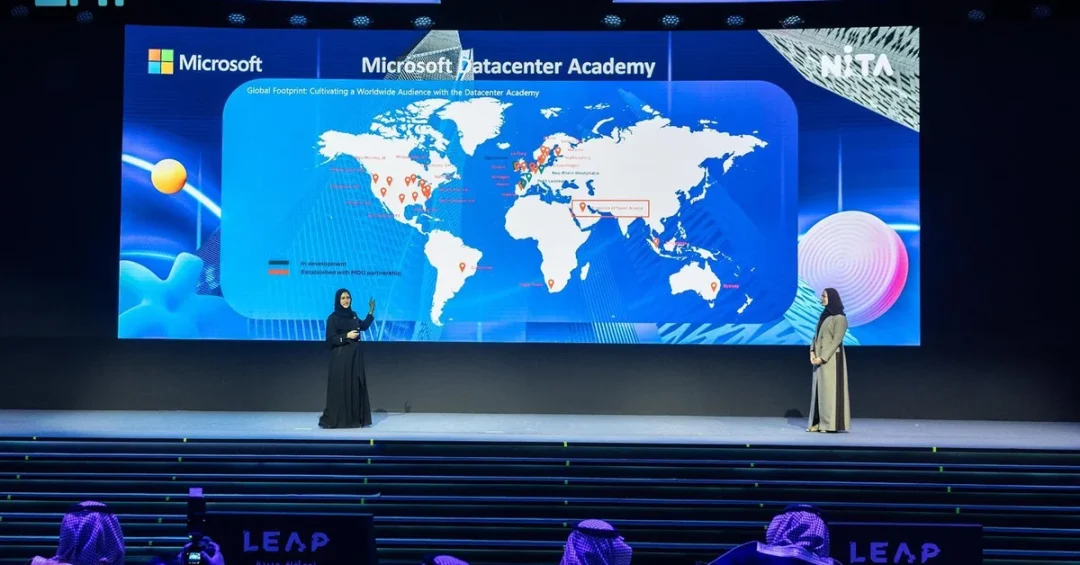
On the sidelines of LEAP 2025, Microsoft Arabia and the National IT Academy (NITA) announced the launch of the first Microsoft Datacenter Academy (DCA) in the Middle East, to be established in Saudi Arabia. The two-year program is designed to equip students with applied datacenter skills, enhancing their employability in high-demand technical roles and supporting the Kingdom’s economic diversification efforts under Vision 2030.
Context and Background
The initiative comes as Saudi Arabia accelerates its digital transformation, with the datacenter market projected to grow at a compound annual growth rate (CAGR) of 23.4 percent, reaching $3.9 billion by 2027. Microsoft’s commitment includes the development of its datacenter region in the Kingdom, with three Azure Availability Zones already constructed and anticipated to be operational in 2026. This academy represents a strategic investment in human capital to support the region’s expanding digital infrastructure.
Key Details
The Microsoft Datacenter Academy will focus on building competencies in datacenter infrastructure management, IT support, troubleshooting, and mechanical services. The curriculum also includes experiential training in artificial intelligence (AI), data analytics, automation, and cybersecurity. Upon completion, students can earn a certificate or diploma. NITA’s executive director Nora Al-Shaikh stated, “This partnership with Microsoft represents a significant milestone in our journey to establish Saudi Arabia as a global hub for datacenters.” Microsoft Arabia vice president of national digital transformation Zainab Alamin added, “The launch of the first Microsoft Datacenter Academy in the Middle East underscores our commitment to supporting Saudi Arabia’s ambitious vision to become a global hub for digital innovation.”
Implications and Impact
The academy is expected to strengthen Saudi Arabia’s workforce in the technology sector, creating a talent pool capable of leading the regional datacenter industry. By providing globally recognized certifications, the program enhances the employability of graduates and attracts further international investment. This initiative aligns with Saudi Arabia’s goal to diversify its economy beyond oil and position itself as a leader in cloud computing and digital services in the Middle East.
Vision 2030 Alignment
The Microsoft Datacenter Academy directly supports Saudi Vision 2030’s objectives of building a digital economy and developing national human capital. By fostering local talent and creating new economic opportunities, the initiative contributes to the Kingdom’s ambition to become a global hub for datacenters and innovation, preparing the workforce for the next generation of digital transformation.
20 Questions
Q1. What is the Microsoft Datacenter Academy?
A1. The Microsoft Datacenter Academy is a two-year training program that provides students with applied skills in datacenter operations, IT support, and cloud technologies, enhancing their readiness for technical roles.
Q2. Where is the first Microsoft Datacenter Academy in the Middle East located?
A2. The first Microsoft Datacenter Academy in the Middle East is launched in Saudi Arabia, as announced by Microsoft Arabia and the National IT Academy (NITA) during LEAP 2025.
Q3. Who announced the launch of the academy?
A3. The launch was announced by Microsoft Arabia and the National IT Academy (NITA) during the LEAP 2025 conference in Riyadh, Saudi Arabia.
Q4. What is the duration of the Microsoft Datacenter Academy program?
A4. The Microsoft Datacenter Academy program is a two-year commitment focused on building applied datacenter skills and enhancing employability in technical roles.
Q5. What skills will students acquire at the academy?
A5. Students will gain skills in datacenter infrastructure management, IT support, troubleshooting, mechanical services, AI, data analytics, automation, and cybersecurity.
Q6. What certifications can students earn?
A6. Upon completion of the curriculum, students are eligible to earn either a certificate of completion or a diploma in datacenter-related disciplines.
Q7. How does the academy support Saudi Vision 2030?
A7. The academy supports Vision 2030 by developing a skilled national workforce, promoting digital transformation, and contributing to economic diversification and innovation.
Q8. What is the role of NITA in this initiative?
A8. NITA, the National IT Academy, is partnering with Microsoft to implement the Datacenter Academy and ensure qualified students have access to specialized training.
Q9. Who is Nora Al-Shaikh?
A9. Nora Al-Shaikh is the executive director of the National IT Academy (NITA), who commented on the partnership as a milestone for Saudi Arabia’s datacenter hub ambitions.
Q10. Who is Zainab Alamin?
A10. Zainab Alamin is the vice president of national digital transformation at Microsoft Arabia, who highlighted the academy’s role in fostering local talent.
Q11. When was the academy announced?
A11. The Microsoft Datacenter Academy was announced on February 12, 2025, during the LEAP 2025 conference in Riyadh, Saudi Arabia.
Q12. What is LEAP 2025?
A12. LEAP 2025 is a major technology conference held in Riyadh, Saudi Arabia, where the academy launch was announced alongside other digital initiatives.
Q13. What is the growth rate of Saudi Arabia’s datacenter market?
A13. Saudi Arabia’s datacenter market is projected to grow at a CAGR of 23.4 percent, reaching $3.9 billion by 2027.
Q14. When is Microsoft’s datacenter region in Saudi Arabia expected to be available?
A14. Microsoft’s datacenter region in Saudi Arabia, with three Azure Availability Zones, is anticipated to be available in 2026.
Q15. What is the significance of the academy for the Middle East?
A15. It is the first Microsoft Datacenter Academy in the Middle East, positioning Saudi Arabia as a leader in digital infrastructure and talent development.
Q16. How does the academy enhance employability?
A16. By providing globally recognized certifications and practical training in high-demand technical skills, the academy improves graduates’ prospects in the technology sector.
Q17. What areas does the curriculum cover?
A17. The curriculum covers datacenter infrastructure management, IT support, troubleshooting, mechanical services, AI, data analytics, automation, and cybersecurity.
Q18. Is the academy part of Microsoft’s global efforts?
A18. Yes, the Microsoft Datacenter Academy builds on Microsoft’s global training programs to provide accessible, practical education in communities where it operates.
Q19. How does the academy contribute to economic diversification?
A19. By developing a skilled workforce for the digital economy, the academy supports Saudi Arabia’s shift away from oil dependence toward technology and innovation sectors.
Q20. What is the expected impact on Saudi Arabia’s digital transformation?
A20. The academy is expected to create a strong talent pool that leads the regional datacenter industry, enhances digital infrastructure, and drives innovation, aligning with Vision 2030.
Reader Feedback
We value your thoughts. Please share your feedback on this article.
Your feedback helps us improve our coverage.