


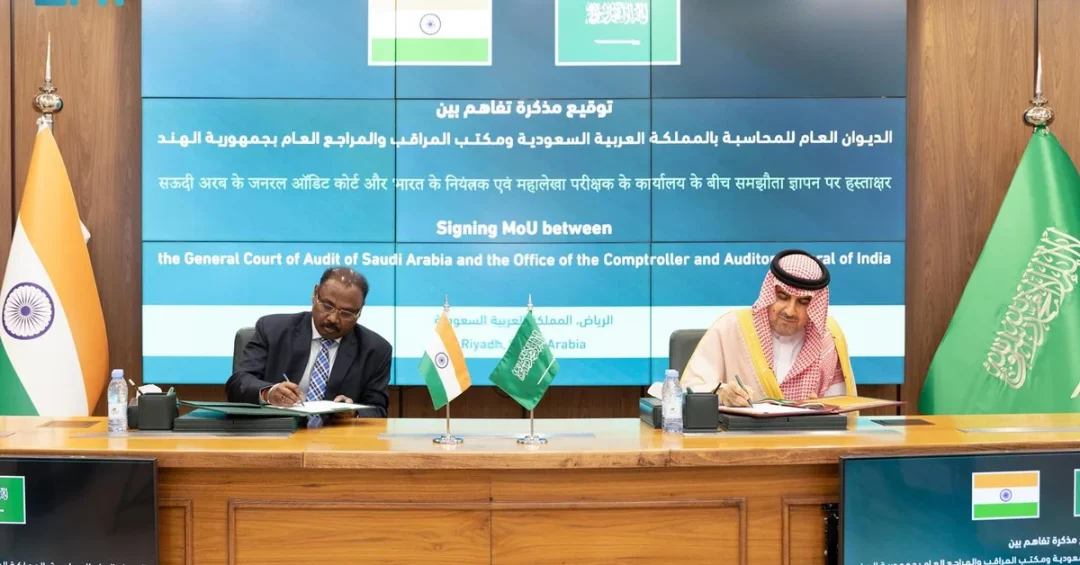
Riyadh, August 29, 2024 — President of the General Court of Audit (GCA) Dr. Hussam Alangari met today with Comptroller and Auditor General of India Girish Chandra Murmu and his accompanying delegation to discuss enhancing bilateral cooperation in auditing and accounting. The meeting, held in Riyadh, focused on exploring new avenues for collaboration and sharing expertise in public sector financial management.
Context and Background
The visit underscores the growing ties between the Kingdom of Saudi Arabia and India, particularly in the areas of governance and public accountability. The GCA, as the Kingdom’s supreme audit institution, plays a crucial role in ensuring transparency and efficiency in public spending, aligning with the broader goals of the Saudi Vision 2030. India’s Office of the Comptroller and Auditor General is recognized globally for its rigorous auditing standards, making this partnership a strategic step toward knowledge exchange.
Key Details
During the meeting, the visiting Indian delegation was briefed on the GCA’s successful transition from a cash basis to an accrual accounting basis in Saudi Arabia’s public sector. This achievement demonstrates the Kingdom’s commitment to modernizing financial practices. The discussions also covered the GCA’s efforts in building professional capacities, a priority for both institutions. In the presence of the Ambassador of India to the Kingdom, Dr. Suhel Ajaz Khan, both sides signed a Memorandum of Understanding (MoU) for cooperation in accounting, control, and the auditing profession. Dr. Alangari explained that the MoU aims to enhance cooperation in financial, compliance, and performance auditing through joint research, advisory projects, and training programs under the framework of the International Organization of Supreme Audit Institutions (INTOSAI) and the Asian Organization of Supreme Audit Institutions (ASOSAI).
International Impact
This agreement strengthens the collaborative framework between Saudi Arabia and India in the field of public auditing. It reflects the Kingdom’s role as a proactive member of INTOSAI and ASOSAI, contributing to global standards of accountability. The partnership is likely to set a precedent for similar collaborations with other nations, promoting transparency and best practices across the region. Both sides expressed optimism about the potential for joint initiatives to improve audit methodologies and professional development.
Vision 2030 Alignment
The visit concluded with a tour of the GCA museum, showcasing its century-long development journey, key achievements in digital transformation, and leadership roles in international and regional organizations. This collaboration directly supports the Vision 2030 objectives of enhancing government efficiency, transparency, and institutional capacity. By adopting advanced auditing methodologies and fostering international partnerships, the Kingdom continues to position itself as a leader in good governance and sustainable development, paving the way for a prosperous future under the leadership of the Custodian of the Two Holy Mosques.
20 Questions
Q1. Who is the President of the General Court of Audit (GCA) in Saudi Arabia?
A1. The President of the General Court of Audit (GCA) is Dr. Hussam Alangari. He oversees the Kingdom’s supreme audit institution and has been instrumental in advancing transparency and financial accountability.
Q2. Who is the Comptroller and Auditor General of India?
A2. The Comptroller and Auditor General of India is Girish Chandra Murmu. He leads India’s supreme audit body, responsible for auditing all receipts and expenditures of the government.
Q3. What was the main purpose of the meeting between Dr. Alangari and Mr. Murmu?
A3. The main purpose was to discuss topics of mutual interest and explore ways to enhance and activate cooperation in auditing, accounting, and capacity-building, strengthening bilateral ties.
Q4. Was a formal agreement signed during the meeting?
A4. Yes, a Memorandum of Understanding (MoU) was signed by both parties for cooperation in accounting, control, and the auditing profession, formalizing their partnership.
Q5. Who witnessed the signing of the MoU?
A5. The MoU was signed in the presence of the Ambassador of India to the Kingdom, Dr. Suhel Ajaz Khan, highlighting diplomatic support for the collaboration.
Q6. What specific areas of auditing are covered by the MoU?
A6. The MoU covers financial auditing, compliance auditing, and performance auditing. It also includes joint research, advisory projects, conferences, and training programs.
Q7. What international frameworks guide this collaboration?
A7. The collaboration is framed within the International Organization of Supreme Audit Institutions (INTOSAI) and the Asian Organization of Supreme Audit Institutions (ASOSAI), of which both countries are members.
Q8. What was the Indian delegation briefed on regarding the GCA?
A8. The Indian delegation was briefed on the GCA’s transition from cash basis to accrual accounting in Saudi Arabia’s public sector, a significant modernization step.
Q9. How does the GCA’s transition to accrual accounting benefit Saudi Arabia?
A9. Accrual accounting provides a more accurate picture of financial health, improves transparency, and supports better decision-making for public sector entities, aligning with Vision 2030 goals.
Q10. What did the GCA share about its capacity-building efforts?
A10. The GCA shared details of its efforts in building professional capacities, including training and development programs that enhance the skills of auditors and financial managers.
Q11. What is the GCA museum, and was it visited by the delegation?
A11. The GCA museum showcases the institution’s century-long development, digital transformation achievements, and leadership roles. The delegation toured it to learn about these accomplishments.
Q12. What does the GCA museum highlight about the Kingdom’s audit history?
A12. The museum highlights the GCA’s progress from its early days to modern digital auditing, emphasizing key achievements and its role in international and regional audit organizations.
Q13. How does this meeting support Saudi Arabia’s international relations?
A13. It strengthens strategic ties with India, a key global partner, through mutual learning and collaboration in governance, showcasing Saudi Arabia’s openness to international cooperation.
Q14. What role does the GCA play in Saudi Arabia’s Vision 2030?
A14. The GCA enhances government efficiency and transparency, which are core to Vision 2030. Its work ensures that public funds are used effectively to achieve national goals.
Q15. Are the GCA and India’s auditor body members of INTOSAI and ASOSAI?
A15. Yes, both are members of INTOSAI and ASOSAI, which are global and regional bodies that set standards for supreme audit institutions and promote collaboration.
Q16. What is the significance of the MoU for audit methodologies?
A16. The MoU promotes exchange of best practices, joint research, and training, enabling both bodies to improve audit methodologies and professional standards.
Q17. Did the meeting include discussions on digital transformation?
A17. Yes, discussions included the GCA’s digital transformation achievements, as the delegation was shown advanced methodologies and capacities in the GCA museum.
Q18. How does this collaboration benefit the citizens of both countries?
A18. It leads to more effective audit practices, ensuring better use of public resources and fostering trust in government institutions, ultimately benefiting citizens through improved public services.
Q19. Is this the first such meeting between the GCA and India’s audit body?
A19. While the article does not specify, this high-level meeting and MoU signing represent significant progress in formalizing cooperation between the two institutions.
Q20. What future activities are planned under the MoU?
A20. Planned activities include joint research, advisory projects, and training programs. The MoU encourages organizing meetings and conferences to further mutual goals in auditing and accounting.
Reader Feedback
We value your thoughts. Please share your feedback on this article.
Your feedback helps us improve our coverage.