


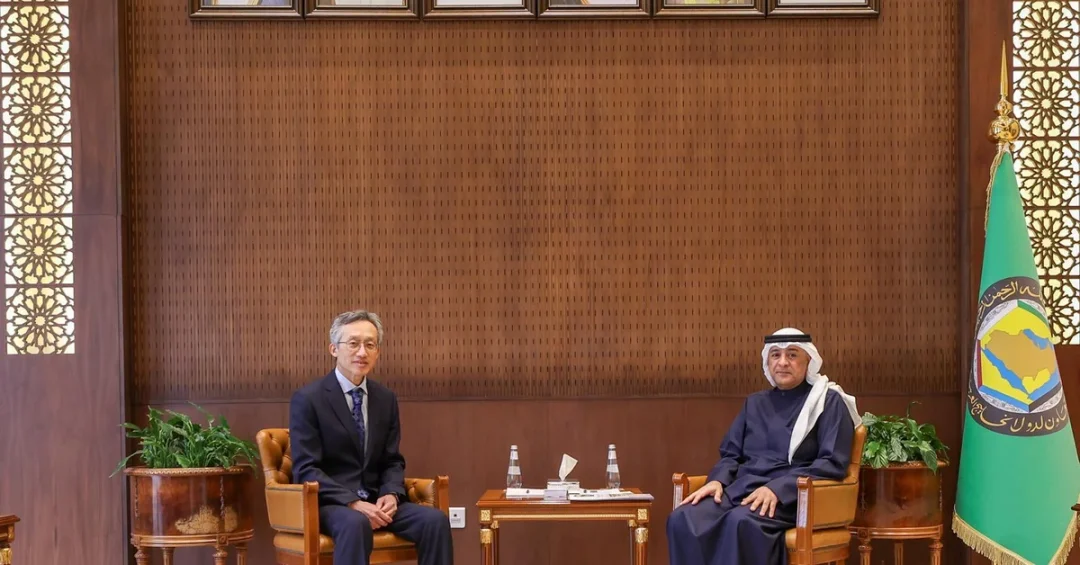
Secretary General of the Gulf Cooperation Council (GCC) Jasem Albudaiwi received Ambassador of Japan to the Kingdom of Saudi Arabia Morino Yasunari in Riyadh on December 15, 2024, for discussions focused on enhancing bilateral cooperation across multiple sectors, with a significant emphasis on concluding a Free Trade Agreement (FTA) between the GCC and Japan.
Context and Background
The meeting, reported by the Saudi Press Agency (SPA), underscores the enduring and strategic partnership between the GCC and Japan, a major economic partner for the Gulf region. Japan has long been a key trade partner and investor in GCC countries, particularly in energy and technology. Discussions on an FTA have been a priority, aiming to liberalize trade in goods and services, facilitate investment, and deepen economic integration. The talks reflect a mutual desire to diversify economic ties beyond energy and explore new avenues for collaboration aligned with global economic shifts.
Key Details
During the meeting, Secretary General Albudaiwi expressed strong optimism about finalizing the GCC-Japan Free Trade Agreement in the near future, highlighting its potential to unlock new opportunities for businesses and investors. He commended the robust GCC-Japanese relations and acknowledged ongoing efforts to strengthen collaboration across economic, commercial, and technological fields. The discussions also covered avenues for cooperation in sustainable development, with both sides recognizing the importance of innovation and technology transfer. The ambassador reaffirmed Japan’s commitment to deepening ties with the GCC, emphasizing shared interests in stability and prosperity in the region.
Implications and Impact
The potential FTA between the GCC and Japan represents a significant step in strengthening economic ties between the Gulf and East Asia. For the GCC, it would provide access to Japan’s advanced technology and investment, supporting diversification goals and reducing reliance on hydrocarbon revenues. For Japan, it would secure access to Gulf energy resources and open up a market of over 50 million people. This agreement could also serve as a model for future trade pacts, enhancing the GCC’s global economic standing and fostering greater regional integration within the GCC itself.
Vision 2030 Alignment
This diplomatic engagement aligns closely with Saudi Arabia’s Vision 2030, which emphasizes economic diversification, technological advancement, and building strategic international partnerships. Pursuing an FTA with Japan supports the Kingdom’s goals of increasing non-oil trade, attracting foreign investment, and positioning the GCC as a hub for innovation and global commerce. The meeting reflects the proactive diplomacy championed by Saudi Arabia, which continues to play a leading role in fostering collaboration that drives sustainable development and strengthens the region’s integration into the global economy.
20 Questions
Q1. Who met with the Japanese ambassador to discuss GCC-Japan relations?
A1. GCC Secretary General Jasem Albudaiwi met with Japanese Ambassador to Saudi Arabia Morino Yasunari in Riyadh on December 15, 2024, to discuss strengthening bilateral cooperation.
Q2. What was the main topic of discussion during the meeting?
A2. The main topic was enhancing cooperation between the GCC and Japan, with a strong focus on concluding a Free Trade Agreement (FTA) between the two sides.
Q3. What did Secretary General Albudaiwi express about the Free Trade Agreement?
A3. He expressed optimism that the GCC-Japan Free Trade Agreement would be concluded in the near future, highlighting its benefits for both sides.
Q4. Which sectors were emphasized for collaboration?
A4. The discussions emphasized collaboration in economic, commercial, and technological fields, as well as efforts toward sustainable development.
Q5. How did Secretary General Albudaiwi describe the current GCC-Japan relations?
A5. He commended the strong GCC-Japanese relations and acknowledged the ongoing efforts to strengthen collaboration across various sectors.
Q6. What is the significance of a GCC-Japan Free Trade Agreement?
A6. The FTA aims to liberalize trade in goods and services, facilitate investment, and deepen economic integration between the GCC and Japan.
Q7. How does this meeting support Saudi Arabia’s Vision 2030?
A7. It supports Vision 2030 by promoting economic diversification, attracting investment, and building strategic international partnerships for technology and innovation.
Q8. Who reported on this meeting?
A8. The meeting was reported by the Saudi Press Agency (SPA), which is the official news source of the Kingdom of Saudi Arabia.
Q9. Where did the meeting take place?
A9. The meeting took place in Riyadh, the capital city of the Kingdom of Saudi Arabia, on December 15, 2024.
Q10. Why is Japan an important partner for the GCC?
A10. Japan is a major trade partner and investor in GCC countries, particularly in energy and technology, and the FTA would further strengthen these ties.
Q11. What are the expected benefits for Japan from the FTA?
A11. Japan would secure access to Gulf energy resources and gain entry to a market of over 50 million people, enhancing economic opportunities.
Q12. How could the FTA impact the GCC’s global economic standing?
A12. The FTA could enhance the GCC’s global economic standing by serving as a model for future trade pacts and promoting regional integration.
Q13. What role does technology transfer play in these discussions?
A13. Technology transfer is a key interest for the GCC, as it supports diversification goals and the development of non-oil sectors.
Q14. What is the historical context of GCC-Japan relations?
A14. Japan has been a long-standing economic partner of the GCC, with strong ties in energy trade and investment that have evolved over decades.
Q15. How does this meeting reflect on Saudi Arabia’s leadership in the region?
A15. It reflects Saudi Arabia’s proactive diplomacy and leadership in fostering collaboration that benefits the entire GCC region and its partners.
Q16. What did the Japanese ambassador reaffirm during the meeting?
A16. The ambassador reaffirmed Japan’s commitment to deepening ties with the GCC, emphasizing shared interests in stability and prosperity in the region.
Q17. Are there other areas of cooperation besides trade discussed?
A17. Yes, the discussions also covered cooperation in sustainable development, innovation, and other sectors to achieve shared goals.
Q18. How does the FTA align with GCC diversification goals?
A18. The FTA helps reduce reliance on hydrocarbon revenues by opening up new markets for non-oil goods and services, thereby supporting diversification.
Q19. What is the timeframe for concluding the FTA?
A19. While no specific date was given, Secretary General Albudaiwi expressed optimism that it would be concluded in the near future.
Q20. How does this meeting contribute to regional stability?
A20. By strengthening economic ties and cooperation, the meeting fosters mutual understanding and shared prosperity, contributing to long-term stability in the Gulf region.
Reader Feedback
We value your thoughts. Please share your feedback on this article.
Your feedback helps us improve our coverage.