


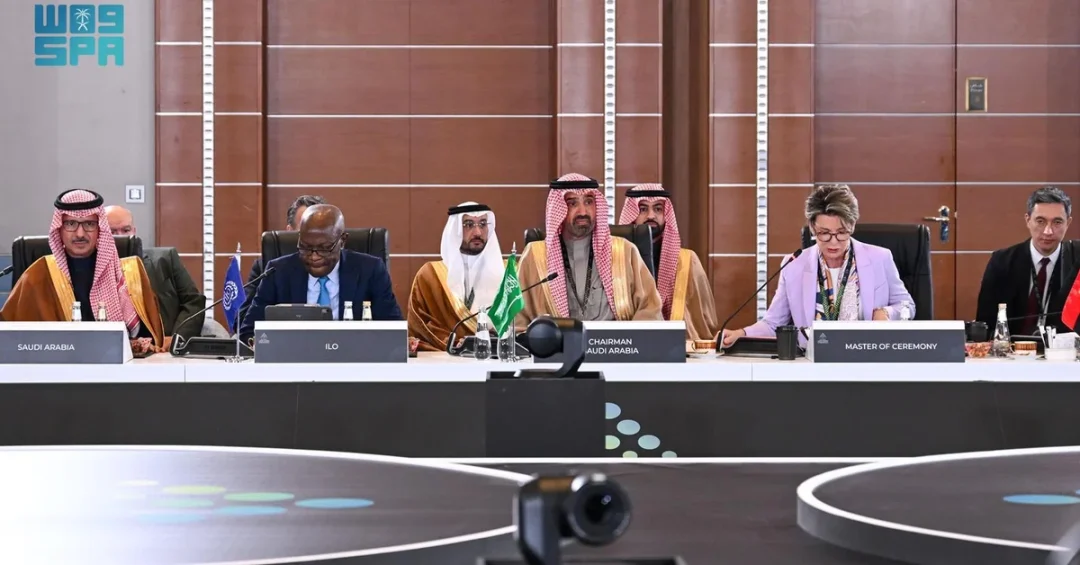
Ministers of labor from 40 nations convened in Riyadh on January 29, 2025, for a roundtable meeting chaired by Saudi Arabia’s Minister of Human Resources and Social Development, Ahmed Al-Rajhi, to address pressing global labor market challenges. The gathering was part of the second edition of the Global Labor Market Conference (GLMC) and included the participation of Gilbert F. Houngbo, Director-General of the International Labour Organization (ILO). The meeting served as a strategic platform for fostering international cooperation and developing actionable solutions to enhance labor market sustainability worldwide.
Context and Background
Hosted by the Kingdom of Saudi Arabia, the GLMC roundtable underscores the nation’s growing role as a central hub for labor market innovation and forecasting. Minister Al-Rajhi emphasized that the conference aligns with Saudi Arabia’s broader ambitions under Vision 2030 to drive economic diversification and human capital development. The meeting brought together diverse perspectives from developed and emerging economies, facilitating a rich exchange of expertise on critical issues such as technological disruption, workforce adaptability, and inclusive growth.
Key Details
During the session, ministers reviewed key trends and challenges, including the rapid rise of artificial intelligence and shifting work patterns. Following constructive discussions, Minister Al-Rajhi announced eight decisive measures aimed at increasing labor market flexibility and inclusiveness. These include empowering the workforce for the future of work in the AI era, increasing investment in human capital development, improving flexibility for remote and part-time arrangements, supporting small and medium enterprises (SMEs) for job creation, and launching initiatives to promote employment for marginalized groups. The measures reflect a consensus among participating nations on the need for proactive, collaborative strategies.
Implications and Impact
The outcomes of the Riyadh roundtable are expected to influence global labor policies, particularly as countries grapple with the implications of automation and demographic shifts. By convening 40 ministers and the ILO chief, Saudi Arabia has reinforced its position as a facilitator of international dialogue. The eight measures provide a concrete framework that other nations can adapt, potentially leading to more resilient labor markets. This collaborative approach also strengthens diplomatic ties and highlights the Kingdom’s commitment to shared global prosperity.
Vision 2030 Alignment
This landmark meeting directly supports Saudi Arabia’s Vision 2030 goals of building a vibrant society and a thriving economy. By championing human capital development and labor market innovation, the Kingdom is positioning itself as a global leader in shaping the future of work. The roundtable’s outcomes will contribute to creating sustainable employment opportunities and fostering an environment where all individuals can participate, aligning with the Vision’s objectives of empowerment and economic diversification. Saudi Arabia’s continued investment in such platforms ensures it remains at the forefront of global labor market transformation.
20 Questions
Q1. What was the main purpose of the Riyadh roundtable meeting?
A1. The meeting aimed to tackle urgent challenges facing global labor markets, exchange expertise, and develop innovative solutions to enhance sustainability and flexibility, especially amid rapid technological changes.
Q2. Who chaired the roundtable meeting?
A2. The meeting was chaired by Saudi Arabia’s Minister of Human Resources and Social Development, Ahmed Al-Rajhi, highlighting the Kingdom’s leadership in global labor discussions.
Q3. How many ministers attended the roundtable?
A3. A total of 40 labor ministers from different countries participated, reflecting broad international interest in collaborative labor market solutions.
Q4. Who represented the International Labour Organization at the event?
A4. Gilbert F. Houngbo, Director-General of the ILO, attended the roundtable, underscoring the global significance of the discussions.
Q5. What is the Global Labor Market Conference?
A5. The GLMC is a strategic platform that brings together global leaders to discuss labor market trends, innovations, and policies, with Saudi Arabia hosting its second edition.
Q6. What did Minister Al-Rajhi say about Saudi Arabia’s role?
A6. He stated that by hosting the conference, Saudi Arabia aims to become a leading hub for forecasting labor market futures and driving sustainable development.
Q7. How many measures were announced by the minister?
A7. Minister Al-Rajhi announced eight decisive measures designed to improve labor market flexibility and inclusiveness across various nations.
Q8. What was one key measure related to technology?
A8. One measure involves empowering the workforce to adapt to the future of work in the era of artificial intelligence, ensuring skills remain relevant.
Q9. Did the meeting address remote work?
A9. Yes, the measures include improving labor market flexibility to accommodate diverse work arrangements such as remote and part-time opportunities.
Q10. How does the meeting support small businesses?
A10. The meeting emphasized supporting the growth of small and medium enterprises to drive job creation and economic resilience.
Q11. What was discussed regarding marginalized groups?
A11. Ministers launched initiatives to promote the employment of marginalized groups, fostering inclusive labor markets.
Q12. Why is this meeting significant for global labor policy?
A12. It brought together 40 ministers and the ILO to build consensus on practical strategies, potentially influencing international labor standards and cooperation.
Q13. How does this relate to Vision 2030?
A13. The meeting aligns with Vision 2030 by promoting human capital development, economic diversification, and Saudi Arabia’s role as a global dialogue facilitator.
Q14. What challenges were highlighted during discussions?
A14. Key challenges included rapid technological advancements, shifting work patterns, and the need for workforce adaptability and sustainability.
Q15. Was the ILO involved in shaping the outcomes?
A15. Yes, the ILO Director-General’s participation helped integrate global labor standards and expertise into the meeting’s outcomes.
Q16. How will the eight measures be implemented?
A16. The measures provide a framework for nations to adapt based on local contexts, with Saudi Arabia leading by example through national initiatives.
Q17. What is the broader impact of the Riyadh meeting?
A17. The meeting strengthens international cooperation and positions Saudi Arabia as a key player in shaping the future of global labor markets.
Q18. Did the meeting focus on skill development?
A18. Yes, increasing investment in human capital development was a central theme, ensuring workers have skills for future jobs.
Q19. How does this event benefit Saudi Arabia’s economy?
A19. It enhances the Kingdom’s reputation as a hub for innovation and dialogue, attracting investment and supporting economic diversification efforts.
Q20. What is the long-term vision for global labor markets after this meeting?
A20. The meeting established a foundation for developing practical strategies that support future transformations and enhance labor market sustainability worldwide.
Reader Feedback
We value your thoughts. Please share your feedback on this article.
Your feedback helps us improve our coverage.