


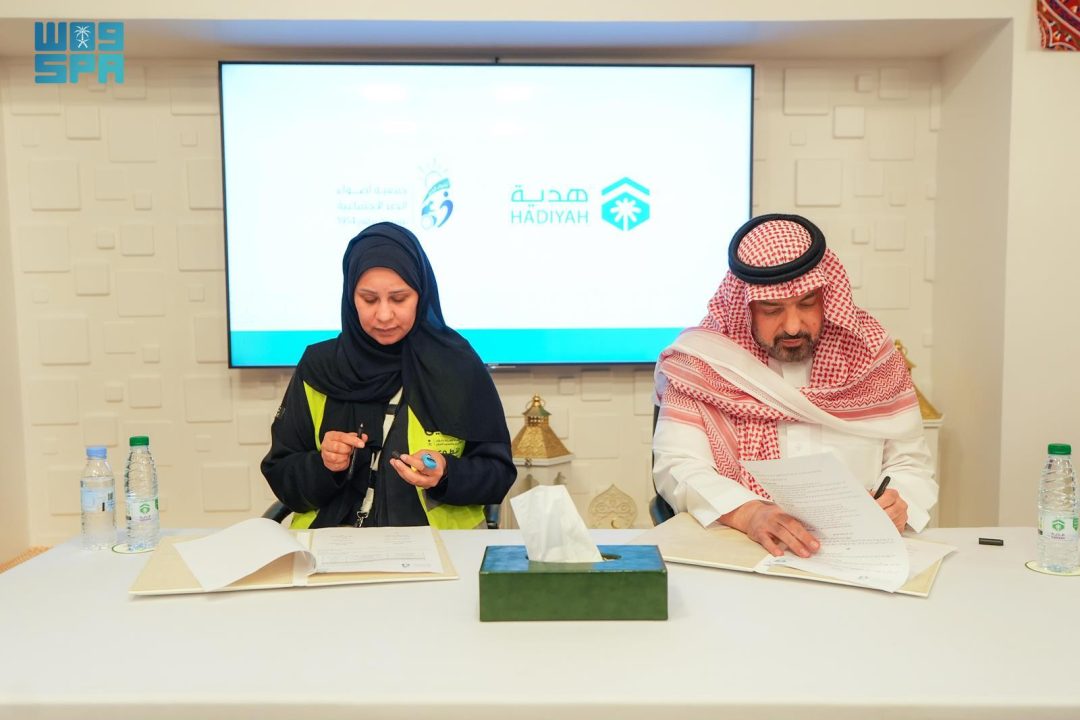
HADIYAH, formally known as the Haji and Mu’tamer’s Gift Charity Association, signed a partnership memorandum with the Adwaa Alkhair Association, according to the Saudi Press Agency. The agreement is aimed at enhancing the experience of elderly and disabled pilgrims during their spiritual journey and providing quality services that ensure their comfort and ease in performing rituals.
SPA reported the signing in Makkah on March 26, 2025. The memorandum brings together two charitable associations in a formal partnership, though the source did not specify the venue of the signing, the names of the signatories, or the duration of the agreement.
What the Partnership Covers
The stated purpose of the memorandum is to enhance the experience of elderly and disabled pilgrims and to provide quality services that ensure their comfort and ease in performing rituals. The agreement is part of HADIYAH Charity’s initiative to enhance the pilgrim experience and facilitate their rituals with ease, according to SPA.
Who are the pilgrims at the center of this partnership? They are the elderly and disabled members of the pilgrim community, a group whose needs during the spiritual journey differ from those of younger and more mobile worshippers. The source does not detail the specific services to be delivered, the number of pilgrims expected to benefit, or the locations where the services will be provided.
What does a partnership memorandum between two charitable associations actually change on the ground? The source frames it as a step toward quality services and ease in performing rituals, but it does not list operational details such as transportation, accommodation, medical support, or volunteer deployment. Those specifics remain outside the published text.
The agreement is described as part of HADIYAH Charity’s broader initiative to enhance the pilgrim experience. That initiative, as presented by SPA, centers on facilitating rituals with ease. The Adwaa Alkhair Association is named as the partner in this effort, though the source does not describe Adwaa Alkhair’s own role, history, or prior work with pilgrims.
Why Elderly and Disabled Pilgrims
The elderly and disabled are a distinct category among pilgrims. Their spiritual journey involves the same rituals as other pilgrims, but the physical demands can present different challenges. The memorandum’s stated focus on comfort and ease reflects that distinction, according to the source.
What does comfort mean in the context of pilgrimage rituals? The source does not define it. It says only that the partnership seeks quality services that ensure comfort and ease in performing rituals. No service categories, no facility types, and no staffing figures are included in the SPA report.
Could this partnership serve as a model for other charitable collaborations in the pilgrimage sector? The source does not say. It presents the memorandum as a single agreement between HADIYAH and Adwaa Alkhair, part of HADIYAH’s initiative, without comparing it to other programs or outlining plans for expansion.
What the Source Did Not Include
The SPA report did not include the financial value of the memorandum, the number of beneficiaries, the implementation timeline, or the specific services to be offered. It did not name the officials who signed the agreement or the location where the signing took place. It did not provide background on either association beyond their names and the stated purpose of the partnership.
The report also did not include statements from either association, details on how the partnership will be monitored or evaluated, or information on whether the services will be delivered during a specific pilgrimage season. Those elements are absent from the published text.
What remains clear from the source is the core fact: HADIYAH and Adwaa Alkhair signed a partnership memorandum to enhance the experience of elderly and disabled pilgrims and to provide quality services ensuring their comfort and ease in performing rituals, as part of HADIYAH Charity’s initiative to enhance the pilgrim experience and facilitate their rituals with ease.
What is HADIYAH? HADIYAH is the Haji and Mu’tamer’s Gift Charity Association, according to the Saudi Press Agency. The association signed a partnership memorandum with the Adwaa Alkhair Association. The agreement is part of HADIYAH Charity’s initiative to enhance the pilgrim experience and facilitate their rituals with ease. The source identifies HADIYAH by its full name and its role in the partnership but does not provide further background on the association’s history, leadership, or other programs.
What does the partnership memorandum aim to achieve? The memorandum aims to enhance the experience of elderly and disabled pilgrims during their spiritual journey and to provide quality services that ensure their comfort and ease in performing rituals, according to SPA. The agreement is part of HADIYAH Charity’s initiative to enhance the pilgrim experience and facilitate their rituals with ease. The source does not specify the individual services, the number of pilgrims expected to benefit, or the locations where the services will be delivered.
Where and when was the agreement signed? SPA reported the signing in Makkah on March 26, 2025. The source did not specify the venue within Makkah, the names of the signatories, or the duration of the agreement. It also did not state whether the signing took place during a particular event or gathering. The report provided the date and the city as the only location and timing details.
Which groups of pilgrims does the partnership target? The partnership targets elderly and disabled pilgrims, according to the source. The memorandum seeks to enhance their experience during their spiritual journey and to provide quality services ensuring their comfort and ease in performing rituals. SPA does not define how elderly or disabled is determined for the purposes of the partnership, nor does it state how many pilgrims fall into these categories or how they will be identified or reached.
What did the SPA report not include about the memorandum? The SPA report did not include the financial value of the memorandum, the number of beneficiaries, the implementation timeline, or the specific services to be offered. It did not name the officials who signed the agreement or the location where the signing took place. It also did not provide background on either association beyond their names and the stated purpose of the partnership, nor did it include statements from either association.