


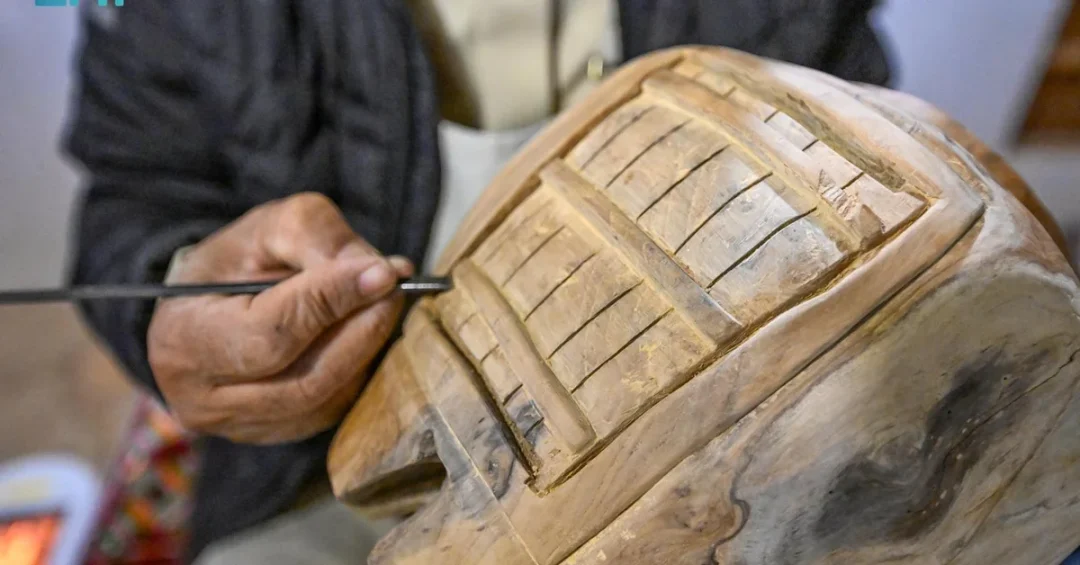
Traditional wooden doors and gypsum carvings from Saudi Arabia’s Hail region are drawing significant crowds at the Handicrafts Festival (HARFA) in Hail, as visitors from across the Kingdom and abroad gather to witness the intricate craftsmanship that preserves the region’s cultural heritage. The pavilion dedicated to these traditional arts has become a focal point of the festival, showcasing the unique skills passed down through generations.
Context and Background
The HARFA festival serves as a key platform for highlighting Saudi Arabia’s rich artisanal traditions, aligning with the Kingdom’s Vision 2030 goals to preserve and promote cultural heritage. The event provides a venue for craftsmen to demonstrate their expertise to a wider audience, fostering appreciation for traditional arts that are an integral part of the national identity. The pavilion’s focus on wooden doors and gypsum carvings underscores the architectural and cultural significance of these crafts in the Hail region.
Key Details
Craftsman Abdullah Al-Khazam, speaking to the Saudi Press Agency (SPA), explained that creating these wooden doors and carvings demands considerable skill and meticulous attention to detail. He noted a distinct difference between Najdi doors, which consist of three beams, and Hail doors, which are traditionally composed of four beams, highlighting the regional diversity in Saudi craftsmanship. The pavilion also features Islamic plaster engravings inspired by the local environment, a hallmark of Najdi architecture used to decorate buildings, entrances, and majlis (councils).
Replicas of traditional engravings from historical Hail majlis are on display, and many visitors have expressed interest in acquiring these pieces to decorate their own homes, viewing them as valuable connections to their heritage. The exhibition further showcases drawings and engravings that once adorned ancient clay houses, including some that feature Quranic verses, traditional sayings, decorative patterns, and depictions of trees and plants, offering a window into the region’s historical and cultural life.
Implications and Impact
The strong visitor interest in the Hail pavilion reflects a growing international and domestic appreciation for Saudi Arabia’s intangible cultural heritage. By attracting crowds from abroad, the festival boosts cultural tourism, and the enthusiasm for acquiring authentic heritage pieces supports local craftsmen and the broader creative economy. This trend helps to document and revitalize traditional crafts, ensuring their transmission to future generations.
Vision 2030 Alignment
The success of the Handicrafts Festival in Hail directly supports the objectives of Saudi Arabia’s Vision 2030, which emphasizes the preservation of national heritage and the development of cultural tourism as key pillars of economic diversification. By showcasing the artistry of traditional door-making and gypsum carving, the Kingdom strengthens its cultural identity, creates economic opportunities for artisans, and positions itself as a global destination for authentic cultural experiences, contributing to a vibrant society and a thriving economy.
20 Questions
Q1. What is the Handicrafts Festival (HARFA) in Hail?
A1. HARFA is a festival held in Hail, Saudi Arabia, that showcases traditional crafts. It serves as a platform for artisans to demonstrate their skills and for visitors to appreciate the region’s cultural heritage.
Q2. What specific crafts are drawing crowds at the festival?
A2. The festival’s main attraction is the pavilion featuring traditional wooden doors and gypsum carvings from the Hail region, which highlights the detailed craftsmanship involved in creating these cultural artifacts.
Q3. Who is Abdallah Al-Khazam?
A3. Abdullah Al-Khazam is a skilled craftsman from Hail. He shared insights with the Saudi Press Agency on the skill and attention to detail required to create the traditional wooden doors and carvings.
Q4. What is the difference between Najdi and Hail doors?
A4. According to craftsman Al-Khazam, Najdi doors are traditionally composed of three beams, while Hail doors are composed of four beams, showcasing regional variations in architectural craftsmanship.
Q5. What materials are used to make traditional Hail doors?
A5. Traditional Hail doors are made from tamarisk and other types of wood. The choice of materials reflects the local environment and the resources available in the region historically.
Q6. What are Islamic plaster engravings?
A6. These are decorative engravings inspired by the local environment, a hallmark of Najdi architecture used to embellish buildings, entrances, and majlis, and are featured in the festival pavilion.
Q7. What architectural elements are decorated with these engravings?
A7. The engravings are used to decorate buildings, entrances, and majlis, which are traditional gathering councils. They add aesthetic and cultural value to these structures.
Q8. What else is on display in the pavilion besides doors?
A8. The pavilion also features replicas of traditional engravings from historical Hail majlis, as well as drawings and engravings from ancient clay houses.
Q9. What themes are depicted in the ancient engravings?
A9. The ancient engravings include Quranic verses, traditional sayings, decorative patterns, and depictions of trees and plants, reflecting the region’s Islamic heritage and natural environment.
Q10. Why are visitors interested in acquiring these pieces?
A10. Visitors view these pieces as valuable parts of their heritage and express interest in decorating their homes with them, preserving cultural traditions in their personal spaces.
Q11. What is the role of the Saudi Press Agency in this event?
A11. The Saudi Press Agency (SPA) reported on the festival, quoting craftsmen and officials. It serves as a primary news source for official Saudi events and achievements.
Q12. When was the article about the festival published?
A12. The article was published on January 7, 2025, based on information provided by the Saudi Press Agency. The festival is ongoing at that time.
Q13. How does HARFA contribute to cultural tourism?
A13. By drawing visitors from both the region and abroad, HARFA promotes cultural tourism in Hail, boosting local interest in traditional arts and Saudi Arabia’s heritage.
Q14. Does the use of Quranic verses in engravings have significance?
A14. Yes, it reflects the deep Islamic roots of Saudi culture. Incorporating Quranic verses into architectural decoration is a tradition that blends faith with artistic expression.
Q15. Who organized the HARFA festival?
A15. The festival is typically organized by Saudi cultural authorities, including the Ministry of Culture, to promote artisanal crafts as part of the Heritage Commission’s activities.
Q16. How does the festival support Vision 2030?
A16. It supports Vision 2030 by preserving cultural heritage, promoting cultural tourism, and providing economic opportunities for craftsmen, aligning with goals for a vibrant society and diversified economy.
Q17. Are visitors allowed to purchase the exhibited items?
A17. While the article notes interest from visitors in acquiring pieces, it does not specify direct sales at the pavilion. However, the festival likely facilitates connections between artisans and buyers.
Q18. What does the term ‘majlis’ mean in this context?
A18. ‘Majlis’ refers to a traditional gathering council or sitting room in Saudi homes. These spaces are often ornately decorated with carvings and engravings.
Q19. How long does the HARFA festival last?
A19. The article does not specify the festival’s duration. However, such events typically run for several days to accommodate visitors and allow for workshops and demonstrations.
Q20. What makes the Hail region’s wooden doors unique?
A20. Hail’s wooden doors are unique for their four-beam construction, use of local tamarisk wood, and intricate carvings, distinguishing them from other regional door-making traditions in Saudi Arabia.
Reader Feedback
We value your thoughts. Please share your feedback on this article.
Your feedback helps us improve our coverage.