


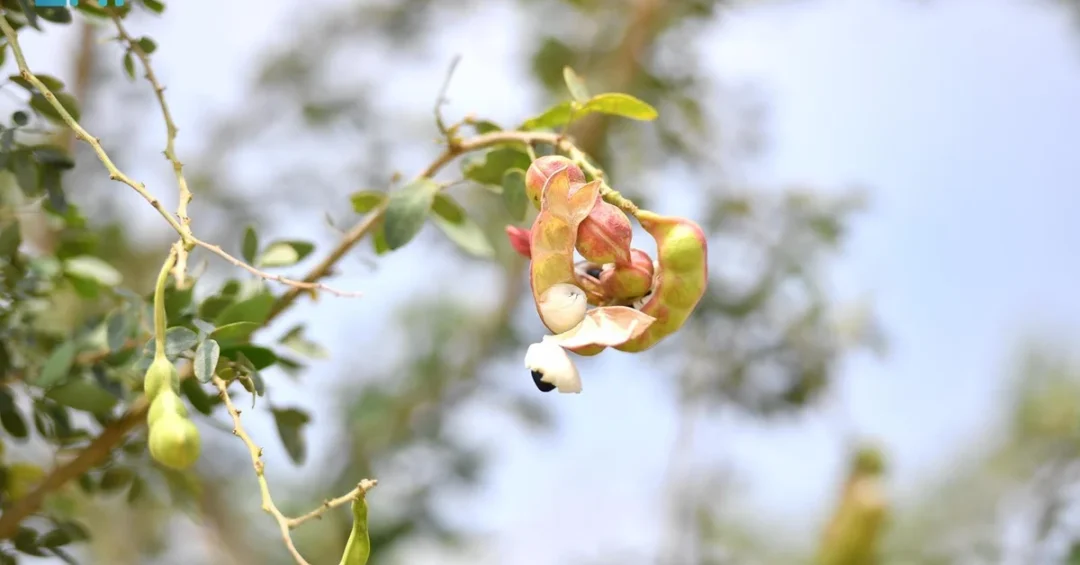
The Indian almond season has officially begun in Jazan, with the Saudi Press Agency reporting on February 8, 2025, that the region’s tropical climate is yielding a bountiful harvest of these distinctive fruits. Known for their dense foliage, abundant shade, and rich flavor, Indian almonds play a significant role in Jazan’s agricultural identity, thriving in the warm, tropical environment that fosters their growth and bloom.
Context and Background
Jazan, located in the southwestern part of the Kingdom of Saudi Arabia, benefits from a unique microclimate characterized by heavy rains and relatively high temperatures. These conditions enhance the production quality of Indian almonds, making the region a prime hub for this seasonal crop. The almond season begins in February with the blooming of white and yellow flowers, which attract bees and wind for pollination. Fruits gradually ripen between May and July, transitioning from green to yellow or red, signaling full maturity.
Key Details
Peak production occurs in June and July, with each fruit weighing between 15 and 30 grams. Ripe almonds are prized for their soft texture and ease of extracting the edible core, which reaches peak sweetness and exhibits a pronounced almond flavor. These fruits are available in well-known markets across Jazan, including the central Jazan market, as well as in the governorates of Sabia, Bish, Abu Arish, Samtah, and others.
Implications and Impact
The cultivation of Indian almonds presents significant economic opportunities for Jazan. The combination of favorable weather conditions and growing demand for natural and healthy products has increased investment prospects. This includes the development of packaging and marketing operations both locally and internationally, the establishment of factories for extracting Indian almond oil, and the expansion of organic agriculture. These initiatives contribute to the region’s agricultural and economic development, creating jobs and supporting local communities.
Vision 2030 Alignment
The growth of Jazan’s Indian almond sector aligns with Saudi Arabia’s Vision 2030 goals of diversifying the economy and promoting sustainable agriculture. By enhancing local production and exploring export markets, the Kingdom is strengthening its agricultural sector and reducing reliance on imports. This supports the national objective of achieving food security and fostering rural development, positioning Jazan as a model for tropical fruit cultivation in the region.
20 Questions
Q1. What are Indian almonds?
A1. Indian almonds, also known as tropical almonds, are fruits grown primarily in the Jazan region of Saudi Arabia. They are valued for their rich flavor, soft texture, and natural oils.
Q2. When does the Indian almond season start in Jazan?
A2. The season begins in February with the blooming of white and yellow flowers, which attract bees for pollination. Fruits ripen from May to July.
Q3. Where are Indian almonds sold in Jazan?
A3. They are available in major markets such as the central Jazan market, and in governorates like Sabia, Bish, Abu Arish, and Samtah throughout the region.
Q4. What is the weight range of a ripe Indian almond fruit?
A4. Each fruit typically weighs between 15 and 30 grams, with peak production in June and July yielding substantial quantities.
Q5. How do Indian almonds contribute to Jazan’s agricultural identity?
A5. They are a distinctive seasonal product thriving in Jazan’s warm, tropical climate, enhancing the region’s reputation for high-quality tropical fruits.
Q6. What role do bees play in Indian almond cultivation?
A6. Bees are attracted to the flowers during blooming in February and aid in pollination alongside wind, which is essential for fruit set.
Q7. What color changes indicate ripeness in Indian almonds?
A7. The fruits transition from green to yellow or red as they ripen, signaling full maturity and peak sweetness.
Q8. Can Indian almonds be processed into oil?
A8. Yes, factories are being established in Jazan to extract Indian almond oil, which is valued for its natural properties and used in various products.
Q9. What economic opportunities does Indian almond cultivation present?
A9. It opens investment in packaging, marketing, processing, and organic agriculture, boosting local employment and regional development.
Q10. Is organic farming of Indian almonds growing?
A10. Yes, there is expansion in organic agriculture to meet rising demand for natural and healthy products, aligning with consumer trends.
Q11. How does the climate in Jazan benefit Indian almond production?
A11. The combination of heavy rains and relatively high temperatures enhances fruit quality, leading to better yields and flavor.
Q12. What is the peak harvest period for Indian almonds?
A12. Peak harvest occurs in June and July, when fruits are fully ripe and sold in local markets in large quantities.
Q13. Are Indian almonds exported from Saudi Arabia?
A13. There are plans to develop international marketing and packaging operations, potentially expanding exports to global markets.
Q14. What other crops are grown in Jazan?
A14. Jazan is known for various tropical fruits, including mangoes, papayas, and bananas, benefiting from similar climatic conditions.
Q15. How does Indian almond cultivation support Vision 2030?
A15. It promotes agricultural diversification, economic growth, and food security, key goals of Saudi Arabia’s Vision 2030.
Q16. What is the texture of a ripe Indian almond?
A16. The ripe fruit has a soft texture, and the edible core can be easily extracted, making it enjoyable as a snack.
Q17. How long does the Indian almond flowering period last?
A17. Flowering occurs in February and lasts several weeks, with bees and wind facilitating pollination during this time.
Q18. Are there any festivals celebrating Indian almonds in Jazan?
A18. While no specific festival is mentioned, the region’s markets highlight seasonal produce, and local events may feature agricultural products.
Q19. What is the taste of Indian almonds?
A19. At peak ripeness, the fruit reaches its highest sweetness and exhibits a pronounced almond flavor, appealing to consumers.
Q20. How can investors participate in Jazan’s almond sector?
A20. Investors can engage in cultivation, processing, packaging, and marketing, leveraging Jazan’s tropical climate and growing demand for natural products.
Reader Feedback
We value your thoughts. Please share your feedback on this article.
Your feedback helps us improve our coverage.