


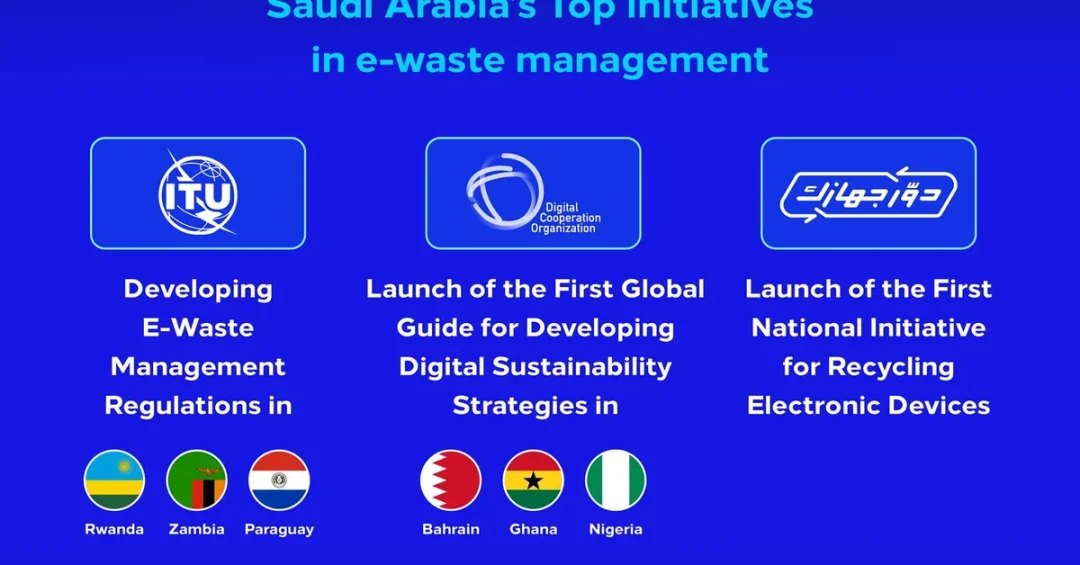
The International Telecommunication Union (ITU) has commended Saudi Arabia’s efforts, led by the Communications, Space and Technology Commission (CST), in establishing pioneering regulations for the digital circular economy. In a report published on International E-Waste Day, the ITU highlighted Saudi Arabia’s proactive steps to develop regulations and standards aimed at reducing global e-waste. These efforts underscore the Kingdom’s commitment to fostering digital sustainability and adopting environmentally friendly practices, aligning with its strategic priorities.
Context and Background
The ITU’s recognition comes amid a global surge in electronic waste. According to the report, 62 billion kilograms of e-waste were generated worldwide in 2022, with less than 23% being recycled. This growing challenge poses significant environmental and health risks, making effective regulation and international cooperation essential. The ITU noted that Saudi Arabia’s CST is taking proactive steps, in collaboration with the ITU, to change this situation and promote a sustainable digital future, particularly in developing nations.
Key Details of the Initiative
The ITU report specifically emphasized the partnership between CST and the ITU regarding e-waste management in developing countries, initially targeting Rwanda, Zambia, and Paraguay. It stressed the significance of working with local stakeholders to implement effective solutions that align technological advancement with sustainable practices. The report highlighted the importance of forming effective partnerships to address one of the world’s fastest-growing environmental challenges. In Rwanda, a circular framework has been established to bolster environmental sustainability and economic growth. Zambia is working to finalize a framework that addresses stakeholder needs, while Paraguay aims to involve local producers and stakeholders in the regulatory framework for e-waste and gather their feedback.
Saudi Arabia’s Domestic Impact
Domestically, CST has previously launched the “Recycle Your Device” initiative, the first national effort dedicated to recycling electronic devices. The initiative has collected over 100,000 devices and recycled more than 240 tons of e-waste. Additionally, it supported over 120 schools and charitable organizations with recycled devices, contributing to a reduction in carbon emissions and helping mitigate global warming. This domestic success demonstrates the practical application of the regulations being developed with the ITU and provides a model for other nations.
Implications and Impact
This international recognition positions Saudi Arabia as a global leader in digital sustainability, enhancing its reputation as a hub for technological innovation and environmental stewardship. By spearheading regulations for the digital circular economy, the Kingdom is addressing a critical global issue while fostering economic opportunities through the recycling and refurbishment of electronic devices. The partnerships with Rwanda, Zambia, and Paraguay also strengthen Saudi Arabia’s diplomatic and economic ties with developing nations, showcasing the Kingdom’s commitment to sharing its expertise and solutions.
Vision 2030 Alignment
The ITU’s praise directly supports Saudi Arabia’s Vision 2030 goals, particularly those focused on environmental sustainability, economic diversification, and technological advancement. By leading the development of digital circular economy regulations, Saudi Arabia demonstrates its commitment to building a knowledge-based economy and a sustainable future. This initiative aligns with the Vision’s focus on improving quality of life, fostering innovation, and positioning the Kingdom as a global leader in key sectors. As Saudi Arabia continues to implement its long-term strategy, such international recognition underscores the tangible progress being made toward a more sustainable and prosperous future.
20 Questions
Q1. What did the ITU commend Saudi Arabia for?
A1. The ITU commended Saudi Arabia for its efforts, led by the Communications, Space and Technology Commission (CST), in establishing regulations for the digital circular economy to reduce global e-waste.
Q2. When was the ITU report published?
A2. The report was published on October 15, 2024, coinciding with International E-Waste Day, highlighting its relevance to global sustainability efforts.
Q3. Which Saudi entity led the digital circular economy regulations?
A3. The Communications, Space and Technology Commission (CST) led the development of the regulations, in collaboration with the International Telecommunication Union.
Q4. How much e-waste was produced globally in 2022?
A4. Globally, 62 billion kilograms of e-waste were produced in 2022, according to the ITU report, underscoring the scale of the environmental challenge.
Q5. What percentage of global e-waste was recycled in 2022?
A5. Less than 23% of global e-waste was recycled in 2022, highlighting the urgent need for effective regulations and recycling initiatives.
Q6. Which countries are initially targeted by the CST-ITU partnership?
A6. The partnership initially targets Rwanda, Zambia, and Paraguay to implement e-waste management solutions through collaboration with local stakeholders.
Q7. What progress has been made in Rwanda under this initiative?
A7. In Rwanda, a circular framework has been established to bolster environmental sustainability and economic growth, aligning technological advancement with sustainable practices.
Q8. What is the status of the initiative in Zambia?
A8. Zambia is working to finalize a framework that addresses the needs of stakeholders, aiming to create effective local solutions for e-waste management.
Q9. What are Paraguay’s goals in this partnership?
A9. Paraguay aims to involve local producers and stakeholders in the regulatory framework for e-waste and gather their feedback to ensure effective implementation.
Q10. What is the “Recycle Your Device” initiative?
A10. The “Recycle Your Device” initiative is Saudi Arabia’s first national effort dedicated to recycling electronic devices, launched by the CST.
Q11. How many devices has the “Recycle Your Device” initiative collected?
A11. The initiative has collected over 100,000 devices for recycling, demonstrating the widespread public participation in Saudi Arabia’s sustainability efforts.
Q12. How much e-waste has been recycled through this initiative?
A12. Over 240 tons of e-waste have been recycled, contributing to a significant reduction in environmental pollution and resource conservation.
Q13. How many schools and charities has the initiative supported?
A13. The initiative has supported over 120 schools and charitable organizations with recycled devices, promoting digital inclusion and education.
Q14. What environmental impact has the initiative achieved?
A14. The initiative has contributed to a reduction in carbon emissions and helped mitigate global warming by approximately 0.03°C.
Q15. Why is the ITU’s recognition significant for Saudi Arabia?
A15. The recognition positions Saudi Arabia as a global leader in digital sustainability, enhancing its reputation for innovation and environmental stewardship.
Q16. How does this initiative help developing countries?
A16. The initiative helps developing countries by providing frameworks and partnerships to manage e-waste effectively, fostering both environmental and economic benefits.
Q17. What role does local stakeholder involvement play in the initiative?
A17. Local stakeholder involvement is crucial for implementing effective solutions that align technological advancement with sustainable practices in each country.
Q18. How does the ITU report describe the global e-waste challenge?
A18. The report describes e-waste as one of the world’s fastest-growing environmental challenges, requiring effective partnerships to address it.
Q19. How does the initiative support Vision 2030?
A19. The initiative supports Vision 2030 by advancing environmental sustainability, economic diversification, and technological innovation, core pillars of the Kingdom’s long-term strategy.
Q20. What future steps are expected from this partnership?
A20. The partnership is expected to expand its reach to more countries, developing and implementing circular economy frameworks to reduce global e-waste and promote a sustainable digital future.
Reader Feedback
We value your thoughts. Please share your feedback on this article.
Your feedback helps us improve our coverage.