


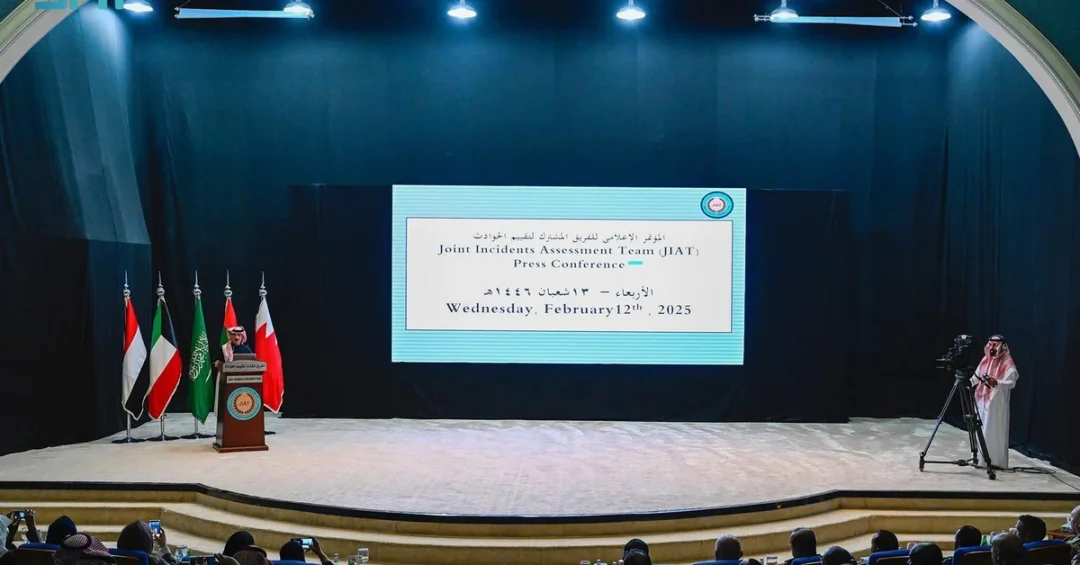
The Joint Incidents Assessment Team (JIAT) issued a statement on February 12, 2025, confirming that a Coalition Forces airstrike on March 21, 2021, targeting a building and hangar in Al-Salif port, Al-Hudaydah Governorate, was a legitimate military action against foreign experts equipping booby-trapped boats for terrorist operations threatening Red Sea navigation. The statement, released via the Saudi Press Agency, detailed the findings of a comprehensive investigation into the incident, which had been the subject of a claim in a UN panel of experts report.
Context and Background
The investigation was prompted by an allegation in a UN panel of experts report on Yemen, published on January 26, 2022, which claimed that two explosive ordnances from an aircraft hit a building and warehouse owned by the Yemeni International Company for Food Production Ltd in Al-Salif port. JIAT, the Coalition body responsible for assessing incidents and ensuring compliance with international humanitarian law, conducted a thorough review of all available evidence, including air tasking orders, satellite imagery, and intelligence reports.
Key Details
JIAT found that Al-Salif port, located 65 km northwest of Al-Hudaydah, contained specific locations on the Coalition Forces No Strike List (NSL). However, intelligence indicated that foreign experts had arrived at a specific site in the port to equip booby-trapped boats for use in terrorist operations against international navigation in the Red Sea. This use of the facility as a military objective caused it to lose civilian protection under Article 52 of the First Additional Protocol to the Geneva Conventions and Rule 8 of customary international humanitarian law. Continuous reconnaissance and surveillance confirmed the presence of foreign experts inside a building and hangar, leading to a precision airstrike at 2:38 AM on March 21, 2021, using two guided bombs.
JIAT verified that the Coalition took all feasible precautions to minimize collateral damage, as required by Article 57 of the First Additional Protocol and Rules 15 and 17 of customary international humanitarian law. These precautions included continuous surveillance, selecting a late-night time to avoid civilian presence, using guided bombs proportionate to the target, and ensuring no civilians were present before and during the strike. Post-strike satellite imagery confirmed that the two bombs impacted the target, located 440 meters away from the nearest NSL site—a safe distance outside the bombs’ side effects.
Implications and Impact
The JIAT statement underscores the Coalition’s commitment to transparency and adherence to international law in its operations in Yemen. The investigation revealed that Al-Huthi armed militia had used Al-Salif port for terrorist activities, including the arrival of four boats loaded with weapons on January 9, 2021, and observed suspicious acts involving booby-trapped boats similar to those used in an attack on Farasan island. The intelligence about foreign experts arriving to equip such boats was corroborated by continuous reconnaissance. The findings affirm that the Coalition’s actions were necessary to counter threats to international maritime security and were conducted with strict compliance to legal standards.
Vision 2030 Alignment
This incident reflects Saudi Arabia’s leadership in regional security and its commitment to upholding international law and protecting global trade routes, in line with Vision 2030’s goals of fostering a stable and prosperous region. By ensuring the Red Sea remains safe for navigation, the Kingdom supports global economic stability and demonstrates its role as a responsible international actor.
20 Questions
Q1. What was the allegation that JIAT investigated?
A1. The allegation, from a UN panel of experts report, claimed that Coalition Forces targeted a building and warehouse in Al-Salif port on March 21, 2021, causing civilian damage.
Q2. What did JIAT conclude about the airstrike?
A2. JIAT concluded that the airstrike was a legitimate military action against foreign experts equipping booby-trapped boats for terrorist operations, in compliance with international humanitarian law.
Q3. Why was the target considered legitimate under international law?
A3. Under Article 52 of the First Additional Protocol to the Geneva Conventions, a civilian object loses protection if it contributes to military actions. The building and hangar were used to equip booby-trapped boats for terrorist attacks.
Q4. What precautions did Coalition Forces take to avoid civilian harm?
A4. Coalition Forces conducted continuous reconnaissance, chose a late-night time to minimize civilian presence, used two guided bombs proportionate to the target, and confirmed no civilians were present before and during the strike.
Q5. Was the port on the Coalition’s No Strike List?
A5. Al-Salif port had specific locations on the No Strike List, but the targeted site was not on the list due to its use for military purposes by foreign experts.
Q6. How did the Coalition verify the target’s nature?
A6. Through intelligence reports and continuous reconnaissance using surveillance systems, which observed foreign experts at the site and their movement to the building and hangar.
Q7. What threat did the booby-trapped boats pose?
A7. The boats were intended to be used in terrorist operations threatening international navigation in the Red Sea, a critical global maritime route.
Q8. Who were the foreign experts?
A8. The statement does not specify their nationality, but they were individuals involved in equipping booby-trapped boats for the Al-Huthi armed militia.
Q9. When did the airstrike occur?
A9. The airstrike occurred at 2:38 AM on March 21, 2021.
Q10. What weapons were used in the airstrike?
A10. Two guided bombs were used, which hit the target precisely.
Q11. How far was the target from the nearest No Strike List location?
A11. The target was 440 meters away from the nearest No Strike List site, a safe distance outside the bombs’ side effects.
Q12. Did the Coalition face any threats during the mission?
A12. Yes, the flight formation was exposed to high threat from anti-aircraft defenses in the target area.
Q13. What evidence did JIAT review?
A13. JIAT reviewed air tasking orders, mission schedules, reports, satellite images, intelligence reports, and interviewed personnel involved in planning and execution.
Q14. What was the role of Al-Huthi militia in using the port?
A14. Al-Huthi militia used Al-Salif port for terrorist operations, including arriving with boats loaded with weapons and preparing booby-trapped boats.
Q15. How does this incident relate to Red Sea security?
A15. It highlights efforts to neutralize threats to international navigation in the Red Sea, which is vital for global trade and security.
Q16. What is JIAT’s role in the Coalition?
A16. JIAT investigates incidents to ensure Coalition operations comply with international humanitarian law and to maintain transparency.
Q17. Did the strike cause any civilian casualties?
A17. JIAT found no evidence of civilian casualties, as precautions were taken to avoid civilian presence.
Q18. What is the significance of the statement being released in 2025?
A18. The 2025 release shows continued commitment to accountability and transparency regarding past operations, reinforcing credibility.
Q19. How does this action support Vision 2030?
A19. By protecting Red Sea navigation, the Coalition supports regional stability and economic prosperity, key pillars of Vision 2030.
Q20. Will the UN panel revise its report based on JIAT’s findings?
A20. The statement does not address that; JIAT’s findings are provided for transparency and to clarify the facts of the incident.
Reader Feedback
We value your thoughts. Please share your feedback on this article.
Your feedback helps us improve our coverage.