


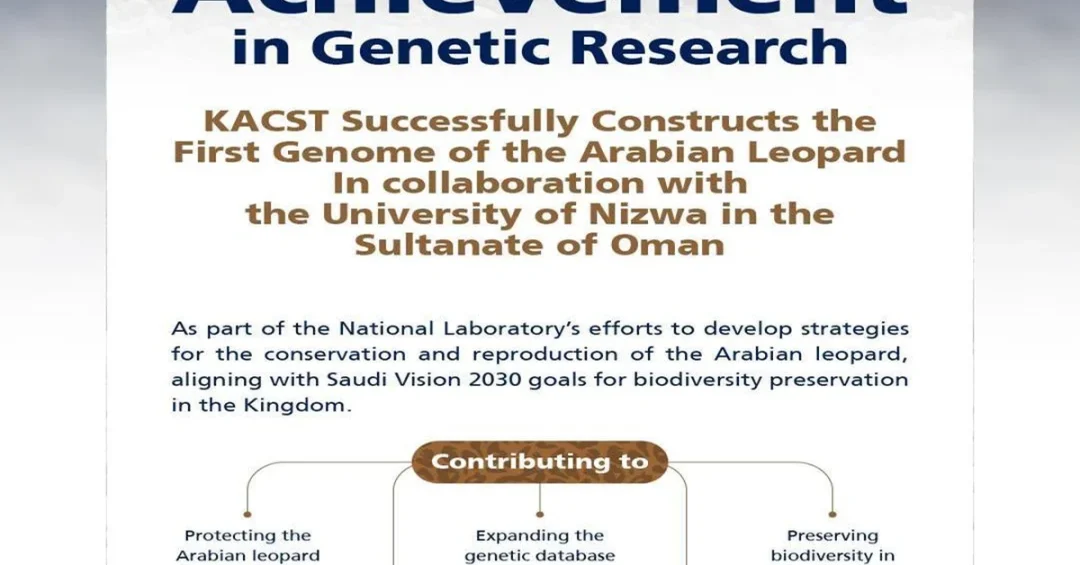
King Abdulaziz City for Science and Technology (KACST) has successfully built the first complete genome of the endangered Arabian leopard, marking a milestone in conservation genetics. The announcement was made on February 11, 2025, via the Saudi Press Agency. With fewer than 200 individuals remaining in the wild, this breakthrough provides critical genetic data to study the species’ adaptation and survival, supporting efforts to prevent extinction.
Context and Background
The Arabian leopard (Panthera pardus nimr) is critically endangered, with its population fragmented across the Arabian Peninsula. Habitat loss, poaching, and prey depletion have driven the species to the brink. KACST’s genome project, conducted in collaboration with the University of Nizwa in Oman, aligns with Saudi Arabia’s Vision 2030 goals for environmental sustainability and biodiversity preservation. The reference genome has been deposited in the global National Center for Biotechnology Information (NCBI) database, ensuring open access for researchers worldwide.
Key Details
The research team at KACST’s National Lab produced a high-quality reference genome using advanced sequencing technologies. This genetic blueprint will help identify genes crucial for the leopard’s survival in arid environments, such as those related to water conservation, heat tolerance, and disease resistance. By making the data publicly available, KACST enables international collaboration on genetic conservation strategies, including captive breeding and reintroduction programs.
Implications and Impact
This achievement positions Saudi Arabia as a leader in wildlife genomics and conservation. It supports the Saudi Green Initiative and the broader regional effort to restore ecosystems. The genome will aid in managing genetic diversity among captive populations, reducing inbreeding, and improving long-term viability. It also enhances the Kingdom’s scientific reputation and fosters knowledge exchange with global institutions.
Vision 2030 Alignment
KACST’s project directly contributes to Vision 2030’s environmental objectives, particularly the goal of preserving Saudi Arabia’s natural heritage. By leveraging advanced science and technology, the Kingdom demonstrates its commitment to sustainable development and biodiversity conservation. This initiative paves the way for further research on other endemic species, reinforcing Saudi Arabia’s role as a steward of regional wildlife.
20 Questions
Q1. What is the Arabian leopard genome?
A1. The Arabian leopard genome is the complete DNA sequence of the endangered Arabian leopard, built for the first time by KACST to support conservation through genetic research.
Q2. Why is the Arabian leopard endangered?
A2. The Arabian leopard is endangered due to habitat loss, poaching, and declining prey, with fewer than 200 individuals left in the wild.
Q3. Who announced the genome achievement?
A3. The Saudi Press Agency (SPA) announced the successful building of the first Arabian leopard genome by KACST on February 11, 2025.
Q4. Which organization led the genome project?
A4. King Abdulaziz City for Science and Technology (KACST) led the project, in collaboration with the University of Nizwa in Oman.
Q5. Where is the genome data stored?
A5. The genome data is deposited in the global National Center for Biotechnology Information (NCBI) database for open access.
Q6. How does the genome help conservation?
A6. The genome helps identify genes for survival adaptation, supports captive breeding, and reduces inbreeding by managing genetic diversity.
Q7. What is the population of Arabian leopards in the wild?
A7. The wild population of Arabian leopards is estimated to be below 200 individuals.
Q8. Which Saudi initiative supports this project?
A8. The project aligns with the Saudi Green Initiative and Vision 2030, which aim to preserve biodiversity and ensure environmental sustainability.
Q9. Who can access the genetic data?
A9. Researchers worldwide can access the genetic data via the NCBI database, enabling global collaboration on genetic conservation.
Q10. What technologies were used to build the genome?
A10. Advanced sequencing technologies were used at KACST’s National Lab to produce a high-quality reference genome.
Q11. What adaptation traits can be studied?
A11. Genes related to water conservation, heat tolerance, and disease resistance can be studied to understand the leopard’s survival in arid habitats.
Q12. Is this the first genome of a big cat from Arabia?
A12. Yes, this is the first high-quality reference genome for the Arabian leopard, a significant achievement for regional biodiversity.
Q13. How does this support captive breeding?
A13. The genome allows genetic monitoring of captive populations to prevent inbreeding and maintain genetic diversity for reintroduction programs.
Q14. What role does the University of Nizwa play?
A14. The University of Nizwa in Oman collaborated with KACST on the genome project, contributing to the research and data analysis.
Q15. How does this align with Vision 2030?
A15. The project supports Vision 2030’s goal of environmental sustainability by using science to preserve biodiversity and protect ecosystems.
Q16. What other species might be studied similarly?
A16. The success with the Arabian leopard paves the way for genomic studies of other endemic Arabian species, aiding regional conservation efforts.
Q17. Is the genome publicly available?
A17. Yes, the genome is deposited in the NCBI database, providing open access to researchers globally without restrictions.
Q18. What is the National Lab’s role?
A18. KACST’s National Lab conducted the genome sequencing and assembly, leveraging its advanced scientific capabilities.
Q19. How does this boost Saudi Arabia’s scientific reputation?
A19. This achievement showcases Saudi Arabia’s leadership in wildlife genomics and conservation science on an international stage.
Q20. What is the next step for conservation?
A20. The genetic data will inform conservation strategies, including habitat protection, captive breeding, and potential reintroduction of Arabian leopards into the wild.
Reader Feedback
We value your thoughts. Please share your feedback on this article.
Your feedback helps us improve our coverage.