


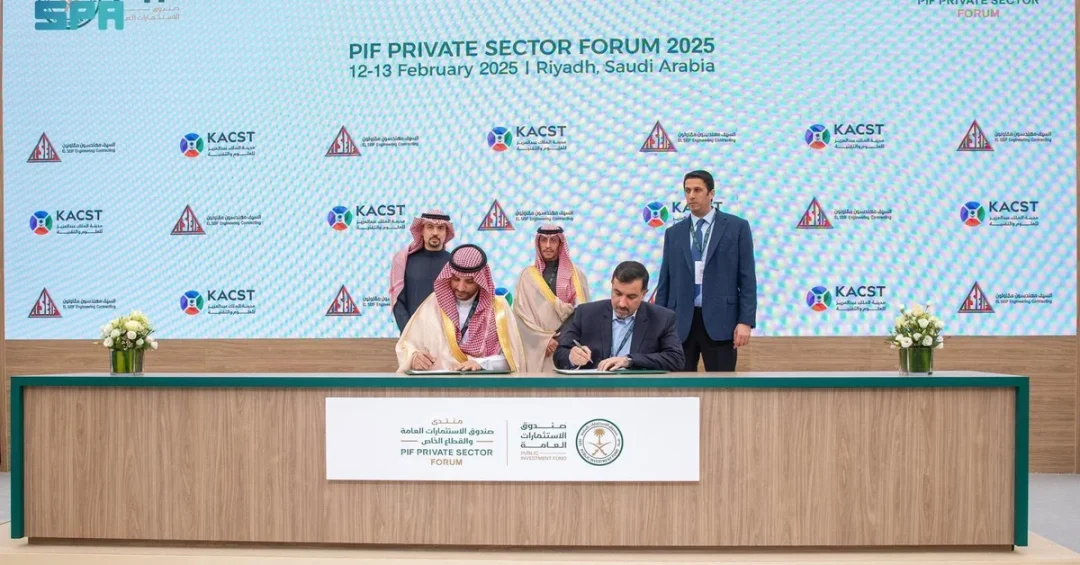
Riyadh, February 14, 2025 – The King Abdulaziz City for Science and Technology (KACST) has granted two technological licenses to Al-Saif Engineers and Contractors for commercializing modular construction technologies and carbon nanotube pipe technologies, marking a key step in advancing Saudi Arabia’s innovation-driven economy.
Context and Background
The licenses were announced during the Public Investment Fund and Private Sector Forum, underscoring KACST’s role as a national laboratory and innovation hub. KACST focuses on transforming research and development projects into economically viable products, aiming to maximize the outcomes of research and innovation, expand deep technology applications, boost local content, and enhance the value of national industries.
Key Details
The modular construction technologies license enables Al-Saif to deploy advanced building methods using prefabricated components, robotics, and automation systems. The carbon nanotube pipe technologies license allows production of high-strength, lightweight pipes with superior durability and thermal properties. These innovations are designed to improve efficiency, quality, and sustainability in the construction sector.
Implications and Impact
The adoption of modular construction and nanotube pipes is expected to reduce construction time and costs, enhance structural performance, and support green building practices. This aligns with Saudi Arabia’s goals to modernize infrastructure, attract foreign investment, and create high-skilled jobs in advanced manufacturing. Regionally, the technologies could set new standards for sustainable development in the Middle East.
Vision 2030 Alignment
The licensing directly supports Vision 2030 objectives to develop the construction sector through innovations in building materials and advanced technologies. By fostering public-private partnerships and commercializing research, Saudi Arabia strengthens its position as a global leader in technology-driven economic diversification. KACST’s continued support for deep tech startups and local industry will accelerate the Kingdom’s transformation into a knowledge-based economy.
20 Questions
Q1. What is KACST?
A1. KACST, the King Abdulaziz City for Science and Technology, is Saudi Arabia’s national science agency that promotes research, innovation, and technology transfer to support economic development and Vision 2030.
Q2. Who received the technological licenses?
A2. Al-Saif Engineers and Contractors, a Saudi company, received the licenses to commercialize modular construction technologies and carbon nanotube pipe technologies.
Q3. What are modular construction technologies?
A3. Modular construction involves building components off-site in controlled factory conditions and assembling them on-site, improving efficiency, quality, and reducing project timelines.
Q4. What are carbon nanotube pipes?
A4. Carbon nanotube pipes are made from cylindrical carbon molecules, offering exceptional strength, lightweight properties, and corrosion resistance, ideal for demanding industrial applications.
Q5. When were the licenses announced?
A5. The licenses were announced on Tuesday, February 14, 2025, during the Public Investment Fund and Private Sector Forum in Riyadh.
Q6. What is the significance of the Public Investment Fund and Private Sector Forum?
A6. The forum facilitates partnerships between the Public Investment Fund and private sector companies to drive economic growth, innovation, and investment in line with Vision 2030.
Q7. How do the licenses support Vision 2030?
A7. They advance the construction sector’s modernization through innovative materials and automation, improving efficiency, sustainability, and local content, key Vision 2030 pillars.
Q8. What is KACST’s role in innovation?
A8. KACST acts as a national laboratory, transforming R&D into commercial products, supporting deep tech, and enhancing the value of national industries through technology transfer.
Q9. How will modular construction benefit Saudi Arabia?
A9. It will reduce construction costs and time, increase quality control, and support green building practices, helping meet housing and infrastructure demands under Vision 2030.
Q10. What are the environmental benefits of nanotube pipes?
A10. Their durability and corrosion resistance reduce maintenance and replacement needs, lowering environmental impact and resource consumption over their lifecycle.
Q11. Are these technologies used elsewhere?
A11. Modular construction is used globally in housing and commercial projects; carbon nanotube pipes are emerging in oil, gas, and water industries. Saudi Arabia aims to be a leader.
Q12. How does KACST choose which technologies to license?
A12. KACST selects technologies with high commercial potential and alignment with national priorities, focusing on innovations that can boost local industry and economic diversification.
Q13. What other sectors could benefit from these technologies?
A13. Beyond construction, modular methods could apply to manufacturing and health care; nanotube pipes can benefit petrochemicals, water infrastructure, and renewable energy systems.
Q14. Will these licenses create jobs?
A14. Yes, commercialization will create skilled jobs in manufacturing, engineering, and project management, contributing to Saudi employment goals under Vision 2030.
Q15. How does this align with public-private partnerships?
A15. The licenses exemplify collaboration between a government R&D agency and a private company, leveraging private sector capabilities to bring innovations to market.
Q16. What is the timeline for commercial use?
A16. Al-Saif will begin pilot projects and production scale-up in 2025-2026, with broader commercial deployment expected within two to three years.
Q17. Who funded the initial research?
A17. The research was funded by KACST through its national research programs, supported by government allocations for science and technology development.
Q18. How do these technologies enhance competitiveness?
A18. Offering advanced, cost-effective building solutions strengthens the competitiveness of Saudi construction firms in regional and global markets.
Q19. What are the export potentials?
A19. After domestic validation, Al-Saif can export modular systems and nanotube pipes to neighboring countries, supporting Saudi Arabia’s non-oil export diversification.
Q20. What is the next step for KACST?
A20. KACST will continue to identify promising technologies and partner with private firms to commercialize more innovations, driving sustainable economic growth.
Reader Feedback
We value your thoughts. Please share your feedback on this article.
Your feedback helps us improve our coverage.