


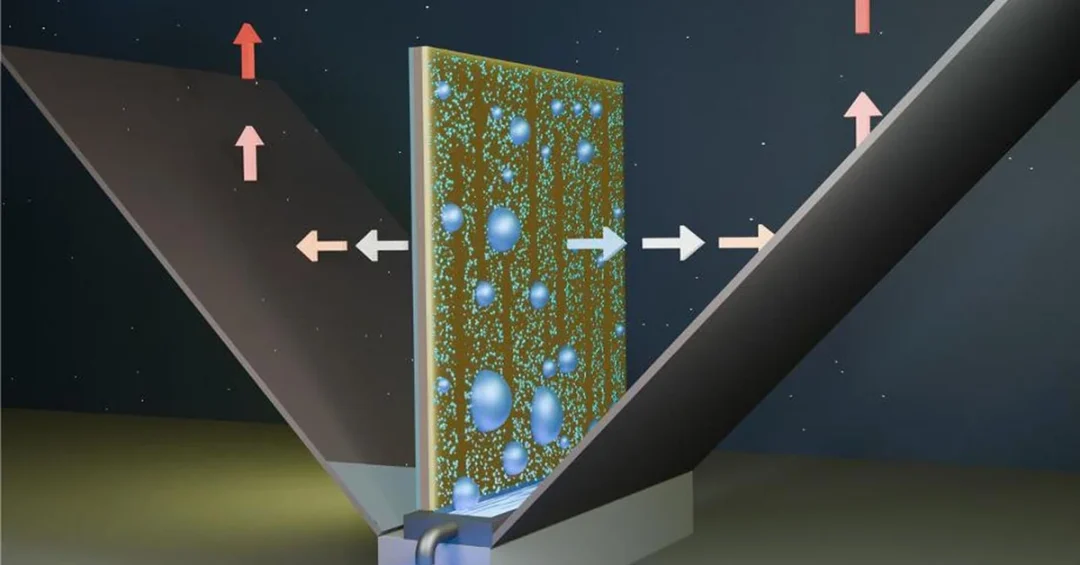
An international research team led by Professor Qiaoqiang Gan of King Abdullah University of Science and Technology (KAUST) has developed a groundbreaking passive cooling technology that extracts water from the air using only gravity and requires no electricity or other costly energy sources. The innovation, based on cheap and readily available materials, simultaneously cools electronic devices and other technologies while producing water that can be repurposed for irrigation, washing, building cooling, and other applications, according to a release by the Saudi Press Agency (SPA).
Context and Background
Scientists estimate that the atmosphere contains six times more water than all the fresh water in the world’s rivers combined. While atmospheric water harvesting technologies exist, they often require significant electricity to function effectively, particularly in arid environments like the Kingdom of Saudi Arabia. This demand poses a barrier to the adoption of solar cells in rural regions, where electricity infrastructure is costly and limited. The new KAUST development directly addresses this challenge by enabling passive, energy-free water collection.
Key Details
The team overcame a major efficiency hurdle: water droplets typically adhere to the surface of harvesting devices, requiring active collection. KAUST Professor Dan Daniel and postdoctoral researcher Shakeel Ahmad in Gan’s group discovered that adding a lubricant coating—a mix of a commercial polymer and silicon oil—allowed water to be collected using only gravity. “A common challenge in atmospheric water harvesting systems is that water droplets tend to remain pinned to the surface of the device, necessitating active condensate collection,” said Ahmad. “Our coating effectively eliminated pinning, enabling true passive water collection driven by gravity.” The device builds on Gan’s previous “vertical double-sided architecture,” originally designed to reflect thermal heat to the sky and keep outdoor electronics cool, but not to capture water.
Testing and Efficiency
Tested six times over the course of a year in natural conditions in the town of Thuwal, about 100 kilometers north of Jeddah, the new device nearly doubled the rate of water collection compared to alternative atmospheric water harvesting technologies. Alongside Gan and Daniel, KAUST Associate Professor Gyorgy Szekely contributed to the study, which was published in Advanced Materials. The project is part of the ongoing work at the new KAUST Center of Excellence for Renewable Energy and Sustainable Technologies.
Economic and Environmental Implications
Professor Daniel emphasized the economic benefits: “The system does not consume any electricity, leading to energy savings. Moreover, it does not rely on any mechanical parts like compressors or fans, reducing the maintenance over traditional systems, leading to further savings.” The technology offers a dual benefit by providing passive cooling for electronic devices—critical for extending the lifespan of solar panels in the Kingdom’s harsh climate—while generating usable water without external energy input.
Vision 2030 Alignment
This innovation directly supports Saudi Arabia’s Vision 2030 by advancing sustainable technologies and resource efficiency. By enabling off-grid cooling and water generation in remote areas, the KAUST development strengthens the Kingdom’s position as a global leader in renewable energy research, contributes to water security, and promotes the adoption of clean energy infrastructure—key pillars of the nation’s long-term transformation and economic diversification goals.
20 Questions
Q1. What is the new technology developed by KAUST?
A1. The technology is a passive cooling system that extracts water from the air using only gravity, requiring no electricity or costly energy sources.
Q2. Who led the international research team?
A2. The team was led by Professor Qiaoqiang Gan of King Abdullah University of Science and Technology (KAUST).
Q3. What is the main advantage of this technology over existing methods?
A3. It operates entirely on passive radiative cooling and gravity, without consuming electricity or relying on mechanical parts like compressors or fans.
Q4. How does the technology overcome the issue of water droplets sticking to surfaces?
A4. Researchers added a lubricant coating made from a commercial polymer and silicon oil, which prevents droplets from pinning to the device surface, allowing gravity to collect them.
Q5. What are the potential uses for the water collected by this device?
A5. The water can be used for irrigation, washing, building cooling, and other applications, in addition to keeping electronic devices cool.
Q6. Where was the new device tested?
A6. It was tested six times over a year in natural conditions in the town of Thuwal, about 100 kilometers north of Jeddah, Saudi Arabia.
Q7. How does the new collection rate compare to alternative technologies?
A7. The device nearly doubled the rate of water collection compared to alternative atmospheric water harvesting technologies.
Q8. What materials are used in the technology?
A8. The system is based on cheap and readily available materials, including the lubricant coating of commercial polymer and silicon oil.
Q9. Who else contributed to the study besides Professor Gan?
A9. KAUST Professor Dan Daniel, postdoc Shakeel Ahmad, and KAUST Associate Professor Gyorgy Szekely contributed to the research.
Q10. In which journal was the study published?
A10. The study was published in the journal Advanced Materials.
Q11. How much water does the atmosphere contain compared to rivers?
A11. Scientists estimate that the atmosphere contains six times more water than all the fresh water in the world’s rivers combined.
Q12. Why is atmospheric water harvesting challenging in arid environments like Saudi Arabia?
A12. In arid environments, existing technologies require electricity to harvest practical amounts of water, making adoption costly in remote areas.
Q13. What previous technology did this new device build upon?
A13. It builds on Gan’s previous “vertical double-sided architecture,” which was designed to reflect thermal heat but not capture water.
Q14. How does this technology benefit solar cell adoption in rural Saudi Arabia?
A14. By providing passive cooling without electricity, it reduces energy costs and maintenance, encouraging solar cell use in areas with limited power infrastructure.
Q15. What economic savings does the system offer?
A15. It saves energy by not consuming electricity and reduces maintenance costs because it has no mechanical parts like compressors or fans.
Q16. Under which KAUST center does this research fall?
A16. This project is part of the work at the new KAUST Center of Excellence for Renewable Energy and Sustainable Technologies.
Q17. What is the primary purpose of the device besides water collection?
A17. The device also provides passive cooling for electronic devices and other technologies, extending their lifespan in outdoor conditions.
Q18. Does the technology require any external energy input?
A18. No, it operates entirely on passive radiative cooling and gravity, without any electricity or other forms of costly energy.
Q19. How does the lubricant coating improve water collection?
A19. The coating eliminates the pinning of water droplets to the surface, enabling true passive water collection driven only by gravity.
Q20. How does this innovation support Saudi Arabia’s long-term goals?
A20. It advances Vision 2030 by promoting sustainable technology, water security, and renewable energy adoption, strengthening Saudi Arabia’s global leadership in innovation.
Reader Feedback
We value your thoughts. Please share your feedback on this article.
Your feedback helps us improve our coverage.