


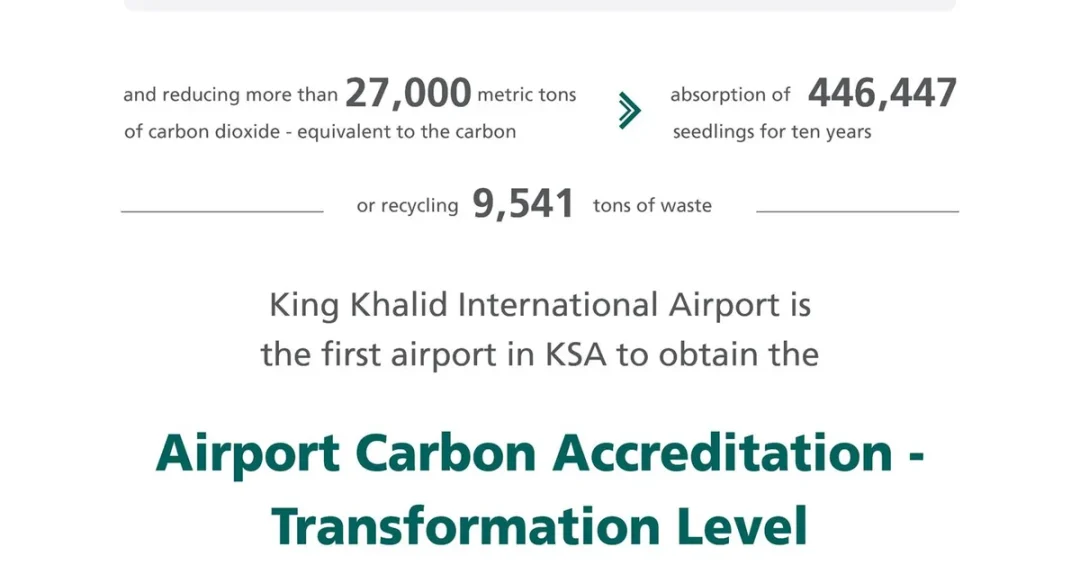
King Khalid International Airport in Riyadh has become the first airport in Saudi Arabia to receive Airport Carbon Accreditation at the Transformation Level, granted by the Airports Council International (ACI) under its Airport Carbon Accreditation (ACA) program. The announcement was made on February 10, 2025, via the Saudi Press Agency, marking a significant milestone in the Kingdom’s aviation sector’s commitment to environmental sustainability.
Context and Background
Airport Carbon Accreditation is a globally recognized program that assesses and certifies airports’ efforts to manage and reduce carbon emissions. The Transformation Level is the fourth of six levels, requiring airports to achieve absolute emission reductions across their operations and engage third parties such as commercial partners. King Khalid International Airport’s achievement demonstrates its alignment with the Paris Agreement and international climate goals, positioning Saudi Arabia as a regional leader in sustainable aviation.
Key Details
The accreditation was secured through a comprehensive transformation of airport operations and those of its commercial partners, resulting in an absolute reduction in carbon emissions. This initiative is part of the Saudi Civil Aviation Environmental Sustainability Program, led by the General Authority of Civil Aviation (GACA). Riyadh Airports Company, which operates the airport, aims to contribute to national environmental targets under Saudi Vision 2030, including reducing carbon dioxide equivalent emissions by 278 million tons annually by 2030 and achieving net-zero emissions by 2060.
Implications and Impact
This achievement enhances Saudi Arabia’s reputation in global environmental stewardship and supports the Kingdom’s broader goals of economic diversification and sustainable development. It sets a benchmark for other airports in the region, encouraging further investment in green technologies and operational efficiencies. The accreditation also strengthens Riyadh’s position as a hub for international travel and business, appealing to environmentally conscious travelers and airlines.
Vision 2030 Alignment
King Khalid International Airport’s carbon accreditation directly supports Saudi Vision 2030’s environmental sustainability targets, including ambitious emission reduction goals. By leading the way in airport carbon management, Riyadh Airports Company exemplifies the private sector’s role in achieving national climate objectives, contributing to a greener future for the Kingdom and the global aviation industry.
20 Questions
Q1. What is Airport Carbon Accreditation?
A1. It is a global program by Airports Council International that certifies airports for managing and reducing carbon emissions, with levels from Mapping to Transition.
Q2. What level did King Khalid International Airport achieve?
A2. It achieved the Transformation Level, the fourth of six levels, requiring absolute emission reductions in airport operations and partner activities.
Q3. Why is this achievement significant?
A3. It makes King Khalid International Airport the first in Saudi Arabia to reach this level, highlighting the Kingdom’s leadership in sustainable aviation.
Q4. How does this align with the Paris Agreement?
A4. The airport’s carbon reduction strategy complies with Paris Agreement goals, contributing to global climate change mitigation efforts.
Q5. What role does GACA play in this effort?
A5. The General Authority of Civil Aviation leads the Saudi Civil Aviation Environmental Sustainability Program, under which this accreditation was pursued.
Q6. Who operates King Khalid International Airport?
A6. Riyadh Airports Company manages the airport and drives its sustainability initiatives.
Q7. What is Saudi Arabia’s 2030 emission reduction target?
A7. The target is to reduce carbon dioxide equivalent emissions by 278 million tons annually by 2030.
Q8. What is Saudi Arabia’s net-zero target?
A8. The Kingdom aims to achieve net-zero emissions by 2060, as part of its Vision 2030 environmental goals.
Q9. How does this accreditation benefit travelers?
A9. It ensures a more sustainable airport experience and positions Riyadh as an environmentally responsible travel hub.
Q10. What operational changes contributed to the accreditation?
A10. Transformations included energy efficiency upgrades, renewable energy adoption, and partner engagement to reduce emissions.
Q11. Is this accreditation permanent?
A11. No, it requires periodic reassessment to maintain certification, ensuring continuous improvement in carbon management.
Q12. How does this affect other Saudi airports?
A12. It sets a benchmark, encouraging them to pursue similar accreditations under the national sustainability program.
Q13. What is the Saudi Civil Aviation Environmental Sustainability Program?
A13. It is a GACA-led initiative to reduce aviation emissions and promote sustainable practices across Saudi airports.
Q14. What are the levels of Airport Carbon Accreditation?
A14. The levels are Mapping, Reduction, Optimization, Transformation, Neutrality, and Transition.
Q15. Why is the Transformation Level important?
A15. It signifies absolute emission reductions across operations and partners, moving beyond incremental improvements.
Q16. How does this support Vision 2030?
A16. It directly contributes to Vision 2030’s environmental sustainability and economic diversification objectives.
Q17. What international recognition does this bring?
A17. The accreditation is globally recognized, enhancing Saudi Arabia’s reputation in climate action.
Q18. Are commercial partners required to participate?
A18. Yes, the Transformation Level requires engagement with partners to achieve absolute emission reductions.
Q19. What future steps will the airport take?
A19. It will continue to reduce emissions and may pursue higher accreditation levels, such as Neutrality or Transition.
Q20. Where can I find more information?
A20. Official updates are available through the Saudi Press Agency and the General Authority of Civil Aviation.
Reader Feedback
We value your thoughts. Please share your feedback on this article.
Your feedback helps us improve our coverage.