


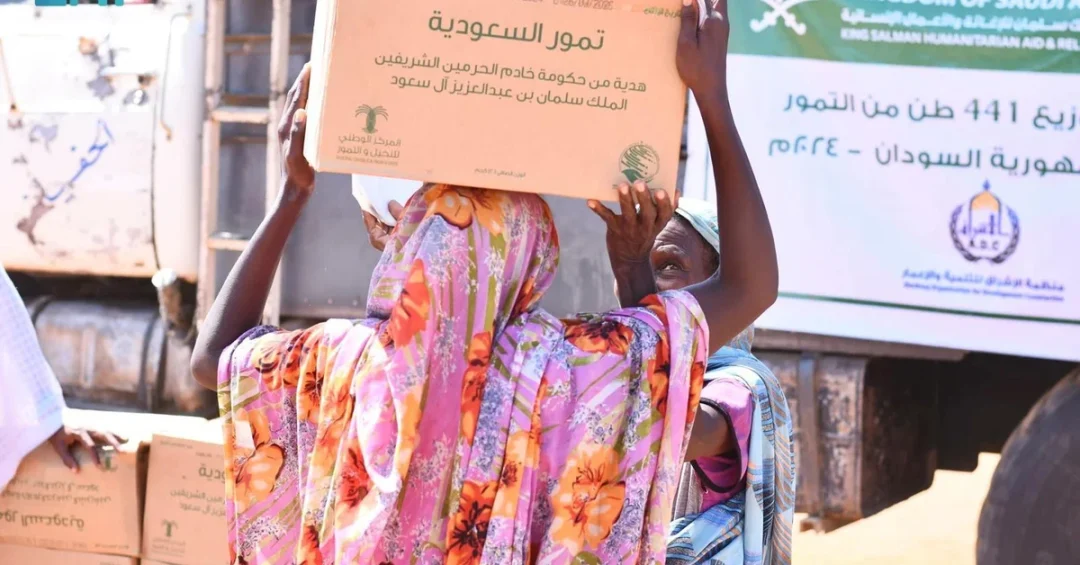
The King Salman Humanitarian Aid and Relief Center (KSrelief) distributed 20 tons of dates to vulnerable families in Sudan’s White Nile State on February 12, 2025, benefiting 11,680 individuals. The distribution, announced by the Saudi Press Agency on February 14, is part of KSrelief’s 2025 date distribution project in Sudan, aimed at supporting food security for the most vulnerable populations.
Context and Background
Sudan has faced ongoing humanitarian challenges, including food insecurity and displacement due to conflict and economic instability. The White Nile State, hosting many internally displaced persons, is among the areas most in need. Saudi Arabia, through KSrelief, has consistently provided humanitarian assistance to Sudan and other nations, reinforcing its commitment to global relief efforts.
Key Details
The date distribution targeted 11,680 individuals from the most vulnerable families in White Nile State. Dates are a staple food in the region, providing essential nutrition. This initiative is part of a broader 2025 date distribution project in Sudan, which aims to reach multiple states. KSrelief continues to coordinate with local authorities to ensure effective delivery.
Implications and Impact
This aid addresses immediate food needs while supporting long-term resilience. It underscores Saudi Arabia’s role as a leading humanitarian donor, particularly in Africa. The distribution also strengthens bilateral ties between Saudi Arabia and Sudan, reflecting the Kingdom’s broader foreign policy of providing aid without political conditions.
Vision 2030 Alignment
KSrelief’s work aligns with Saudi Vision 2030’s goal of enhancing the Kingdom’s global humanitarian role. By supporting vulnerable communities abroad, Saudi Arabia builds international goodwill and demonstrates its commitment to sustainable development and global stability.
20 Questions
Q1. What is KSrelief?
A1. KSrelief is the King Salman Humanitarian Aid and Relief Center, a Saudi humanitarian agency established in 2015 to coordinate and deliver relief aid worldwide, operating under the directives of King Salman and Crown Prince Mohammed bin Salman.
Q2. When did the date distribution in White Nile State take place?
A2. The distribution occurred on Wednesday, February 12, 2025, as announced by KSrelief through the Saudi Press Agency on February 14, 2025.
Q3. How many tons of dates were distributed?
A3. A total of 20 tons of dates were distributed to vulnerable families in White Nile State, Sudan.
Q4. How many individuals benefited from the distribution?
A4. The distribution benefited 11,680 individuals from the most vulnerable families in the region.
Q5. Where is White Nile State located?
A5. White Nile State is a state in south-eastern Sudan, bordering South Sudan, and is named after the White Nile River that flows through it.
Q6. Why is date distribution important in Sudan?
A6. Dates are a nutritious staple food in Sudan, providing essential energy and nutrients, and are particularly valuable for vulnerable populations facing food insecurity.
Q7. Is this distribution part of a larger project?
A7. Yes, it is part of KSrelief’s 2025 date distribution project in Sudan, which aims to support food security across multiple states.
Q8. How does KSrelief select beneficiaries?
A8. KSrelief works with local authorities and humanitarian partners to identify the most vulnerable families, including internally displaced persons and those affected by conflict and poverty.
Q9. What other humanitarian aid has Saudi Arabia provided to Sudan?
A9. Saudi Arabia has provided various aid to Sudan, including food parcels, medical supplies, shelter materials, and cash assistance through KSrelief and other channels.
Q10. How does this aid reflect Saudi Arabia’s foreign policy?
A10. It reflects Saudi Arabia’s policy of providing unconditional humanitarian aid based on need, strengthening diplomatic ties and promoting global stability without political strings attached.
Q11. Does KSrelief operate in other countries?
A11. Yes, KSrelief operates in over 80 countries worldwide, delivering humanitarian aid in areas such as food security, health, water and sanitation, and education.
Q12. What is the 20 Questions section?
A12. This section provides 20 relevant questions and factual answers to help readers quickly understand key details about the article topic.
Q13. Who announced the distribution?
A13. The distribution was announced by the Saudi Press Agency (SPA), the official news agency of Saudi Arabia, on behalf of KSrelief.
Q14. What is the Saudi Press Agency?
A14. The Saudi Press Agency is the official government news agency of Saudi Arabia, reporting on domestic and international news, including official statements and humanitarian efforts.
Q15. How does date distribution support food security?
A15. Dates are calorie-dense, non-perishable, and culturally accepted, providing a reliable source of nutrition that can be stored and distributed easily, helping to reduce hunger and malnutrition.
Q16. What challenges does Sudan face regarding food security?
A16. Sudan faces severe food insecurity due to conflict, economic crisis, climate shocks, and displacement, with millions needing urgent food assistance.
Q17. How does this aid align with Vision 2030?
A17. Vision 2030 aims to enhance Saudi Arabia’s role as a global humanitarian leader, and KSrelief’s international aid programs directly support this goal by showcasing the Kingdom’s generosity.
Q18. What is the value of the date project?
A18. The specific monetary value is not disclosed, but the project involves distribution of 20 tons of dates, reflecting a significant logistical and financial commitment.
Q19. Can other countries request aid from KSrelief?
A19. Yes, KSrelief provides aid based on humanitarian needs and international requests, coordinating with governments and UN agencies to deliver assistance.
Q20. How can individuals support KSrelief’s work?
A20. Individuals can support KSrelief through donations via the official KSrelief website, or by volunteering in fundraising and awareness campaigns approved by the organization.
Reader Feedback
We value your thoughts. Please share your feedback on this article.
Your feedback helps us improve our coverage.