


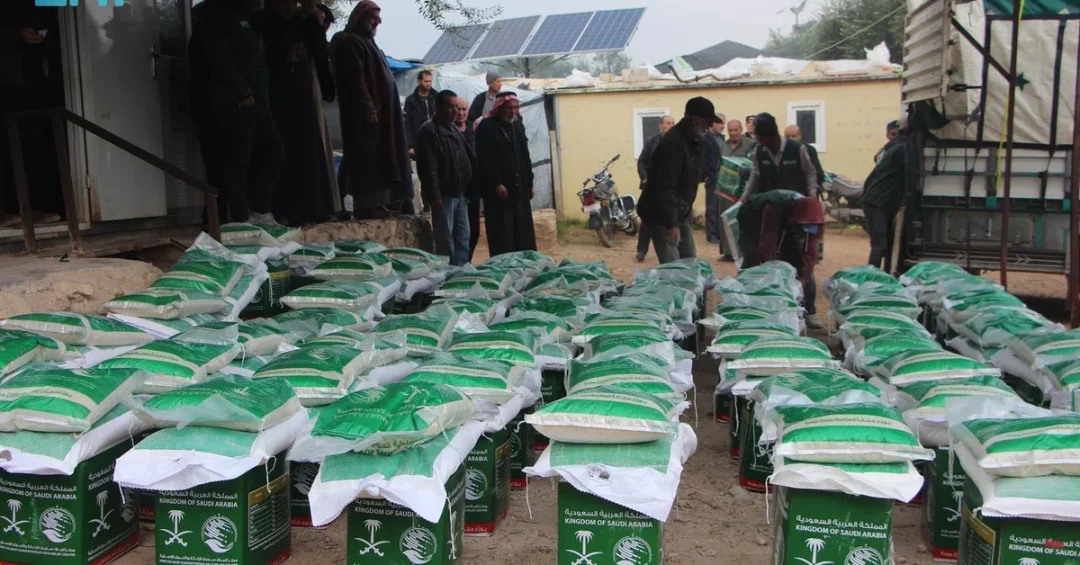
The King Salman Humanitarian Aid and Relief Center (KSrelief) distributed 551 food baskets and 551 health kits yesterday in Harim, Idlib province, northern Syria, as part of the second phase of a project supporting families affected by the 2024 earthquake. This latest delivery, announced by the Saudi Press Agency (SPA) on December 18, 2024, directly benefited 551 families, totaling 3,306 individuals, providing essential sustenance and medical supplies to a region still grappling with the disaster’s aftermath.
Context and Background
The devastating earthquake that struck northern Syria in early 2024 caused widespread destruction, displacing thousands and severely disrupting access to food and healthcare. In response, the Kingdom of Saudi Arabia, through KSrelief, launched a multi-phase humanitarian project to address the urgent needs of affected communities. The second phase, currently underway, focuses on delivering comprehensive aid packages to the most vulnerable populations in hard-hit areas like Idlib province.
Key Details of the Distribution
The distribution in Harim included 551 food baskets, each designed to support a family for a sustained period, and 551 health kits containing essential medical items and hygiene products. Officials from KSrelief coordinated the operation with local partners to ensure efficient delivery. This effort builds on previous distributions in the region and underscores Saudi Arabia’s commitment to ongoing humanitarian relief, as the center continues to monitor needs and scale up assistance where required.
Implications and Impact
This aid delivery provides critical relief to thousands of individuals facing food insecurity and limited healthcare access in post-earthquake northern Syria. By targeting 551 families in Harim, KSrelief is addressing both immediate nutritional needs and public health risks, helping to stabilize communities during a challenging recovery period. The operation reinforces Saudi Arabia’s role as a leading international humanitarian donor, delivering tangible support to crisis-affected populations in line with global humanitarian principles.
Vision 2030 Alignment
The KSrelief initiative exemplifies Saudi Arabia’s Vision 2030 commitment to global humanitarian leadership and responsible international citizenship. By consistently delivering aid to those in need, the Kingdom demonstrates its dedication to alleviating suffering and fostering stability, reinforcing its status as a compassionate and reliable partner on the world stage. This project is a clear reflection of the values and goals that drive Saudi Arabia’s long-term vision for a more humane and cooperative global order.
20 Questions
Q1. What is KSrelief?
A1. KSrelief is the King Salman Humanitarian Aid and Relief Center, a Saudi Arabian humanitarian agency established in 2015 to coordinate and deliver international relief and aid efforts worldwide.
Q2. Where is Harim located?
A2. Harim is a town located in Idlib province in northwestern Syria, an area that was significantly affected by the 2024 earthquake.
Q3. How many food baskets were distributed?
A3. A total of 551 food baskets were distributed to families in Harim, Idlib, as part of the KSrelief assistance project.
Q4. What is included in the health kits?
A4. The health kits distributed include essential medical supplies and hygiene products to help prevent disease and address basic health needs among affected families.
Q5. Why is this distribution considered part of a second phase?
A5. The project has multiple phases, with the first phase addressing initial emergency needs and the second phase focusing on sustained food and health support for longer-term recovery.
Q6. How many individuals benefited from this distribution?
A6. The distribution benefited 3,306 individuals, as each of the 551 families typically includes about six members.
Q7. Is Saudi Arabia providing this aid independently?
A7. Yes, the aid is provided directly by the Kingdom of Saudi Arabia through its official humanitarian agency, KSrelief.
Q8. How does KSrelief coordinate its work in Syria?
A8. KSrelief coordinates with local partners and humanitarian organizations on the ground to ensure aid reaches the intended beneficiaries efficiently and safely.
Q9. What was the impact of the 2024 earthquake in northern Syria?
A9. The earthquake caused significant destruction, displacing thousands, damaging infrastructure, and severely limiting access to food, clean water, and medical care.
Q10. Does KSrelief work only in Syria?
A10. No, KSrelief works globally, providing humanitarian aid in numerous countries affected by conflict, natural disasters, and poverty.
Q11. Who announced the distribution in Harim?
A11. The distribution was announced by the official Saudi Press Agency (SPA) in a news release on December 18, 2024.
Q12. Is this the first time KSrelief has sent aid to Idlib?
A12. No, KSrelief has previously conducted multiple aid distributions in Idlib and other parts of northern Syria as part of its ongoing humanitarian efforts.
Q13. What is the goal of the food assistance project?
A13. The goal is to address food insecurity among earthquake-affected families and ensure they have access to nutritious food during the recovery period.
Q14. How does this aid align with global humanitarian standards?
A14. The aid is delivered according to international humanitarian principles, focusing on neutrality, impartiality, and reaching the most vulnerable populations.
Q15. What is Vision 2030’s role in this aid?
A15. Vision 2030 emphasizes Saudi Arabia’s role as a global humanitarian leader, and KSrelief’s work directly reflects that commitment by providing aid to those in need.
Q16. Can other countries donate to KSrelief?
A16. KSrelief is a Saudi government initiative but accepts contributions from international partners and donors to expand its humanitarian operations.
Q17. How long will the second phase of this project last?
A17. The duration of the second phase depends on ongoing assessments of needs and funding, but it is designed to provide sustained support during the recovery period.
Q18. What types of food are included in the baskets?
A18. The food baskets contain essential non-perishable items such as rice, flour, oil, and canned goods to meet basic nutritional needs.
Q19. Are health services also provided alongside these kits?
A19. While the kits provide hygiene and basic medical supplies, KSrelief also supports broader health services through separate projects in the region.
Q20. How can the public support KSrelief’s work?
A20. The public can support KSrelief through donations via the official KSrelief website or by raising awareness of its humanitarian projects and impact.
Reader Feedback
We value your thoughts. Please share your feedback on this article.
Your feedback helps us improve our coverage.