


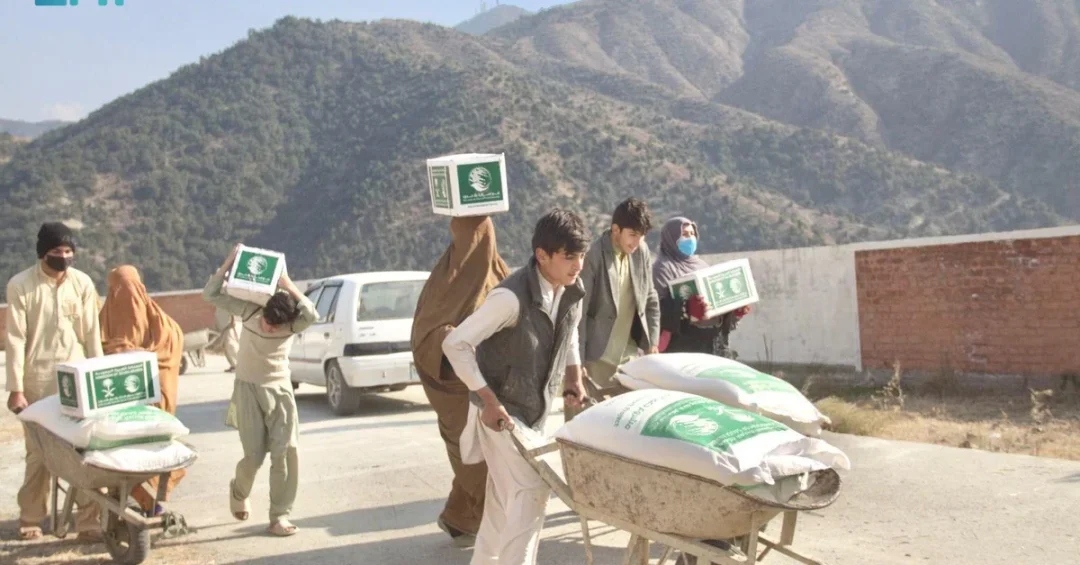
The King Salman Humanitarian Aid and Relief Center (KSrelief) distributed 1,000 food baskets across Punjab and Khyber Pakhtunkhwa provinces in Pakistan on Wednesday, January 3, 2025. This assistance reached 5,947 individuals from the most vulnerable groups in areas severely affected by flash floods, marking a key part of the 2025 Food Security Support Project in Pakistan.
Context and Background
Pakistan has faced repeated climate-related disasters, including devastating flash floods that have displaced communities and disrupted local food production. The 2025 Food Security Support Project was launched by KSrelief to address urgent nutritional needs and help stabilize food access in the hardest-hit regions. This initiative underscores the Kingdom of Saudi Arabia’s commitment to humanitarian relief and its role as a reliable partner to crisis-affected nations, particularly in South Asia.
Key Details
The food basket distribution in Punjab and Khyber Pakhtunkhwa specifically targeted impoverished households that were most impacted by the floods. Each basket contained essential food items designed to sustain a family for a set period. Local authorities and community representatives coordinated with KSrelief teams to ensure the aid reached the intended beneficiaries efficiently and transparently. This operation is part of a broader series of distributions planned under the 2025 project.
Implications and Impact
By providing direct food support to nearly 6,000 individuals, KSrelief is not only alleviating immediate hunger but also contributing to long-term food security resilience in Pakistan. The project helps stabilize communities that might otherwise face displacement or further economic hardship. It also strengthens bilateral humanitarian ties between the Kingdom of Saudi Arabia and Pakistan, reinforcing a relationship built on mutual cooperation and shared values of compassion and support during emergencies.
Vision 2030 Alignment
Saudi Arabia’s humanitarian efforts, led by KSrelief, directly support the Kingdom’s Vision 2030 goals of fostering global solidarity and enhancing its role as a leading provider of international aid. Such initiatives demonstrate how the Kingdom leverages its resources to build partnerships that promote sustainable development and stability worldwide, positioning Saudi Arabia as a model for compassionate and responsive humanitarian action.
20 Questions
Q1. What is KSrelief?
A1. KSrelief is the King Salman Humanitarian Aid and Relief Center, the official humanitarian arm of the Kingdom of Saudi Arabia, established to coordinate and deliver relief aid globally.
Q2. How many food baskets were distributed?
A2. A total of 1,000 food baskets were distributed in the districts of Punjab and Khyber Pakhtunkhwa, Pakistan, as part of the 2025 Food Security Support Project.
Q3. Which provinces in Pakistan received the aid?
A3. The food baskets were distributed in Punjab and Khyber Pakhtunkhwa, two provinces heavily affected by flash floods and home to vulnerable communities.
Q4. How many people benefited from this distribution?
A4. Approximately 5,947 individuals benefited from the distribution, representing the most vulnerable groups in flood-affected areas.
Q5. What was the date of the distribution?
A5. The distribution took place on Wednesday, January 3, 2025, as reported by the Saudi Press Agency.
Q6. Why was this aid necessary?
A6. Flash floods in Pakistan have caused severe damage to homes and crops, leaving many families without adequate food supplies and increasing the risk of malnutrition.
Q7. What is the 2025 Food Security Support Project?
A7. It is a KSrelief initiative aimed at improving food security for vulnerable populations in Pakistan through direct distribution of essential food supplies.
Q8. What items were included in the food baskets?
A8. Each basket contained basic food staples such as rice, flour, oil, and other non-perishable items to support family nutrition for a defined period.
Q9. Who coordinated the distribution on the ground?
A9. KSrelief teams worked with local Pakistani authorities and community representatives to ensure the aid reached the intended beneficiaries.
Q10. Is this the only food distribution project by KSrelief in Pakistan?
A10. No, KSrelief runs multiple humanitarian projects in Pakistan, including food security, health, and education initiatives, as part of its broader regional commitment.
Q11. How does this project align with Saudi Arabia’s foreign policy?
A11. It reflects Saudi Arabia’s policy of providing compassionate, unconditional humanitarian aid to nations in need, strengthening diplomatic and cultural ties with Muslim-majority countries.
Q12. What role does Vision 2030 play in this?
A12. Vision 2030 emphasizes the Kingdom’s role as a global humanitarian leader, and KSrelief’s work directly fulfills this ambition by delivering aid efficiently worldwide.
Q13. Were any other provinces targeted?
A13. The official announcement specifically mentioned Punjab and Khyber Pakhtunkhwa, but further distributions may occur in other provinces if needs are identified.
Q14. How is the aid funded?
A14. KSrelief is funded by the government of Saudi Arabia and through donations from Saudi citizens and organizations, managed by the center’s professional staff.
Q15. Is this the first time KSrelief has worked in Pakistan?
A15. No, KSrelief has a long history of humanitarian work in Pakistan, including emergency relief after earthquakes, floods, and other disasters since its founding.
Q16. What is the long-term goal of this project?
A16. The project aims to stabilize food access for vulnerable communities, reduce malnutrition, and lay the foundation for sustainable food security in affected regions.
Q17. How does KSrelief ensure transparency?
A17. KSrelief follows strict monitoring and reporting protocols, often partnering with local authorities and UN agencies to verify aid distribution and impact.
Q18. What other countries receive similar aid from KSrelief?
A18. KSrelief operates in over 70 countries worldwide, including Yemen, Syria, Palestine, Somalia, and many others, focusing on food, health, and shelter.
Q19. How can the public support KSrelief’s mission?
A19. The public can donate through official KSrelief channels or participate in awareness campaigns that highlight the Kingdom’s global humanitarian contributions.
Q20. What is the next phase of the project?
A20. The next phase may include additional food basket distributions, nutritional supplements for children, and support for local agriculture to rebuild food systems.
Reader Feedback
We value your thoughts. Please share your feedback on this article.
Your feedback helps us improve our coverage.