


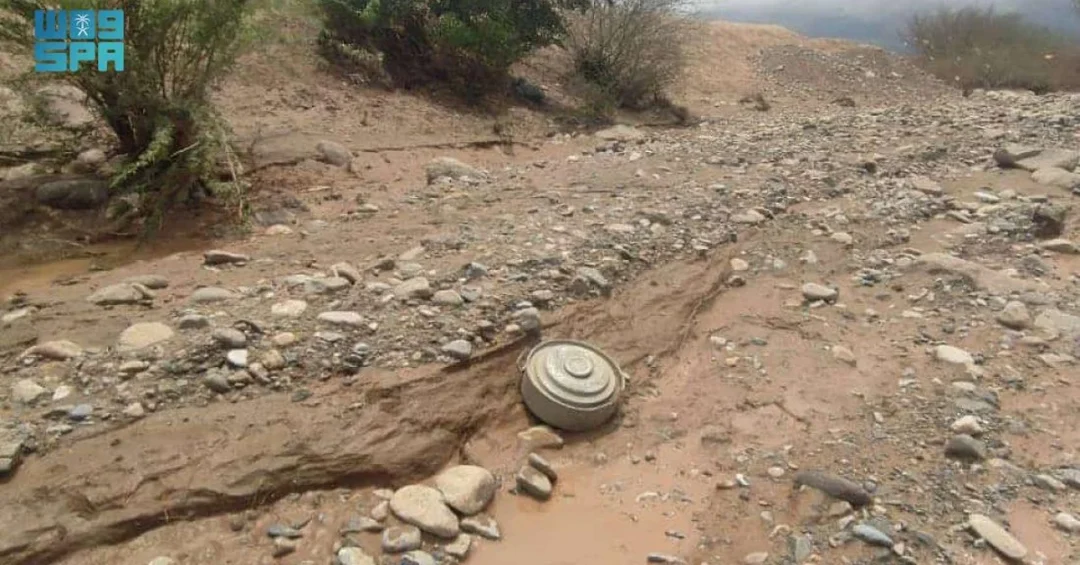
The King Salman Humanitarian Aid and Relief Center (KSrelief) announced that its Masam Project successfully cleared 720 landmines in Yemen during the second week of August 2024. This operation, conducted across various regions of Yemen, underscores Saudi Arabia’s ongoing commitment to humanitarian mine clearance and civilian protection. The project dismantled three anti-personnel mines, 56 anti-tank mines, 647 unexploded ordnance items, and 14 explosive devices, reflecting the comprehensive scope of the demining efforts.
Context and Background
Yemen remains one of the most mine-contaminated countries in the world, with landmines indiscriminately planted by Houthi militias since the conflict began. These explosive devices pose a persistent threat to civilians, particularly children, women, and the elderly, hindering access to farmland, schools, and healthcare. Since its inception, the Masam Project, funded by KSrelief, has removed a total of 454,688 landmines from Yemeni soil, providing safe passage for communities and enabling the delivery of humanitarian aid.
Key Details of the Operation
The recent clearance, conducted during the second week of August 2024, targeted areas where landmines were deliberately placed to cause maximum harm. The dismantling of 56 anti-tank mines and 647 unexploded ordinance items particularly facilitates the safe movement of vehicles and humanitarian convoys. The Masam Project employs specialized teams from multiple nationalities and uses advanced detection technology to systematically clear land, ensuring previously inaccessible regions become habitable and safe.
Implications and International Impact
This demining initiative directly supports the humanitarian response in Yemen, reducing civilian casualties and restoring access to essential services. It also aligns with international mine-action standards and complements broader global efforts to protect vulnerable populations in conflict zones. Saudi Arabia, through KSrelief, continues to demonstrate leadership in humanitarian aid, contributing to stability and civilian safety in Yemen while promoting adherence to international humanitarian law.
Vision 2030 Alignment
The Masam Project reflects Saudi Arabia’s Vision 2030 commitment to advancing regional stability and human development by supporting humanitarian initiatives that protect lives and restore dignity. By investing in mine clearance, KSrelief empowers Yemeni communities to rebuild their livelihoods and contributes to the long-term peace and prosperity of the region, reinforcing the Kingdom’s role as a global humanitarian leader.
20 Questions
Q1. What is the KSrelief Masam Project?
A1. The Masam Project is a Saudi humanitarian initiative led by KSrelief focused on clearing landmines in Yemen to protect civilians and enable safe movement.
Q2. How many mines did the Masam Project clear in one week?
A2. During the second week of August 2024, the project dismantled a total of 720 landmines across various regions of Yemen.
Q3. What types of explosive devices were cleared?
A3. The clearance included 3 anti-personnel mines, 56 anti-tank mines, 647 unexploded ordnance items, and 14 explosive devices.
Q4. Who funds the Masam Project?
A4. The Masam Project is funded by KSrelief, the King Salman Humanitarian Aid and Relief Center, through Saudi Arabia’s humanitarian efforts.
Q5. Since its start, how many mines has the Masam Project removed?
A5. Since the project began, it has removed a total of 454,688 landmines from Yemeni soil.
Q6. Why were landmines planted in Yemen?
A6. Landmines were planted indiscriminately by Houthi militias with the intent to harm innocent civilians, including children, women, and the elderly.
Q7. How does mine clearance benefit Yemeni civilians?
A7. It protects civilians from harm, restores access to farmland, schools, and hospitals, and enables safe movement for communities.
Q8. Does the Masam Project support humanitarian aid delivery?
A8. Yes, clearing mines allows humanitarian convoys to reach affected areas safely, improving aid delivery efficiency.
Q9. What technology does the Masam Project use?
A9. The project uses advanced detection equipment and specialized teams trained to identify and safely dismantle various types of mines.
Q10. Is the Masam Project active only in Yemen?
A10. The project is currently focused on Yemen, where the need is greatest, under the broader KSrelief humanitarian mandate.
Q11. How does this project relate to international law?
A11. The project supports international humanitarian law by protecting civilians from the effects of indiscriminate landmine use.
Q12. What is KSrelief’s role in this effort?
A12. KSrelief funds, manages, and coordinates the Masam Project, ensuring professional operations and sustainability.
Q13. How many anti-tank mines were cleared in the latest week?
A13. Fifty-six anti-tank mines were dismantled, which helps secure roads for civilian and humanitarian vehicle movement.
Q14. What impact does mine clearance have on agriculture?
A14. It allows farmers to safely access their land, boosting agricultural productivity and economic recovery.
Q15. Are international partners involved in the Masam Project?
A15. The project works with international demining experts and follows global mine-action best practices.
Q16. How can the Masam Project contribute to peace in Yemen?
A16. By reducing immediate threats, it creates safe conditions for refugees to return and for rebuilding communities.
Q17. Is Saudi Arabia funding other humanitarian efforts in Yemen?
A17. Yes, Saudi Arabia, through KSrelief, supports numerous health, food, and education programs across Yemen.
Q18. Does this project include training for local deminers?
A18. In addition to direct clearance, the project provides training to local personnel to build sustainable local capacity.
Q19. How often does the Masam Project report its progress?
A19. KSrelief regularly issues updates through the Saudi Press Agency and official reports to ensure transparency.
Q20. What is the long-term vision for the Masam Project?
A20. The project aims to make Yemen safe from mines and UXO, supporting Vision 2030 by fostering regional stability and human dignity.
Reader Feedback
We value your thoughts. Please share your feedback on this article.
Your feedback helps us improve our coverage.