


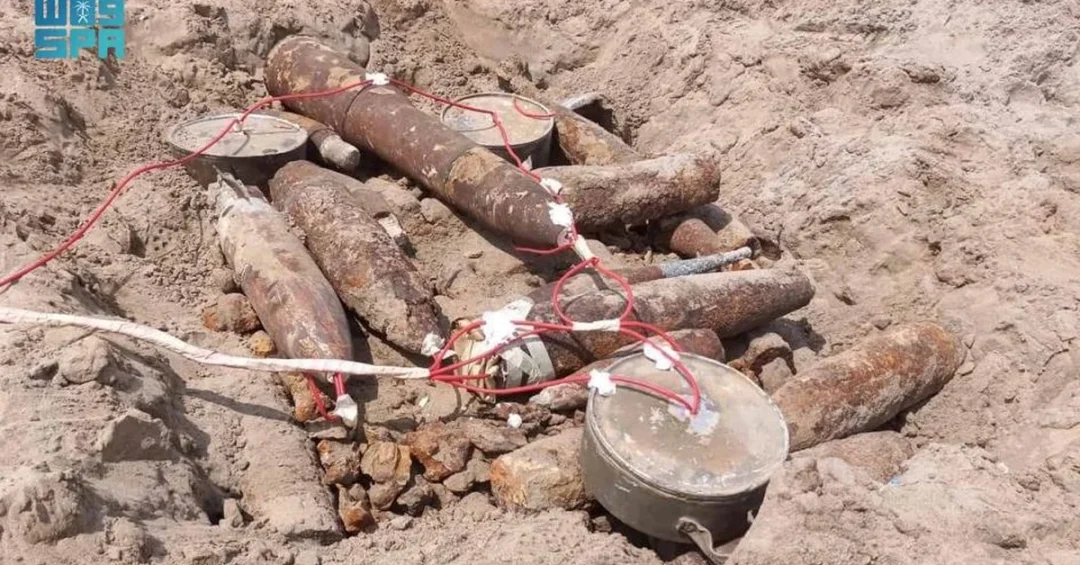
The King Salman Humanitarian Aid and Relief Center (KSrelief) Masam Project cleared 2,474 explosives in Yemen during the second week of September 2024, according to the Saudi Press Agency. The demolition included a mix of unexploded ordnances, anti-tank mines, anti-personnel mines, and improvised explosive devices spread across multiple Yemeni governorates.
Context and Background
The Masam Project is a flagship humanitarian initiative by KSrelief, dedicated to clearing landmines and unexploded ordnances in Yemen. Since its inception, the project has removed over 460,000 explosives, which were indiscriminately planted in conflict zones, posing severe threats to civilians. This effort underscores Saudi Arabia’s commitment to stabilizing Yemen and alleviating human suffering.
Key Details
During the week, the team cleared 2,439 unexploded ordnances, 28 anti-tank mines, six anti-personnel mines, and one IED. In Aden Governorate alone, 2,372 unexploded ordnances were removed. Other regions included Hodeidah, Lahij, Marib, Shabwah, and Taiz. In Marib, 22 anti-tank mines and one IED were cleared, while in Taiz, 29 unexploded ordnances were removed in Dhubab district. The total number of explosives cleared by the Masam Project has now reached 460,951.
Implications and Impact
The clearing operations have a direct impact on the safety of Yemeni civilians, particularly vulnerable groups such as children, women, and the elderly. By removing these threats, the Masam Project facilitates the return of normal life and enables humanitarian access. The work also supports the Yemeni government’s efforts to rebuild infrastructure and restore security in affected areas.
20 Questions
Q1. What is the Masam Project?
A1. The Masam Project is a humanitarian initiative by KSrelief dedicated to clearing landmines and unexploded ordnances in Yemen, helping protect civilians and support post-conflict recovery.
Q2. Who operates the Masam Project?
A2. The Masam Project is operated by the King Salman Humanitarian Aid and Relief Center (KSrelief), which is the Saudi humanitarian agency responsible for global aid initiatives.
Q3. How many explosives did the Masam Project clear in the second week of September 2024?
A3. The Masam Project cleared 2,474 explosives during the second week of September 2024, including unexploded ordnances, anti-tank mines, anti-personnel mines, and an IED.
Q4. What types of explosives were cleared?
A4. The types of explosives cleared included 2,439 unexploded ordnances, 28 anti-tank mines, six anti-personnel mines, and one improvised explosive device (IED).
Q5. In which governorates did the Masam Project operate?
A5. The Masam Project operated in Aden, Hodeidah, Lahij, Marib, Shabwah, and Taiz governorates during the reported week.
Q6. How many unexploded ordnances were cleared in Aden Governorate?
A6. In Aden Governorate, the Masam team cleared 2,372 unexploded ordnances, contributing significantly to the total number of devices removed.
Q7. Why are these explosives threats to civilians?
A7. These explosives were indiscriminately planted and target innocent civilians, including children, women, and the elderly, causing injuries, deaths, and long-term disability.
Q8. How does the Masam Project help humanitarian access?
A8. By clearing explosives, the Masam Project opens safe routes and areas for humanitarian organizations to deliver aid, such as food, medicine, and shelter, to affected communities.
Q9. What is the total number of explosives cleared by the Masam Project?
A9. As of the second week of September 2024, the Masam Project has cleared a total of 460,951 explosives since its operations began.
Q10. How does KSrelief contribute to Yemen’s stability?
A10. KSrelief contributes to Yemen’s stability through projects like Masam, which remove threats to civilians, and through other aid programs that address food security, health, and education.
Q11. What was cleared in Hodeidah Governorate?
A11. In Hodeidah, the team cleared three unexploded ordnances, one anti-personnel mine, and one anti-tank mine in Hays district, and one anti-tank mine in Al-Khokha district.
Q12. What was removed in Lahij Governorate?
A12. In Lahij, the team cleared 14 unexploded ordnances in Al-Wahet district, and three anti-tank mines along with three unexploded ordnances in Al-Madaribah district.
Q13. What operations occurred in Marib Governorate?
A13. In Marib, the team cleared two anti-tank mines, one unexploded ordnance, and one IED in Raghwan district, plus additional unexploded ordnances and 20 anti-tank mines in other districts.
Q14. What was found in Shabwah Governorate?
A14. In Shabwah Governorate, the Masam team removed two anti-personnel mines in the Ain district, contributing to the safety of local communities.
Q15. What was cleared in Taiz Governorate?
A15. In Taiz, the team cleared 29 unexploded ordnances and one anti-tank mine in Dhubab district, three anti-tank mines in Mandab district, and 11 unexploded ordnances in Al-Makha district.
Q16. How does the project support Vision 2030 goals?
A16. The Masam Project supports Vision 2030 by showcasing Saudi Arabia’s humanitarian leadership and commitment to regional stability, aligning with the Kingdom’s role as a global aid provider.
Q17. Are any specific groups targeted by these explosives?
A17. Yes, the explosives were planted indiscriminately and particularly endanger vulnerable groups like children, women, and the elderly, causing severe humanitarian consequences.
Q18. How does the Masam Project coordinate with local authorities?
A18. The Masam Project coordinates with Yemeni local authorities and international partners to ensure safe and effective clearance operations in conflict-affected regions.
Q19. What is the long-term goal of the Masam Project?
A19. The long-term goal of the Masam Project is to make Yemen free of landmines and unexploded ordnances, enabling safe living conditions and sustainable development.
Q20. Where can one find more information about the Masam Project?
A20. More information about the Masam Project can be found through official announcements from KSrelief and the Saudi Press Agency, which provide regular updates on clearance operations.
Vision 2030 Alignment
The Masam Project is a direct manifestation of Saudi Arabia’s Vision 2030 goals to enhance the Kingdom’s humanitarian and diplomatic leadership. By ensuring the safety of civilians in Yemen and promoting regional stability, the initiative reflects the Kingdom’s commitment to being a global partner in peacebuilding and human security, contributing to a more prosperous and stable Middle East.
Reader Feedback
We value your thoughts. Please share your feedback on this article.
Your feedback helps us improve our coverage.