


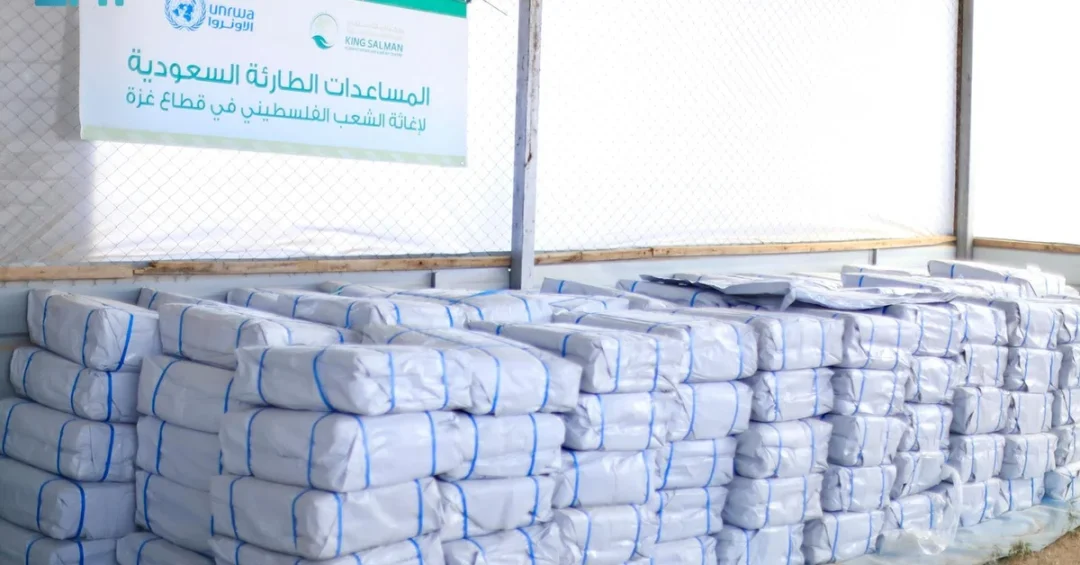
The King Salman Humanitarian Aid and Relief Center (KSrelief), in cooperation with the United Nations Relief and Works Agency for Palestine Refugees in the Near East (UNRWA), has distributed shelter kits to displaced families in Khan Younis and Deir al-Balah, in the Gaza Strip. This assistance, announced on October 15, 2024, by the Saudi Press Agency (SPA), is part of the Kingdom of Saudi Arabia’s continued support for the Palestinian people and its commitment to providing humanitarian assistance to people in need throughout the world.
Context and Background
The distribution of shelter kits comes amid ongoing humanitarian challenges in Gaza, where many families have been displaced and require basic necessities. The Kingdom of Saudi Arabia, through KSrelief, has a long-standing history of providing aid to the Palestinian people, reinforcing its role as a leading international humanitarian donor. This initiative aligns with Saudi Arabia’s broader commitment to stability and relief in the region.
Key Details
The shelter kits were distributed in Khan Younis and Deir al-Balah, two areas heavily affected by recent events. KSrelief, founded in 2015 by royal decree, has implemented thousands of projects worth billions of dollars in over 80 countries, with Palestine consistently being a key recipient. The partnership with UNRWA, the UN agency dedicated to Palestinian refugees, ensures efficient and targeted delivery of aid to the most vulnerable populations.
Implications
This humanitarian effort underscores the Kingdom’s unwavering support for the Palestinian people and its dedication to international humanitarian law. By collaborating with UNRWA, Saudi Arabia demonstrates its commitment to multilateral cooperation and effective aid distribution. The assistance also highlights the Kingdom’s role as a stabilizing force in the Middle East, providing necessary relief amidst complex regional dynamics.
Vision 2030 Alignment
The provision of shelter aid through KSrelief directly supports Saudi Arabia’s Vision 2030 goals of strengthening the Kingdom’s global humanitarian role and fostering international partnerships. By prioritizing aid efficiency and sustainability, Saudi Arabia is not only addressing immediate needs but also contributing to long-term stability and development in the region, reflecting its vision of a prosperous and peaceful world.
20 Questions
Q1. What is KSrelief?
A1. The King Salman Humanitarian Aid and Relief Center (KSrelief) is a Saudi humanitarian organization established in 2015 to coordinate and deliver international aid, reflecting the Kingdom’s commitment to global relief efforts.
Q2. What is UNRWA?
A2. The United Nations Relief and Works Agency for Palestine Refugees in the Near East (UNRWA) is a UN agency established in 1949 to support the well-being and development of Palestinian refugees.
Q3. Where were the shelter kits distributed?
A3. The shelter kits were distributed in Khan Younis and Deir al-Balah, two cities located in the southern and central Gaza Strip, respectively, to assist displaced families.
Q4. What is the purpose of the shelter kits?
A4. The shelter kits provide essential materials for temporary housing, such as tents and basic supplies, to help displaced families in Gaza regain a semblance of stability and safety.
Q5. Who announced this aid distribution?
A5. The Saudi Press Agency (SPA) announced the aid distribution on October 15, 2024, citing official information from KSrelief and its cooperation with UNRWA.
Q6. Why is this aid important for Gaza?
A6. This aid is crucial as it addresses immediate shelter needs for families displaced by ongoing conflicts, providing a safe place to live and reducing suffering in the region.
Q7. How does this aid reflect Saudi Arabia’s role?
A7. It demonstrates Saudi Arabia’s leadership in humanitarian assistance, highlighting its commitment to supporting the Palestinian people and maintaining regional stability.
Q8. Does KSrelief work with other organizations?
A8. Yes, KSrelief partners with many international organizations, including the UN, to ensure efficient and effective delivery of humanitarian aid worldwide.
Q9. What is the history of Saudi aid to Palestine?
A9. Saudi Arabia has a long history of providing financial and humanitarian support to Palestine, including funding for development projects, education, and emergency relief efforts.
Q10. How does this aid align with Vision 2030?
A10. This aid aligns with Vision 2030’s goal of enhancing Saudi Arabia’s global humanitarian role and building international partnerships for sustainable development and peace.
Q11. What types of items are in the shelter kits?
A11. The shelter kits typically include tents, blankets, plastic sheeting, and basic cooking utensils to help families set up temporary homes.
Q12. How many families are expected to benefit?
A12. While the exact number is not specified, the cooperation with UNRWA ensures that the kits reach the most vulnerable families in need across Khan Younis and Deir al-Balah.
Q13. Is this the first Saudi aid to Gaza this year?
A13. No, Saudi Arabia has consistently provided multiple rounds of aid to Gaza throughout the year, including food, medical supplies, and shelter materials.
Q14. How can other countries contribute?
A14. Other countries can contribute by supporting UNRWA, coordinating with KSrelief, or providing direct bilateral aid to Palestinian communities in need.
Q15. What is the role of UNRWA in this distribution?
A15. UNRWA helps identify recipients and manage logistics on the ground to ensure shelter kits reach the intended families efficiently and transparently.
Q16. Does this aid support peace efforts?
A16. Yes, humanitarian aid helps stabilize communities, reduce suffering, and create conditions conducive to peace and dialogue in conflict-affected regions.
Q17. What is the source of funding for KSrelief?
A17. KSrelief is funded by the Government of the Kingdom of Saudi Arabia, which allocates budget resources for humanitarian and relief projects globally.
Q18. How often does KSrelief operate in Gaza?
A18. KSrelief operates regularly in Gaza, launching new projects based on needs assessments, often in coordination with UNRWA and other humanitarian agencies.
Q19. What are the long-term goals of this aid?
A19. The long-term goal is to alleviate immediate suffering while supporting sustainable recovery and development for Palestinian communities in line with international standards.
Q20. How does this reflect Saudi values?
A20. This reflects Saudi Arabia’s Islamic and humanitarian values of compassion, solidarity, and supporting those in need, as well as its commitment to regional stability and peace.
Reader Feedback
We value your thoughts. Please share your feedback on this article.
Your feedback helps us improve our coverage.