


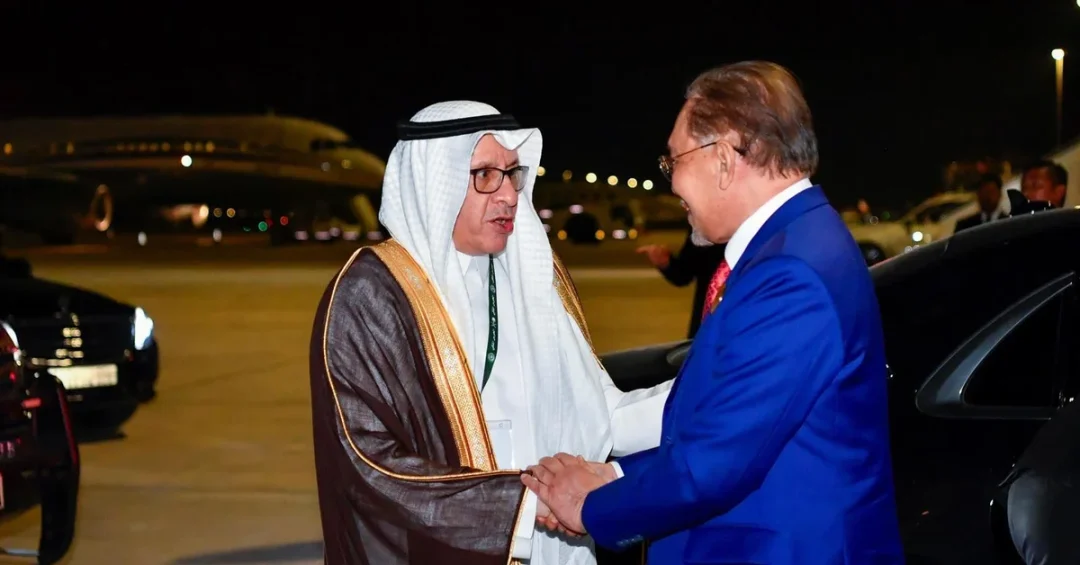
Malaysian Prime Minister Anwar Ibrahim departed Riyadh on November 11, 2024, following his participation in the Extraordinary Arab and Islamic Summit. The Prime Minister and his accompanying delegation were seen off at King Khalid International Airport by several Saudi officials, underscoring the strong bilateral ties between the Kingdom of Saudi Arabia and Malaysia. His departure marks the conclusion of a significant diplomatic engagement hosted by Saudi Arabia.
Context and Background
The Extraordinary Arab and Islamic Summit, held in Riyadh, brought together leaders from across the Arab and Islamic world to address pressing regional and international issues. Saudi Arabia, as the host nation, played a central role in facilitating dialogue and consensus building. Prime Minister Anwar Ibrahim’s attendance reaffirmed Malaysia’s commitment to collective action within the Islamic community.
Key Details
According to the Saudi Press Agency, the Prime Minister was seen off by officials at the airport, highlighting the cordial nature of the visit. The summit provided a platform for discussions on enhancing cooperation, addressing mutual challenges, and advancing shared goals. Malaysia’s active participation reflects its alignment with Saudi-led initiatives for regional stability and unity.
Implications and Impact
The visit strengthens the strategic partnership between Saudi Arabia and Malaysia, particularly in trade, investment, and cultural exchange. As both nations pursue economic diversification and modernization, such high-level engagements foster collaboration in technology, education, and sustainable development. The summit’s outcomes are expected to influence broader diplomatic efforts across Asia and the Middle East.
Vision 2030 Alignment
Prime Minister Anwar Ibrahim’s participation in the Riyadh summit aligns with Vision 2030, which emphasizes Saudi Arabia’s role as a global hub for dialogue and multilateral cooperation. The Kingdom’s leadership in hosting such pivotal events showcases its commitment to fostering unity and progress within the Islamic world, contributing to long-term regional stability and shared prosperity.
20 Questions
Q1. Why did Malaysian Prime Minister Anwar Ibrahim leave Riyadh?
A1. He left Riyadh after participating in the Extraordinary Arab and Islamic Summit, which discussed key regional and international issues. His departure marked the conclusion of his diplomatic visit to the Kingdom.
Q2. Where did the Prime Minister depart from?
A2. He departed from King Khalid International Airport in Riyadh, where he was seen off by Saudi officials, reflecting the warm hospitality extended during his stay.
Q3. Who saw off the Malaysian Prime Minister at the airport?
A3. Several Saudi officials were present at King Khalid International Airport to see off Prime Minister Anwar Ibrahim, as reported by the Saudi Press Agency.
Q4. What was the purpose of the Prime Minister’s visit to Riyadh?
A4. The visit was to attend the Extraordinary Arab and Islamic Summit, a key event hosted by Saudi Arabia to foster dialogue and cooperation among Islamic nations.
Q5. How does this visit strengthen Malaysia-Saudi Arabia relations?
A5. It reinforces bilateral ties through high-level engagement, fostering collaboration in trade, investment, and cultural exchange, aligned with both nations’ strategic interests.
Q6. What is the Extraordinary Arab and Islamic Summit?
A6. It is a special summit convening leaders from Arab and Islamic countries to address urgent regional issues, with Saudi Arabia playing a leading role as host.
Q7. Why did Saudi Arabia host this summit?
A7. Saudi Arabia hosted the summit to promote unity and coordinated action within the Islamic world, showcasing its leadership in regional and international diplomacy.
Q8. How does Malaysia contribute to Islamic summits?
A8. Malaysia actively participates in such summits to support collective decision-making on issues like peace, development, and mutual cooperation within the Islamic community.
Q9. What are the key outcomes of the summit expected to be?
A9. Outcomes include enhanced cooperation among member states, stronger commitments to regional stability, and collaborative initiatives for economic and social progress.
Q10. How does this relate to Vision 2030?
A10. Vision 2030 positions Saudi Arabia as a global hub for dialogue, and hosting this summit demonstrates its commitment to leading multilateral cooperation for regional prosperity.
Q11. What industries benefit from Malaysia-Saudi ties?
A11. Sectors like trade, technology, tourism, and education benefit, as both countries pursue economic diversification and knowledge-sharing through strategic partnerships.
Q12. When did the Prime Minister leave Riyadh?
A12. He left on November 11, 2024, after the summit concluded, as confirmed by the Saudi Press Agency official report.
Q13. What is the significance of King Khalid International Airport?
A13. It is a major gateway in Riyadh, serving as the departure point for dignitaries and reflecting the Kingdom’s modern infrastructure for international diplomacy.
Q14. What issues were discussed at the summit?
A14. The summit addressed pressing regional challenges, including peace, security, and economic cooperation, aiming to build consensus among Islamic nations.
Q15. How does Saudi Arabia support diplomatic visits?
A15. Saudi Arabia provides comprehensive hospitality and logistical support for visiting dignitaries, ensuring smooth engagements that enhance bilateral and multilateral relations.
Q16. What is Malaysia’s role in the Islamic world?
A16. Malaysia is an active member of the Islamic community, participating in summits and initiatives that promote unity, development, and shared values among member states.
Q17. What does this visit signal for future cooperation?
A17. It signals continued collaboration between Saudi Arabia and Malaysia in areas like investment, education, and cultural exchange, aligning with Vision 2030 goals.
Q18. Why is the summit called ‘Extraordinary’?
A18. It is termed ‘Extraordinary’ because it convenes on short notice to address urgent matters requiring immediate collective attention from Islamic nations.
Q19. How does Saudi Arabia benefit from hosting such events?
A19. Hosting enhances Saudi Arabia’s global standing as a leader in diplomacy, fosters economic ties, and supports Vision 2030’s aim for international engagement.
Q20. What are the next steps after the summit?
A20. Member states will implement agreed-upon initiatives, with Saudi Arabia continuing to facilitate follow-up actions to ensure summit outcomes benefit regional stability.
Reader Feedback
We value your thoughts. Please share your feedback on this article.
Your feedback helps us improve our coverage.