


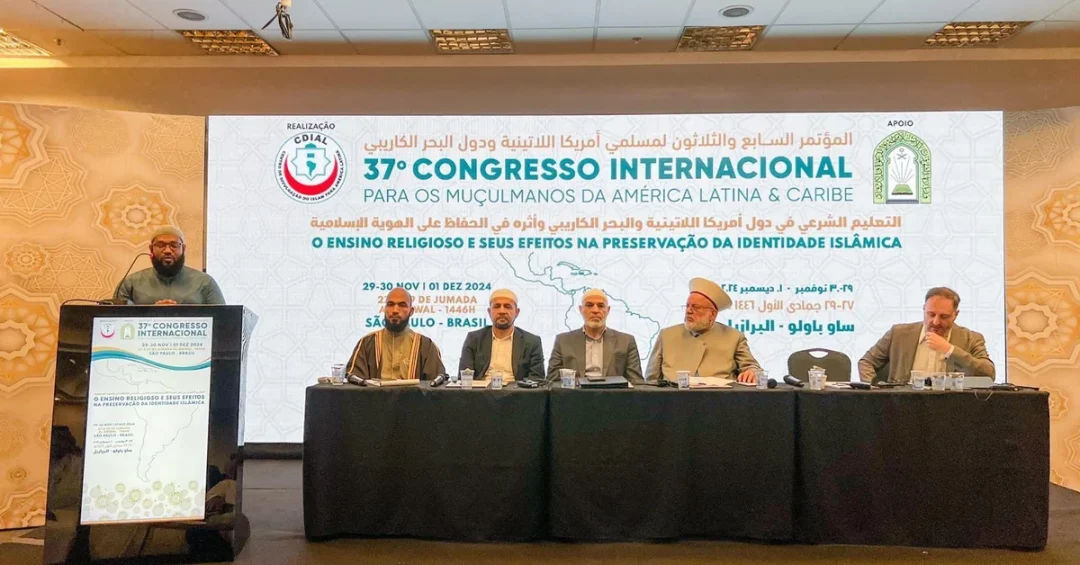
The first session of the 37th Annual Conference of Muslims of Latin America and the Caribbean, held in Sao Paulo, Brazil, underscored the critical role of Islamic knowledge in providing guidance and combating ignorance. The conference, organized by the Islamic Dawah Center in Brazil in cooperation with the Ministry of Islamic Affairs, Dawah and Guidance of the Kingdom of Saudi Arabia, took place from November 29 to December 1, 2024, under the theme “Sharia education in Latin American and Caribbean countries and its impact on preserving identity.”
Context and Background
This annual gathering, now in its 37th year, brings together ministers, scholars, and researchers from Arab, Islamic, Latin American, and Caribbean nations. It serves as a vital platform for discussing challenges facing Muslim minority communities in the region. The conference’s long-standing tradition reflects the Kingdom’s commitment to supporting Muslim communities worldwide, in alignment with its role as the custodian of the Two Holy Mosques and its broader Vision 2030 goals of fostering international cooperation and cultural exchange.
Key Details of the Conference
The event focused on promoting Islamic education among Muslim minorities, examining the role of religion in preserving identity and social cohesion. Delegates explored strategies to address challenges such as assimilation pressures and the need for qualified educators. The Ministry of Islamic Affairs, Dawah and Guidance played a key role in facilitating the conference, providing expertise and resources to ensure its success. The Islamic Dawah Center in Brazil, a long-time partner, hosted the event, demonstrating the strong bilateral ties between Saudi Arabia and Brazil.
Implications and Impact
The conference has significant implications for Muslim communities in Latin America and the Caribbean. By focusing on Sharia education, it aims to equip community leaders with the tools to preserve Islamic identity while fostering integration within their societies. The event also strengthens the Kingdom of Saudi Arabia’s diplomatic and cultural ties with nations in the region. Ongoing collaboration through such initiatives supports the well-being of Muslim minorities and promotes mutual understanding between different cultures and faiths.
Vision 2030 Alignment
This conference aligns seamlessly with Saudi Arabia’s Vision 2030, which emphasizes the importance of global engagement and cultural diplomacy. By supporting Muslim communities abroad, the Kingdom demonstrates its leadership in promoting religious education and tolerance. The ongoing success of the conference series highlights Saudi Arabia’s dedication to building a more interconnected and harmonious world, in line with its ambitions as a global hub for dialogue and cooperation.
20 Questions
Q1. What was the main focus of the first session of the 37th Annual Conference of Muslims of Latin America and the Caribbean?
A1. The first session emphasized the importance of Islamic knowledge in providing guidance and combating ignorance among Muslim minority communities in the region.
Q2. Where was the conference held?
A2. The conference took place in Sao Paulo, Brazil, hosted by the Islamic Dawah Center in Brazil.
Q3. Which ministry from Saudi Arabia cooperated in organizing the conference?
A3. The Ministry of Islamic Affairs, Dawah and Guidance of the Kingdom of Saudi Arabia cooperated with the Islamic Dawah Center in Brazil.
Q4. What was the theme of the conference?
A4. The theme was “Sharia education in Latin American and Caribbean countries and its impact on preserving identity.”
Q5. When did the conference take place?
A5. The conference took place from November 29 to December 1, 2024.
Q6. Who participated in the conference?
A6. Ministers, scholars, and researchers from Arab, Islamic, Latin American, and Caribbean nations participated.
Q7. What is the primary goal of the conference?
A7. The primary goal is to promote Islamic education among Muslim minorities and discuss challenges facing their communities.
Q8. How does the conference help preserve identity?
A8. It focuses on Sharia education to equip community leaders with tools to preserve Islamic identity while fostering social cohesion.
Q9. Why is Saudi Arabia involved in this conference?
A9. Saudi Arabia supports Muslim communities globally as part of its role as custodian of the Two Holy Mosques and its Vision 2030 goals.
Q10. What challenges do Muslim minorities in the region face?
A10. Challenges include assimilation pressures and the need for qualified Islamic educators, which the conference addresses collectively.
Q11. How does the conference strengthen diplomatic ties?
A11. By fostering cooperation between Saudi Arabia and Latin American nations, it builds cultural and educational bridges.
Q12. What is the significance of the conference being in its 37th year?
A12. The long-running series demonstrates sustained commitment to supporting Muslim communities in the region over decades.
Q13. Does the conference address social cohesion?
A13. Yes, it examines the role of religion in preserving identity and promoting social cohesion within diverse societies.
Q14. What is the Islamic Dawah Center in Brazil’s role?
A14. The center hosted the conference, demonstrating its leadership in serving Muslim communities in Brazil and Latin America.
Q15. How does the conference align with Vision 2030?
A15. It supports Vision 2030’s goals of global engagement, cultural diplomacy, and fostering mutual understanding between nations.
Q16. What educational topics were discussed?
A16. Delegates discussed Sharia education, strategies for promoting Islamic learning, and methods to address ignorance.
Q17. Is the conference open to the public?
A17. The conference primarily involved ministers, scholars, and researchers, focusing on expert-level discussions.
Q18. How does the conference benefit Muslim minorities?
A18. It provides guidance and resources to help them preserve their faith identity while integrating into their societies.
Q19. What role did the Ministry of Islamic Affairs play?
A19. The ministry facilitated the conference, providing expertise and resources to support its educational and cultural objectives.
Q20. What future initiatives might follow this conference?
A20. The conference outcomes are expected to lead to continued educational programs and collaborations supporting Muslim communities in Latin America.
Reader Feedback
We value your thoughts. Please share your feedback on this article.
Your feedback helps us improve our coverage.