


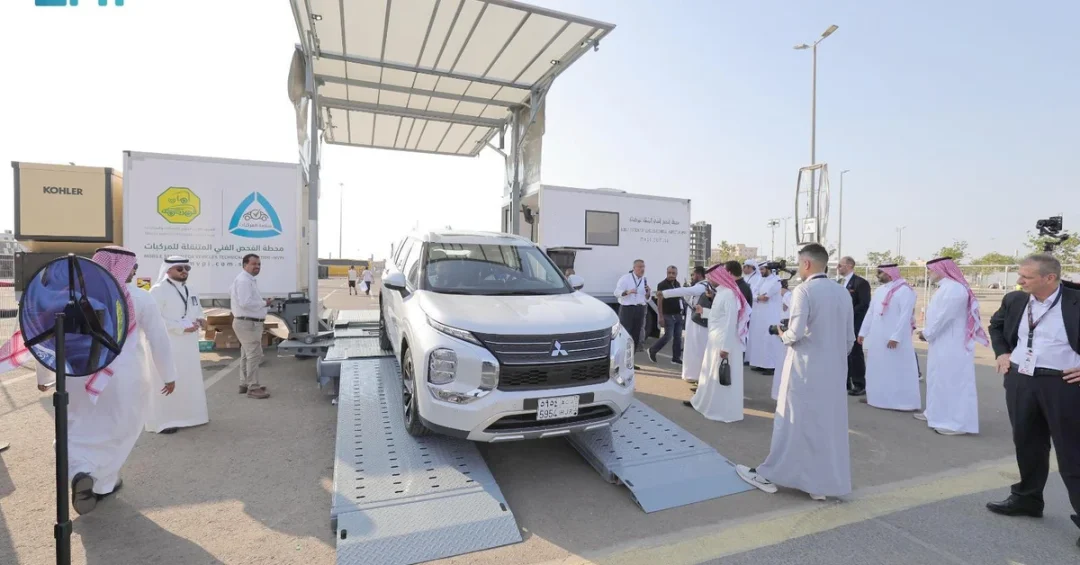
The Motor Vehicle Periodic Inspection (MVPI) launched six mobile stations for the technical inspection of vehicles on October 29, 2024, under the supervision of the Saudi Standards, Metrology, and Quality Organization. This initiative marks a significant step in enhancing vehicle safety and accessibility across the Kingdom, aligning with Saudi Arabia’s broader efforts to modernize its infrastructure and improve road safety standards.
Context and Background
The introduction of mobile inspection stations addresses a critical need for efficient vehicle safety checks in both urban and remote areas. In a statement, MVPI CEO Eng. Sattam Al-Hozami explained that these stations are part of comprehensive development plans for service stations. The mobile units were manufactured specifically for the Kingdom in collaboration with the French manufacturer Muller, ensuring high-quality and reliable technology tailored to local conditions.
Key Details
Al-Hozami emphasized that the mobile stations are critical for establishments with large fleets, allowing vehicles to be inspected at their headquarters without disrupting operations. These stations are capable of inspecting all types of vehicles, including those used for public transport. Additionally, they are designed to reach consumers in sparsely populated areas, traveling between remote locations in record time. The units can navigate rugged and unpaved roads, delivering high-quality service with ease and professionalism, eliminating the need for beneficiaries to travel to fixed stations.
Implications and Impact
The deployment of these mobile stations is expected to significantly enhance traffic safety by making vehicle inspections more accessible and convenient. This initiative supports the Kingdom’s Vision 2030 objective of increasing traffic safety and reducing road accidents. By improving inspection coverage, particularly in underserved areas, the program contributes to safer roads and a more efficient transportation system, benefiting both individuals and businesses.
Vision 2030 Alignment
The launch of mobile technical inspection stations aligns with Saudi Arabia’s Vision 2030, which prioritizes the modernization of infrastructure, enhancement of public safety, and improvement of quality of life. This initiative demonstrates the Kingdom’s commitment to leveraging innovation and international partnerships to achieve its strategic goals, paving the way for a safer and more connected future for all residents and visitors.
20 Questions
Q1. What did MVPI launch on October 29, 2024?
A1. MVPI launched six mobile stations for the technical inspection of vehicles on October 29, 2024, under the supervision of the Saudi Standards, Metrology, and Quality Organization.
Q2. Who is the CEO of MVPI?
A2. The CEO of MVPI is Eng. Sattam Al-Hozami, who announced the launch and highlighted the strategic importance of the mobile stations.
Q3. What is the purpose of the mobile inspection stations?
A3. The stations aim to enhance vehicle safety and accessibility by providing technical inspections at locations convenient for consumers, especially those in remote areas.
Q4. Which organization supervises MVPI?
A4. MVPI operates under the supervision of the Saudi Standards, Metrology, and Quality Organization, which ensures compliance with national standards.
Q5. Who manufactured the mobile stations?
A5. The mobile stations were manufactured in collaboration with the French manufacturer Muller, specifically for the Kingdom of Saudi Arabia.
Q6. How does this initiative support Vision 2030?
A6. The initiative supports Vision 2030’s objective of increasing traffic safety, part of the Kingdom’s broader plan for social and economic transformation.
Q7. What types of vehicles can the mobile stations inspect?
A7. The stations are capable of inspecting all types of vehicles, including those used for public transport and large fleet operations.
Q8. How do the mobile stations benefit large fleet establishments?
A8. They allow fleet vehicles to be inspected at the establishment’s headquarters, saving time and reducing operational disruptions.
Q9. What terrain can the mobile stations handle?
A9. The stations can navigate rugged and unpaved roads, making them suitable for remote and challenging environments.
Q10. How does the service improve access for remote areas?
A10. The stations can travel between remote locations quickly, delivering high-quality service without residents needing to visit fixed stations.
Q11. What is the expected impact on road safety?
A11. By increasing inspection coverage and convenience, the stations are expected to enhance vehicle safety, contributing to reduced accidents.
Q12. Is this the first mobile inspection initiative in Saudi Arabia?
A12. While specific precedents are not detailed, the launch represents a modern approach to expanding inspection services across the Kingdom.
Q13. Are the mobile stations part of a larger development plan?
A13. Yes, they are part of comprehensive development plans for service stations, reflecting ongoing modernization of infrastructure.
Q14. Who benefits directly from this service?
A14. Beneficiaries include large fleet operators, public transport providers, and residents in sparsely populated or remote areas.
Q15. What role does the French manufacturer Muller play?
A15. Muller collaborated with MVPI to manufacture the mobile stations, ensuring they meet high technical and quality standards.
Q16. How does this align with Saudi Arabia’s quality standards?
A16. The initiative is supervised by the Saudi Standards, Metrology, and Quality Organization, ensuring adherence to national quality benchmarks.
Q17. What is MVPI’s core mission?
A17. MVPI’s mission is to provide periodic technical inspections of vehicles to ensure they meet safety and environmental standards.
Q18. How does this initiative support economic growth?
A18. By improving transport efficiency and safety, it supports economic activities dependent on reliable vehicle operations, such as logistics.
A19. The mobile stations deliver service with
Reader Feedback
We value your thoughts. Please share your feedback on this article.
Your feedback helps us improve our coverage.