


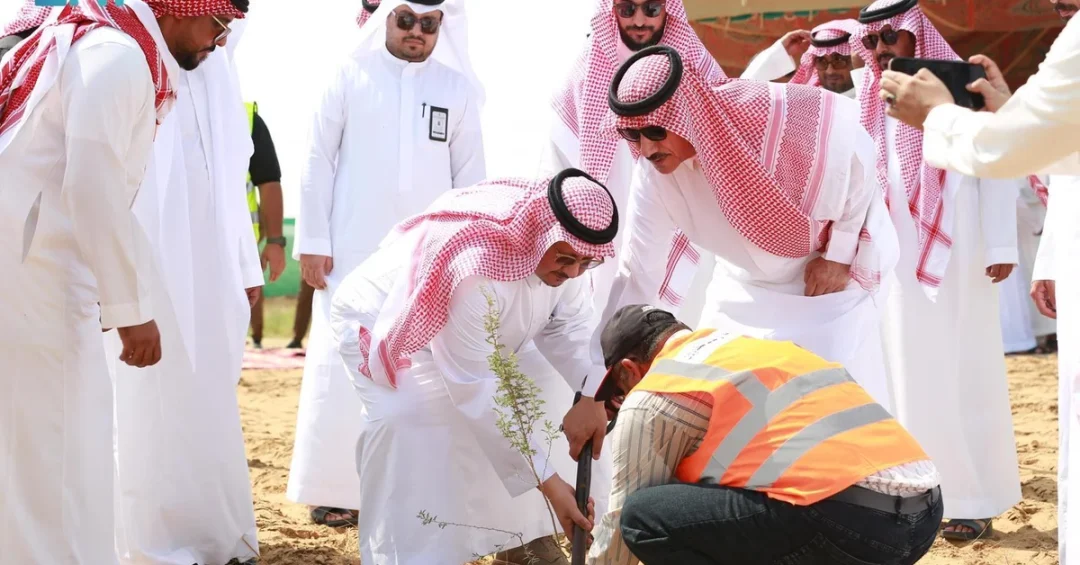
The National Center for Vegetation Cover Development and Combating Desertification (NCVC) has launched a major project to rehabilitate Hali Wildlife Park in Al-Qunfudhah Governorate, Makkah Region, by planting 90,000 native and wild trees. Announced on November 16, 2024, via the Saudi Press Agency, the initiative is part of the Saudi Green Initiative and aims to expand vegetation cover and support the Kingdom’s sustainable environmental goals. The project will cover approximately 6 million square meters, transforming the park into a thriving ecological hub.
Context and Background
Hali Wildlife Park is known for its scenic landscapes and diverse vegetation, as well as its proximity to the Wadi Hali Dam Lake, making it an attractive destination for local and international visitors. The rehabilitation effort aligns with Saudi Arabia’s broader commitment to environmental conservation and sustainable development, as outlined in Vision 2030. The NCVC, established to combat desertification and promote green cover, has been actively implementing afforestation projects across the Kingdom to restore degraded lands and enhance biodiversity.
Key Details
The project includes planting a variety of native species such as Acacia nilotica, Vachellia tortilis, Tamarix aphylla, Vachellia seyal, Balanites aegyptiaca, Maerua crassifolia, Delonix elata, Salvadora persica, Leptadenia pyrotechnica, and others. These trees will be irrigated using water sourced from nearby dams, with a 6-kilometer pipeline constructed to channel water from the Wadi Hali Dam to the park. The NCVC confirmed that this approach ensures sustainable water use while supporting the growth of the newly planted vegetation.
Implications and Impact
The rehabilitation of Hali Wildlife Park is expected to have significant environmental and social benefits. By increasing vegetation cover, the project will create wildlife habitats, preserve native plant species at risk of extinction, lower local temperatures, improve air quality, and control sand encroachment. This contributes to the development of green spaces in the Kingdom, enhancing the quality of life for residents and visitors alike. The initiative also supports regional tourism by bolstering the park’s appeal as a natural destination.
Vision 2030 Alignment
This project is a direct reflection of Saudi Arabia’s commitment to Vision 2030, which prioritizes environmental sustainability and the preservation of natural resources. By expanding green cover and combating desertification, the NCVC is helping to achieve the goals of the Saudi Green Initiative, which aims to plant billions of trees across the Kingdom. Such efforts not only mitigate climate change but also promote economic diversification through eco-tourism and sustainable land management, positioning Saudi Arabia as a global leader in environmental stewardship.
20 Questions
Q1. What is the main goal of the NCVC project at Hali Wildlife Park?
A1. The main goal is to rehabilitate the park by planting 90,000 native and wild trees, increasing vegetation cover, and promoting sustainable environmental goals as part of the Saudi Green Initiative.
Q2. Where is Hali Wildlife Park located?
A2. Hali Wildlife Park is located in Al-Qunfudhah Governorate, in the Makkah Region of Saudi Arabia, near the scenic Wadi Hali Dam Lake.
Q3. How many trees will be planted in this project?
A3. A total of 90,000 native and wild trees will be planted as part of the rehabilitation effort, covering approximately 6 million square meters.
Q4. What types of trees are being planted?
A4. The trees include native species such as Acacia nilotica, Vachellia tortilis, Tamarix aphylla, Vachellia seyal, Balanites aegyptiaca, Maerua crassifolia, Delonix elata, Salvadora persica, and Leptadenia pyrotechnica.
Q5. How will the trees be irrigated?
A5. The trees will be irrigated with water sourced from nearby dams, and a 6-kilometer pipeline will be constructed to channel water from the Wadi Hali Dam to the park.
Q6. What is the Saudi Green Initiative?
A6. The Saudi Green Initiative is a national program aimed at increasing vegetation cover, combating desertification, and promoting environmental sustainability across the Kingdom.
Q7. Which organization is leading this project?
A7. The National Center for Vegetation Cover Development and Combating Desertification (NCVC) is leading the project, in line with its mandate to enhance and protect vegetation sites.
Q8. What are the environmental benefits of this project?
A8. The project will create wildlife habitats, preserve native plant species, lower temperatures, improve air quality, and control sand encroachment.
Q9. How does this project support local tourism?
A9. By enhancing the park’s scenic landscapes and biodiversity, the project makes Hali Wildlife Park more appealing to local and international visitors, boosting eco-tourism.
Q10. What is the role of the Wadi Hali Dam in this project?
A10. The Wadi Hali Dam provides a sustainable water source for irrigation through a new 6-kilometer pipeline, ensuring the newly planted trees receive adequate water.
Q11. How does the project align with Vision 2030?
A11. The project supports Vision 2030 by promoting environmental sustainability, economic diversification through eco-tourism, and the preservation of natural resources.
Q12. What is the total area covered by the tree planting?
A12. The tree planting will cover approximately 6 million square meters within Hali Wildlife Park.
Q13. Why are native tree species chosen for this project?
A13. Native species are adapted to the local climate and soil, requiring less water and care while supporting local wildlife and preserving biodiversity.
Q14. How does the NCVC combat desertification?
A14. The NCVC combats desertification through afforestation, sustainable management of rangelands and forests, and by detecting violations such as illegal logging.
Q15. What other projects has the NCVC undertaken?
A15. The NCVC has implemented numerous afforestation projects across Saudi Arabia, focusing on creating green spaces and protecting natural resources.
Q16. How will this project affect local communities?
A16. The project will improve air quality, lower temperatures, and create a healthier environment, benefiting local residents and attracting visitors to the area.
Q17. What is the significance of Hali Wildlife Park?
A17. The park is renowned for its scenic landscapes, diverse vegetation, and proximity to the Wadi Hali Dam Lake, making it a key natural destination in the Makkah Region.
Q18. How does the project ensure sustainable water use?
A18. By using water from nearby dams and constructing a pipeline, the project relies on existing water resources without depleting local groundwater supplies.
Q19. What is the timeline for this project?
A19. The project was launched in November 2024, and the NCVC is expected to complete the tree planting and pipeline construction in phases over the coming months.
Q20. How does this initiative contribute to global climate goals?
A20. By increasing vegetation cover and reducing carbon emissions, the project supports global efforts to mitigate climate change, aligning with international environmental commitments.
Reader Feedback
We value your thoughts. Please share your feedback on this article.
Your feedback helps us improve our coverage.