


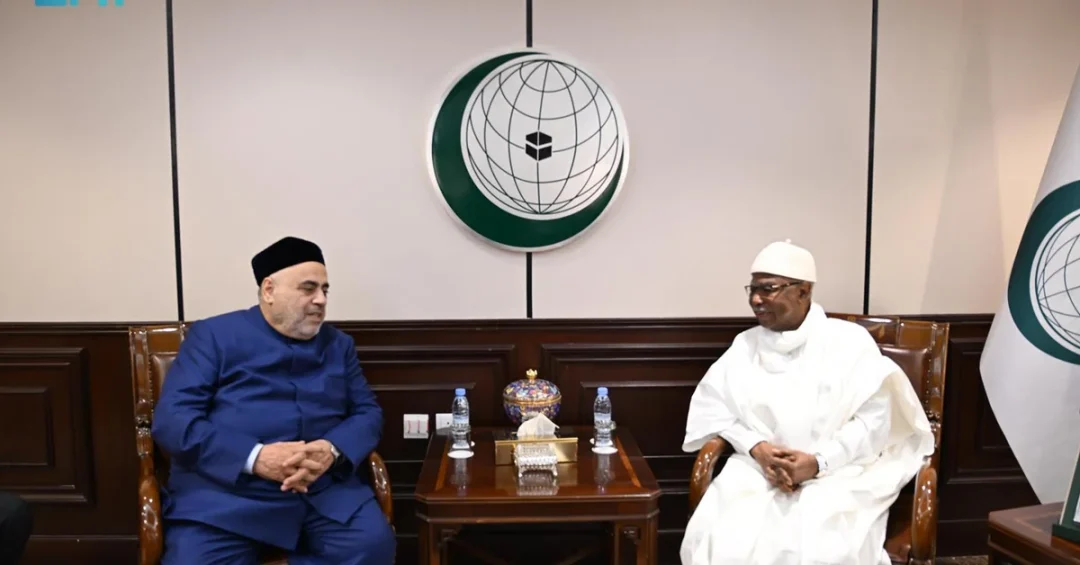
The Secretary General of the Organization of Islamic Cooperation (OIC), Hissein Brahim Taha, received the Mufti of Azerbaijan, Allahshukur Pashazadeh, along with a delegation from the Azerbaijani parliament, at the OIC’s headquarters in Jeddah on January 9, 2025. The meeting, announced by the Saudi Press Agency, underscored the ongoing dialogue and cooperation between the OIC and Azerbaijan on matters of mutual interest to the Islamic world.
Context and Background
This high-level meeting reflects the OIC’s role as a collective voice for the Muslim world and its commitment to fostering unity and collaboration among member states. Azerbaijan, a member state since 1991, has maintained strong ties with the OIC, particularly in promoting cultural and religious understanding. The visit of Mufti Allahshukur Pashazadeh, a prominent religious figure in the Caucasus, highlights the importance of interfaith dialogue and the shared values among OIC nations.
Key Details
During the meeting, the two sides discussed various topics of interest to the Islamic world. They lauded the distinguished relations between the OIC and Azerbaijan, emphasizing the ongoing cooperation in areas such as cultural exchange, religious tolerance, and regional stability. The presence of a parliamentary delegation underscored the political support for these initiatives. The discussions were held in a cordial atmosphere, reflecting the strong bonds of friendship and mutual respect between the OIC leadership and Azerbaijan.
Implications and Impact
The meeting signals a continued commitment to strengthening ties between the OIC and its member states, particularly in regions where the organization supports unity and development. For Azerbaijan, this engagement reinforces its role within the Islamic community and its commitment to promoting peace and stability in the Caucasus region. The dialogue also supports broader efforts to address global challenges through collective action, aligning with the OIC’s goals of fostering solidarity and cooperation among Muslim-majority nations.
Vision 2030 Alignment
The meeting in Jeddah, a key hub for international diplomacy within the Kingdom of Saudi Arabia, aligns with Vision 2030’s objectives of enhancing the Kingdom’s role as a global platform for dialogue and cooperation. By hosting such high-level discussions, Saudi Arabia continues to support initiatives that promote peace, religious tolerance, and mutual understanding among nations. This engagement reflects the Kingdom’s commitment to fostering a stable and interconnected world, contributing to the long-term success of Vision 2030’s vision for a vibrant society and a thriving economy.
20 Questions
Q1. Who received the Mufti of Azerbaijan at the OIC headquarters?
A1. The Secretary General of the OIC, Hissein Brahim Taha, received the Mufti of Azerbaijan, Allahshukur Pashazadeh, at the OIC headquarters in Jeddah.
Q2. When did this meeting take place?
A2. The meeting took place on January 9, 2025, as announced by the Saudi Press Agency.
Q3. Who accompanied the Mufti of Azerbaijan to the meeting?
A3. The Mufti was accompanied by a delegation from the Azerbaijani parliament.
Q4. Where was the meeting held?
A4. The meeting was held at the Organization of Islamic Cooperation (OIC) headquarters in Jeddah, Saudi Arabia.
Q5. Which official Saudi source reported the meeting?
A5. The meeting was reported by the Saudi Press Agency (SPA).
Q6. What was the primary topic of discussion between the two sides?
A6. The two sides discussed various topics of interest to the Islamic world and lauded the distinguished relations between the OIC and Azerbaijan.
Q7. How did the two sides describe the relations between the OIC and Azerbaijan?
A7. They lauded the relations as distinguished, reflecting strong bonds of friendship and mutual respect.
Q8. What is the role of the OIC in the Islamic world?
A8. The OIC serves as the collective voice of the Muslim world, fostering unity, cooperation, and dialogue among its 57 member states.
Q9. Since when has Azerbaijan been a member of the OIC?
A9. Azerbaijan has been a member state of the OIC since 1991, maintaining strong ties with the organization.
Q10. Who is the Mufti of Azerbaijan?
A10. The Mufti of Azerbaijan is Allahshukur Pashazadeh, a prominent religious figure in the Caucasus region.
Q11. Why is the presence of a parliamentary delegation significant?
A11. The parliamentary delegation underscores the political support from Azerbaijan for the OIC’s initiatives and the importance of the relationship.
Q12. How does this meeting benefit the Islamic world?
A12. The meeting promotes unity, cultural exchange, and cooperation among member states, which helps address shared challenges and foster peace.
Q13. What broader goal does the OIC aim to achieve through such meetings?
A13. The OIC aims to strengthen solidarity, promote religious tolerance, and encourage collective action on issues affecting Muslim-majority nations.
Q14. How does the location of the meeting in Jeddah align with Vision 2030?
A14. Jeddah is a key hub for international diplomacy, and hosting such meetings supports Vision 2030’s goal of enhancing Saudi Arabia’s global role in dialogue and cooperation.
Q15. What is the significance of the Mufti’s visit for the Caucasus region?
A15. The visit reinforces Azerbaijan’s commitment to peace and stability in the Caucasus, particularly within the Islamic community.
Q16. What topics were lauded during the meeting?
A16. The two sides lauded the distinguished relations and discussed topics of interest to the Islamic world, including cultural exchange and regional stability.
Q17. How does this meeting reflect Saudi Arabia’s role in the Islamic world?
A17. Saudi Arabia, as the host country, supports OIC activities, reinforcing its leadership in promoting interfaith dialogue and cooperation among Muslim nations.
Q18. What is the OIC’s stance on distinguishing between verified facts and opinion?
A18. The OIC focuses on factual and constructive dialogue, avoiding speculation, as shown in the official SPA report of the meeting.
Q19. How does the OIC support Vision 2030 indirectly?
A19. By hosting events that promote global peace and cooperation, the OIC helps create a stable environment that aligns with Vision 2030’s goals for economic and social development.
Q20. What is the expected outcome of such high-level meetings for member states?
A20. The outcomes include strengthened bilateral ties, enhanced mutual understanding, and a unified approach to addressing regional and global challenges.
Reader Feedback
We value your thoughts. Please share your feedback on this article.
Your feedback helps us improve our coverage.