


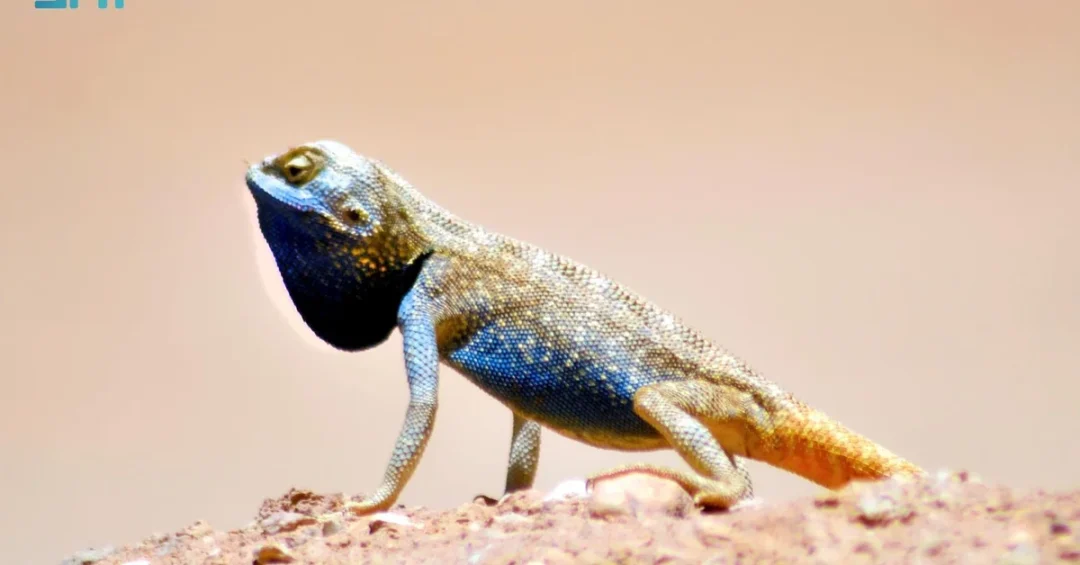
A rare lizard species, Savigny’s agama (Trapelus savignii), has been observed in the Northern Borders region of Saudi Arabia, specifically in the city of Arar, according to an official announcement by the Saudi Press Agency (SPA). This sighting, reported on November 12, 2024, underscores the region’s rich and unique biodiversity, highlighting the Kingdom’s diverse ecosystems and ongoing environmental conservation efforts.
Context and Background
The Northern Borders region, characterized by arid desert landscapes and diverse microhabitats, has long been recognized for its ecological significance. The recent observation of Savigny’s agama adds to a growing list of species that thrive in this area, reflecting the success of environmental protection initiatives under Saudi Arabia’s Vision 2030. The species, named after the French naturalist Marie Jules César Savigny, is a medium-sized lizard well adapted to harsh desert conditions, featuring a flattened body, wide head, and spiny scales that offer protection from predators and extreme temperatures.
Key Details
According to the Saudi Press Agency, the lizard was observed in its natural habitat in Arar, a key urban center in the Northern Borders region. Males of this species are particularly notable for their vibrant blue coloration during the mating season, which they use to attract females. This behavioral trait, along with the lizard’s physical adaptations, provides valuable insights into desert wildlife survival strategies. The sighting was documented as part of ongoing biodiversity monitoring by Saudi authorities, emphasizing the Kingdom’s commitment to preserving its natural heritage.
Implications and Impact
The discovery of Savigny’s agama in the Northern Borders enhances scientific understanding of species distribution in the Arabian Peninsula. It also reinforces Saudi Arabia’s standing as a key player in regional conservation efforts, aligning with global biodiversity targets such as the Kunming-Montreal Global Biodiversity Framework. By highlighting such findings, the Kingdom showcases its dedication to environmental stewardship, which supports eco-tourism potential and sustainable development in the region.
Vision 2030 Alignment
This observation directly supports Vision 2030 objectives by promoting environmental sustainability and strengthening the Kingdom’s natural capital. Through initiatives like the Saudi Green Initiative and the establishment of nature reserves, Saudi Arabia aims to protect its unique ecosystems and wildlife. The continued discovery of species like Savigny’s agama demonstrates the progress being made toward creating a vibrant society that values and conserves its natural environment for future generations, in line with the nation’s long-term strategic goals.
20 Questions
Q1. What species was recently spotted in the Northern Borders region?
A1. Savigny’s agama (Trapelus savignii) was observed in the city of Arar, Saudi Arabia, as reported by the Saudi Press Agency.
Q2. When was the lizard sighting officially reported?
A2. The sighting was reported on November 12, 2024, by the Saudi Press Agency (SPA).
Q3. What is the primary significance of this sighting?
A3. The sighting highlights the rich biodiversity of the Northern Borders region and supports Saudi Arabia’s conservation and environmental goals.
Q4. How is Savigny’s agama adapted to the desert environment?
A4. It has a flattened body, wide head, and spiny scales that protect it from predators and harsh desert conditions.
Q5. What distinctive feature do males of this species have?
A5. Males display a vibrant blue coloration during the mating season to attract females.
Q6. Who named the species Savigny’s agama?
A6. The species is named after French naturalist Marie Jules César Savigny, who contributed to early biological classification.
Q7. Which Saudi agency announced this discovery?
A7. The Saudi Press Agency (SPA) officially announced the observation of the lizard.
Q8. What does this sighting indicate about Saudi Arabia’s environmental policies?
A8. It demonstrates the success of conservation efforts and commitment to preserving natural heritage.
Q9. How does this relate to Vision 2030?
A9. The observation supports Vision 2030 goals of environmental sustainability and natural capital protection.
Q10. What other initiatives in Saudi Arabia focus on biodiversity?
A10. Initiatives include the Saudi Green Initiative and the establishment of nature reserves to protect ecosystems.
Q11. Is the Northern Borders region known for biodiversity?
A11. Yes, the region has diverse microhabitats and is recognized for its ecological significance in the Arabian Peninsula.
Q12. What color do male Savigny’s agama turn during mating season?
A12. Males turn a vibrant blue color to attract females during the mating season.
Q13. How can this discovery help scientific research?
A13. It improves understanding of species distribution, desert adaptations, and behavioral ecology in the region.
Q14. Does this sighting affect eco-tourism potential?
A14. Yes, it highlights the region’s unique wildlife, potentially boosting eco-tourism interest.
Q15. What is the global relevance of this discovery?
A15. It contributes to global biodiversity goals like the Kunming-Montreal Global Biodiversity Framework.
A16. The spiny scales provide physical protection against predators and help reduce water loss in the desert.
A17. Authorities likely monitor biodiversity through surveys and field studies led by environmental agencies.
Q18. What message does this observation send internationally?
A18. It reinforces Saudi Arabia’s dedication to environmental stewardship and sustainable development on a global stage.
Q19. How does this align with the Saudi Green Initiative?
A19. The Saudi Green Initiative aims to protect wildlife and ecosystems, consistent with this discovery.
Q20. What future steps might follow this sighting?
A20. Continued monitoring, potential conservation measures, and integration into broader biodiversity databases are expected.
Reader Feedback
We value your thoughts. Please share your feedback on this article.
Your feedback helps us improve our coverage.