


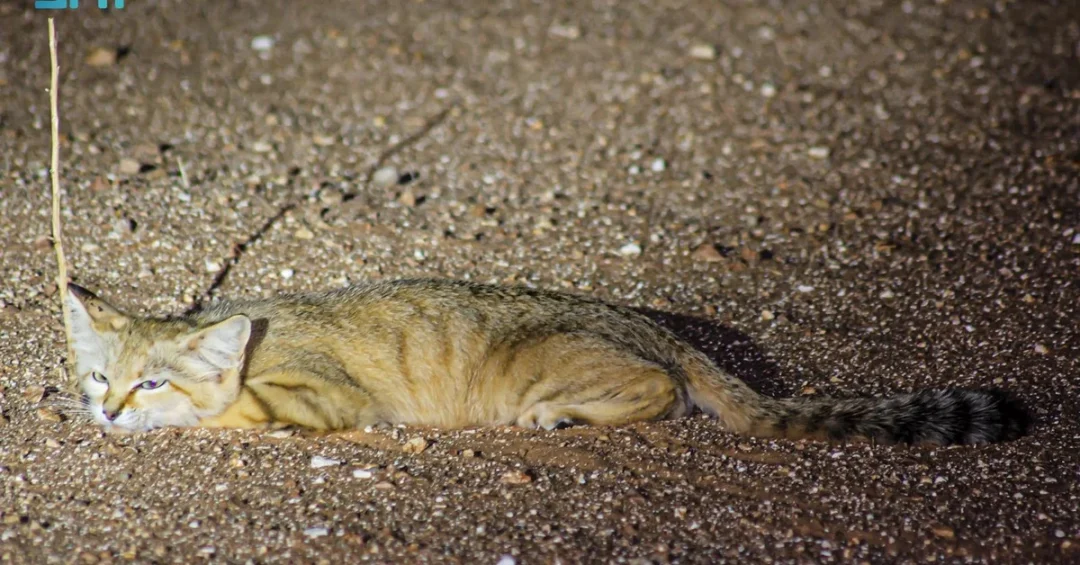
The Saudi Press Agency (SPA) has captured footage of the rare sand cat in wild locations east of Arar in the Northern Borders region, highlighting the species’ recovery. The sighting, reported on October 17, 2024, underscores the success of environmental protection initiatives in the Kingdom. Once threatened by poaching and habitat destruction, the sand cat is making a comeback thanks to the establishment of nature reserves and dedicated conservation efforts.
Context and Background
The sand cat (Felis margarita) is a small wild cat adapted to desert environments. It has a pale sandy to grey-brown coat with darker back fur and lighter belly fur, often with stripes on its legs and distinctive red markings on its cheeks. With a wide head, big eyes, and low-set ears, the sand cat is uniquely suited to survive in harsh conditions. Its nocturnal and crepuscular lifestyle helps it avoid intense desert heat, while its ability to dig burrows provides shelter and aids in conserving water and energy.
Key Details
Director of the Aman Environmental Association in the region, Nasser Al-Majlad, emphasized the Northern Borders region’s diverse wildlife. The area’s varied terrain—including mountains, plateaus, plains, valleys, and ravines—along with an abundance of plants, supports a thriving ecosystem. The sand cat’s presence is a positive indicator of environmental health and the effectiveness of Saudi Arabia’s conservation measures. The species was once threatened by human activities, but adapted to its environment through burrowing and energy conservation.
Implications and Impact
The sighting of the sand cat has significant implications for biodiversity in Saudi Arabia. It reflects the Kingdom’s commitment to preserving its natural heritage and reversing environmental degradation. The successful comeback of such a sensitive species demonstrates the tangible benefits of establishing nature reserves and enforcing protections against poaching and habitat destruction. This development also supports regional ecological balance and positions Saudi Arabia as a leader in wildlife conservation in the Middle East.
Vision 2030 Alignment
The sand cat’s recovery aligns directly with Saudi Arabia’s Vision 2030 goals, particularly the emphasis on environmental sustainability and the preservation of natural habitats. By protecting endangered species and restoring ecosystems, the Kingdom is fostering a greener future that attracts eco-tourism and enhances quality of life. This achievement showcases Saudi Arabia’s dedication to responsible stewardship of its natural resources, contributing to a balanced and prosperous society for generations to come.
20 Questions
Q1. What is the sand cat?
A1. The sand cat is a small wild cat species adapted to desert environments, known for its pale sandy coat, wide head, and nocturnal habits.
Q2. Where was the sand cat recently spotted?
A2. The sand cat was spotted in wild locations east of Arar in the Northern Borders region of Saudi Arabia.
Q3. Who reported the sighting?
A3. The sighting was reported by the Saudi Press Agency (SPA) on October 17, 2024.
Q4. Why is this sighting significant?
A4. The sighting indicates the sand cat’s comeback after being threatened by poaching and habitat destruction, showing successful conservation.
Q5. What measures helped the sand cat recover?
A5. The establishment of nature reserves and environmental protection initiatives contributed to the sand cat’s recovery.
Q6. What does the sand cat look like?
A6. The sand cat has a pale sandy to grey-brown coat, darker back fur, lighter belly fur, stripes on legs, and red markings on cheeks.
Q7. How does the sand cat survive in the desert?
A7. It digs burrows for shelter, conserves water and energy, and is active at night to avoid heat.
Q8. Is the sand cat nocturnal?
A8. Yes, it is primarily nocturnal and crepuscular, active during cooler night and twilight hours.
Q9. Who commented on the sighting?
A9. Nasser Al-Majlad, Director of the Aman Environmental Association in the region, provided commentary.
Q10. What is the Aman Environmental Association?
A10. It is an environmental organization in the Northern Borders region focused on wildlife conservation and ecosystem protection.
Q11. What kind of terrain supports wildlife in Northern Borders?
A11. The region has varied terrain including mountains, plateaus, plains, valleys, and ravines.
Q12. What role do plants play in the ecosystem?
A12. Abundant plants in the region provide food and habitat, supporting the ecosystem’s biodiversity.
Q13. How does this sighting relate to Saudi Arabia’s environmental goals?
A13. It aligns with Vision 2030’s focus on environmental sustainability and natural habitat preservation.
Q14. What is Vision 2030?
A14. Vision 2030 is Saudi Arabia’s strategic framework for economic diversification, social development, and environmental sustainability.
Q15. Is the sand cat endangered?
A15. It was threatened in the region but is now recovering due to conservation efforts; global status varies.
Q16. What other wildlife is in Northern Borders?
A16. The region hosts diverse wildlife adapted to its mountains, plains, and valleys, though specific species were not listed.
Q17. How does burrowing help the sand cat?
A17. Burrows provide shelter from extreme temperatures and predators, and help conserve moisture.
Q18. Why is the sand cat called a “sand cat”?
A18. It is named for its adaptation to sandy desert habitats and its pale, sand-like coat color.
Q19. What threats did the sand cat face?
A19. Poaching and habitat destruction were primary threats before conservation measures were implemented.
Q20. What is the long-term outlook for the sand cat in Saudi Arabia?
A20. Continued conservation efforts and reserve expansion are likely to support the species’ recovery and population stability, benefiting biodiversity.
Reader Feedback
We value your thoughts. Please share your feedback on this article.
Your feedback helps us improve our coverage.