


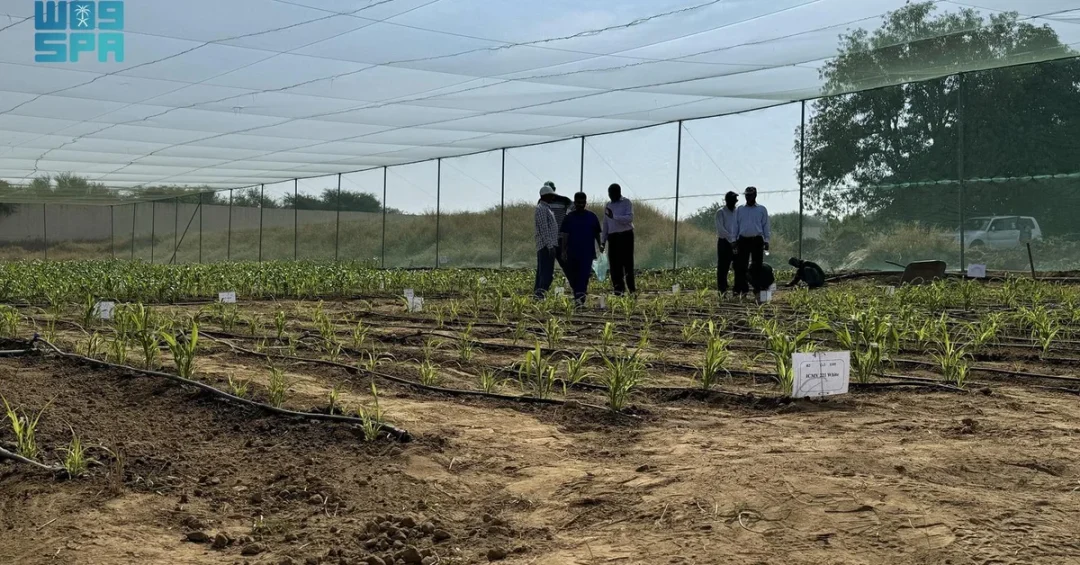
The Sustainable Agricultural Rural Development Program (Reef Saudi) has launched a supervisory initiative at the Jazan Agricultural Research Center to enhance rainfed crop productivity, according to the Saudi Press Agency. The initiative, which began on October 18, 2024, brings together experts, specialists, and employees from the Ministry of Environment, Water and Agriculture to address key challenges in rainfed agriculture in the Jazan region.
Context and Background
Rainfed agriculture, which relies on natural rainfall rather than irrigation, is critical for food security in regions like Jazan, located in southwestern Saudi Arabia. The initiative targets staple crops such as corn, millet, and sesame, which are vital to local diets and economies. By focusing on these crops, Reef Saudi aims to reduce reliance on imports and enhance the resilience of local farming communities, aligning with broader national efforts to modernize the agricultural sector.
Key Details
The initiative centers on implementing effective agricultural practices and utilizing modern technologies to boost rainfed crop yields. A key component is educating farmers about the benefits of genetically improved varieties, which are designed to be more resistant to drought and disease, and produce higher outputs. Interactive training sessions were conducted for Ministry employees, equipping them with research skills and agricultural advisors with the expertise to provide high-quality advisory services to local farmers.
Implications and Impact
This initiative is expected to significantly improve agricultural productivity in Jazan, benefiting both farmers and the local economy. By enhancing the skills of agricultural advisors and researchers, Reef Saudi is building long-term capacity in the region. The use of modern technologies and improved seed varieties could serve as a model for other rainfed agricultural areas in the Kingdom, contributing to greater food self-sufficiency and rural development.
Vision 2030 Alignment
The initiative directly supports Saudi Arabia’s Vision 2030 goals of enhancing agricultural sustainability, ensuring food security, and empowering rural communities. By promoting innovation and knowledge transfer in rainfed farming, Reef Saudi is strengthening the Kingdom’s agricultural sector, reducing import dependency, and creating new economic opportunities in line with the Vision’s commitment to diversifying the economy and improving quality of life.
20 Questions
Q1. What is the main goal of the Reef Saudi initiative in Jazan?
A1. The main goal is to enhance the productivity of rainfed crops, such as corn, millet, and sesame, by using effective agricultural practices and modern technologies.
Q2. Where was the initiative launched?
A2. The initiative was launched at the Jazan Agricultural Research Center in the Jazan region of Saudi Arabia.
Q3. Who is involved in the initiative?
A3. The initiative involves experts, specialists, and employees from the Ministry of Environment, Water and Agriculture.
Q4. What are rainfed crops?
A4. Rainfed crops are crops that rely solely on natural rainfall for water, rather than irrigation.
Q5. Which specific crops are targeted by the initiative?
A5. The initiative targets corn, millet, and sesame as key rainfed crops.
Q6. How does the initiative aim to improve crop yields?
A6. It aims to improve yields by implementing effective agricultural practices and using modern technologies.
Q7. What role do genetically improved varieties play?
A7. Genetically improved varieties are promoted for their benefits, such as higher yields and better resistance to drought and disease.
Q8. What kind of training did Ministry employees receive?
A8. Employees received interactive training sessions on conducting research on rainfed crops and providing advisory services.
Q9. How will agricultural advisors benefit from the initiative?
A9. Advisors will gain skills to provide high-quality advisory services to farmers, improving farm management.
Q10. What is the role of the Jazan Agricultural Research Center?
A10. The center serves as the location for launching and overseeing the initiative, providing research support.
Q11. How does this initiative support food security in Saudi Arabia?
A11. By boosting yields of staple crops, it reduces reliance on imports and strengthens local food production.
Q12. Is the initiative focused only on Jazan?
A12. The initiative is specifically launched in Jazan, but its methods could be replicated in other regions.
Q13. What modern technologies are being used?
A13. The initiative utilizes modern technologies, though specific technologies are not detailed, they include improved seed varieties and research tools.
Q14. How does the initiative educate farmers?
A14. Farmers are educated through advisors and training on the benefits of improved varieties and best practices.
Q15. What is the expected outcome for local farmers?
A15. Farmers are expected to see increased crop yields, leading to better incomes and food security.
Q16. How long is the initiative expected to run?
A16. The duration is not specified, but it is a supervisory initiative that includes ongoing training and research.
Q17. Who funds the Reef Saudi program?
A17. Reef Saudi is a government program funded by the Kingdom of Saudi Arabia.
Q18. How does this align with Vision 2030?
A18. It supports Vision 2030 goals of agricultural sustainability, food security, and rural development.
Q19. What is the significance of rainfed agriculture for Saudi Arabia?
A19. Rainfed agriculture is important for water conservation and utilizing natural resources in suitable regions.
Q20. How can farmers access the benefits of this initiative?
A20. Farmers can access benefits through agricultural advisors trained by the initiative and by adopting recommended practices.
Reader Feedback
We value your thoughts. Please share your feedback on this article.
Your feedback helps us improve our coverage.