


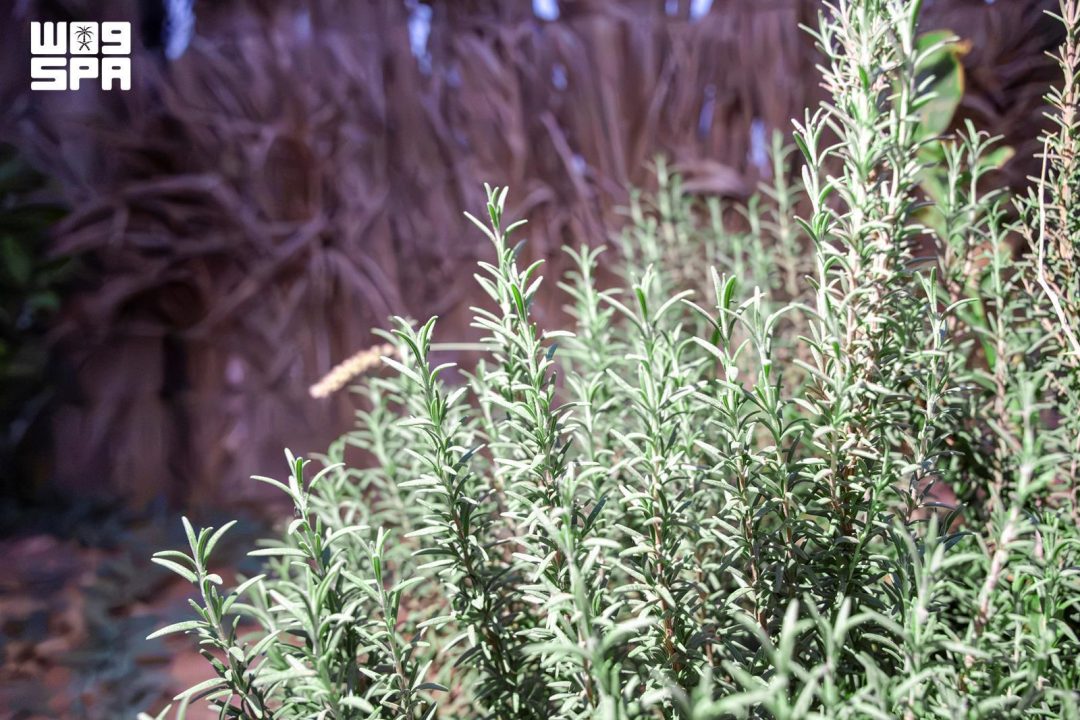
Rosemary, known in Arabic as Ikleel Al-Jabal, is drawing attention from agricultural ventures in Al-Jouf Region, where farmland and farmers’ accumulated experience support crop diversity. The evergreen aromatic plant, with its needle-like leaves and distinctive scent, can be grown on farms and in home gardens, provided it receives sufficient sunlight, well-drained soil, and moderate irrigation. Al-Jouf Region is known for its agricultural assets and crop diversity, supported by vast farmland and farmers’ accumulated experience. Some agricultural ventures are now turning their attention to aromatic plants that combine aesthetic value with a wide range of uses. Among them is rosemary.
Farmer Fawaz Al-Khalidi said growing rosemary on his farm reflects his interest in aromatic plants because of their distinctive scent and multiple uses. He also emphasized the importance of caring for the plant and providing suitable growing conditions. What makes rosemary attractive to growers who already manage diverse crops? Its relatively drought-tolerant nature once established makes it a useful option for home gardens and suitable agricultural sites.
Joud Al-Ruwaili described her experience growing rosemary in her home garden. She noted that the plant has added a pleasant fragrance to the garden, while its green foliage has enhanced its beauty and natural atmosphere. How does a single plant change the feel of a home garden? For Al-Ruwaili, the answer lies in both scent and sight, as the green foliage contributes to the garden’s natural atmosphere alongside the fragrance.
Rosemary’s fresh and dried leaves also add a distinctive flavor to food, combining practical uses with aesthetic and aromatic value. That combination of kitchen utility and garden presence may explain why aromatic plants are gaining ground among agricultural ventures in the region. Could the same plant serve a farm’s production goals and a household’s daily needs? The source describes rosemary as fitting both farms and home gardens when the growing conditions are right.
The plant’s requirements are specific but manageable: sufficient sunlight, well-drained soil, and moderate irrigation. Once established, rosemary is relatively drought-tolerant, which the source presents as a useful trait for home gardens and suitable agricultural sites. Why does drought tolerance matter in a region defined by its farmland? Al-Jouf’s agricultural assets and crop diversity rest on vast farmland and farmers’ accumulated experience, and a plant that needs moderate irrigation fits into that setting.
Al-Khalidi’s interest in aromatic plants centers on their distinctive scent and multiple uses, and he stressed the importance of caring for the plant and providing suitable growing conditions. That emphasis on care suggests that even a drought-tolerant plant depends on the right start. What separates a thriving rosemary plant from a struggling one? According to the source, it is the combination of sunlight, drainage, and moderate irrigation, along with the attention the farmer provides.
Al-Ruwaili’s home garden experience adds a domestic dimension to the same plant. She said rosemary has added a pleasant fragrance to the garden, while its green foliage has enhanced its beauty and natural atmosphere. Does a home garden need more than flowers to feel complete? In her account, the evergreen character of rosemary and its needle-like leaves give the garden both scent and structure.
The source notes that rosemary is an evergreen aromatic plant with needle-like leaves and a distinctive scent. That description applies whether the plant grows on a farm or in a home garden. What does an evergreen habit mean for a garden through the seasons? The source does not detail seasonal performance beyond noting the plant is evergreen and drought-tolerant once established.
Al-Jouf Region’s agricultural identity, built on farmland and experience, provides the backdrop for this turn toward aromatic plants. Some agricultural ventures are now focusing on plants that combine aesthetic value with a wide range of uses, and rosemary is named among them. Why would growers look beyond staple crops to aromatic plants? The source points to the dual appeal of beauty and utility, with rosemary’s leaves serving both the garden and the kitchen.
The practical uses of rosemary extend to food, where fresh and dried leaves add a distinctive flavor. That gives the plant a role beyond ornament, connecting farm production and home cooking. How many uses can one aromatic plant carry? The source lists scent, foliage beauty, drought tolerance, and culinary flavor, without quantifying production or market figures.
For home gardeners, the source’s guidance is straightforward: sufficient sunlight, well-drained soil, and moderate irrigation. For farmers, the same conditions apply, with the added consideration of caring for the plant as Al-Khalidi described. Is rosemary a crop for large fields or small plots? The source places it in both farms and home gardens, without specifying acreage or yields.
Al-Ruwaili’s account of her home garden highlights the sensory result: a pleasant fragrance and green foliage that enhances beauty and natural atmosphere. Al-Khalidi’s farm account highlights the commercial and practical interest in aromatic plants with multiple uses. Together, the two experiences show the plant’s range across settings. What do a farm and a home garden share when rosemary is involved? Both depend on suitable growing conditions and both gain from the plant’s aromatic and visual qualities.
The source does not include rosemary prices, harvest volumes, or the number of farms now growing it in Al-Jouf. It also does not name additional farmers or provide a timeline for the shift toward aromatic plants. What the source does provide is the plant’s name in Arabic, Ikleel Al-Jabal, its growing requirements, its drought tolerance once established, and two first-hand accounts from the region.
Al-Jouf’s farmland and farmers’ accumulated experience remain the foundation the source describes for crop diversity. Within that setting, rosemary stands as one aromatic option that combines aesthetic value with a wide range of uses. Will more agricultural ventures follow the same path toward aromatic plants? The source does not forecast, but it documents the interest already present among some ventures and the experiences of a farmer and a home gardener.
What is rosemary called in Arabic, and where is it being grown according to the source? The source states that rosemary is known in Arabic as Ikleel Al-Jabal. It is being grown in Al-Jouf Region, which is known for its agricultural assets and crop diversity, supported by vast farmland and farmers’ accumulated experience. Some agricultural ventures in the region are turning their attention to aromatic plants that combine aesthetic value with a wide range of uses, and rosemary is named among them. The plant can be grown on farms and in home gardens, provided it receives sufficient sunlight, well-drained soil, and moderate irrigation.
What growing conditions does rosemary need, and how does it perform once established? According to the source, rosemary requires sufficient sunlight, well-drained soil, and moderate irrigation. Once established, it is relatively drought-tolerant, which the source describes as making it a useful option for home gardens and suitable agricultural sites. The plant is evergreen and aromatic, with needle-like leaves and a distinctive scent. Farmer Fawaz Al-Khalidi emphasized the importance of caring for the plant and providing suitable growing conditions, suggesting that attention during growth matters even for a drought-tolerant species.
What did farmer Fawaz Al-Khalidi say about growing rosemary on his farm? The source reports that farmer Fawaz Al-Khalidi said growing rosemary on his farm reflects his interest in aromatic plants because of their distinctive scent and multiple uses. He also emphasized the importance of caring for the plant and providing suitable growing conditions. His account connects the farm side of rosemary cultivation with the broader appeal of aromatic plants in Al-Jouf Region, where agricultural ventures are turning attention to plants that combine aesthetic value with a wide range of uses.
How did Joud Al-Ruwaili describe her home garden experience with rosemary? Joud Al-Ruwaili described her experience growing rosemary in her home garden, noting that the plant has added a pleasant fragrance to the garden while its green foliage has enhanced its beauty and natural atmosphere. Her account illustrates the home-garden side of the source’s report, which states that rosemary can be grown on farms and in home gardens with sufficient sunlight, well-drained soil, and moderate irrigation. The source presents her experience alongside Al-Khalidi’s farm account without adding further details about her garden’s size or location.
What practical uses does rosemary have beyond its scent and appearance? The source states that rosemary’s fresh and dried leaves add a distinctive flavor to food, combining practical uses with aesthetic and aromatic value. That culinary role sits alongside the plant’s value as an evergreen aromatic with needle-like leaves and a distinctive scent, and its drought tolerance once established. The source does not list other uses or provide quantities, prices, or market details for rosemary leaves, whether fresh or dried, in Al-Jouf Region or elsewhere.
What details about rosemary cultivation in Al-Jouf does the source not include? The source does not include rosemary prices, harvest volumes, or the number of farms now growing the plant in Al-Jouf Region. It also does not name additional farmers beyond Fawaz Al-Khalidi and Joud Al-Ruwaili, and it provides no timeline for the shift toward aromatic plants among agricultural ventures. What it does provide is the plant’s Arabic name, Ikleel Al-Jabal, its growing requirements, its drought tolerance once established, and two first-hand accounts from the region.