


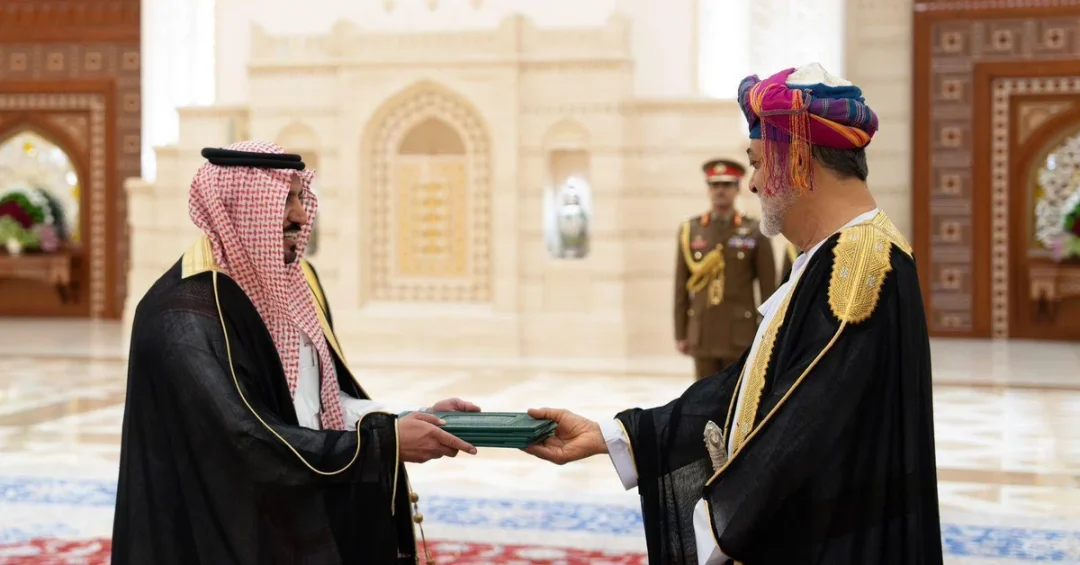
On November 15, 2024, Saudi Ambassador to the Sultanate of Oman Ibrahim bin Saad bin Bishan presented his credentials to Sultan Haitham bin Tariq at Al Baraka Palace in Muscat. The ceremony underscored the deep-rooted and continually strengthening ties between the Kingdom of Saudi Arabia and the Sultanate of Oman, marking another milestone in their longstanding bilateral relationship.
Context and Background
The presentation of credentials is a formal diplomatic procedure that officially establishes an ambassador’s role in the host country. Ambassador bin Bishan’s appointment reflects the Kingdom of Saudi Arabia’s commitment to fostering close cooperation and mutual understanding with Oman, a key partner in the Gulf Cooperation Council (GCC). The relationship between the two nations is characterized by historical bonds, shared cultural heritage, and aligned strategic interests, including regional stability and economic integration.
Key Details
During the meeting at Al Baraka Palace, Sultan Haitham bin Tariq warmly received the Saudi ambassador and commended the historical ties between Saudi Arabia and Oman. He expressed appreciation for the continued progress achieved across various sectors, highlighting the mutual benefits of their collaboration. In turn, Ambassador bin Bishan conveyed greetings from the Custodian of the Two Holy Mosques King Salman bin Abdulaziz Al Saud and His Royal Highness Prince Mohammed bin Salman bin Abdulaziz Al Saud, Crown Prince and Prime Minister, to the Sultan of Oman. He extended sincere wishes for the continued prosperity of the Omani people, reaffirming the Kingdom’s dedication to strengthening bilateral relations.
Implications and Impact
The formal exchange is expected to enhance diplomatic coordination and facilitate new initiatives in trade, investment, and cultural exchange between the two Gulf nations. As both countries work within frameworks like the GCC and the broader Middle East region, this step supports efforts to promote peace, economic diversification, and mutual development. The ambassador’s role will be crucial in advancing joint projects and maintaining open channels of communication on matters of regional importance.
Vision 2030 Alignment
This diplomatic engagement aligns with Saudi Arabia’s Vision 2030, which emphasizes building strong international partnerships to drive economic growth and regional stability. By deepening ties with Oman, the Kingdom reinforces its commitment to collaborative prosperity, cultural exchange, and strategic cooperation, contributing to a more integrated and resilient Gulf region. The continued strengthening of Saudi-Omani relations supports shared goals of sustainable development and long-term progress for both nations.
20 Questions
Q1. Who presented the credentials to the Sultan of Oman?
A1. Saudi Ambassador Ibrahim bin Saad bin Bishan presented his credentials to Sultan Haitham bin Tariq of Oman at a formal ceremony.
Q2. Where did the ceremony take place?
A2. The ceremony took place at Al Baraka Palace in Muscat, the capital of the Sultanate of Oman.
Q3. What is the significance of presenting credentials?
A3. Presenting credentials is a formal diplomatic procedure that officially establishes an ambassador’s role and authority in the host country.
Q4. Who received the credentials on behalf of Oman?
A4. Sultan Haitham bin Tariq of the Sultanate of Oman received the credentials from the Saudi ambassador.
Q5. What did Sultan Haitham commend during the meeting?
A5. Sultan Haitham commended the historical ties between Saudi Arabia and Oman and their continued progress across various sectors.
Q6. Whose greetings did Ambassador bin Bishan convey?
A6. He conveyed greetings from King Salman bin Abdulaziz Al Saud and Crown Prince Mohammed bin Salman, along with wishes for Oman’s prosperity.
Q7. How does this event reflect Saudi-Oman relations?
A7. The event underscores the deep-rooted, positive, and continuously strengthening bilateral relationship between Saudi Arabia and Oman.
Q8. What is the role of the Saudi Ambassador in Oman?
A8. The ambassador represents the Kingdom, facilitates diplomatic ties, and promotes cooperation in trade, culture, and regional affairs.
Q9. How does this relate to the Gulf Cooperation Council?
A9. Both nations are GCC members, and this diplomatic step supports regional integration and collaboration within the council.
Q10. What are the benefits of strong Saudi-Oman ties?
A10. Benefits include enhanced trade, investment opportunities, cultural exchange, and coordinated efforts for regional stability and development.
Q11. Did the Sultan express any views on progress?
A11. Yes, he commended the continued progress across various sectors, indicating satisfaction with the bilateral relationship’s growth.
Q12. What message did the ambassador deliver from Saudi leaders?
A12. The ambassador delivered greetings and wishes for the prosperity of the Omani people from King Salman and Crown Prince Mohammed bin Salman.
Q13. Is this event considered a routine diplomatic procedure?
A13. Yes, it is a standard procedure when a new ambassador assumes their post, but it also reaffirms the commitment to strong bilateral ties.
Q14. How does this event support Saudi Arabia’s foreign policy?
A14. It aligns with Saudi Arabia’s foreign policy of building strong, cooperative partnerships with neighboring and regional countries.
Q15. What sectors might see increased cooperation?
A15. Potential sectors include trade, investment, energy, tourism, and cultural exchange, all benefiting from closer diplomatic ties.
Q16. Why is the Ambassador’s role important?
A16. The ambassador facilitates communication, implements joint initiatives, and ensures ongoing collaboration on issues of mutual interest.
Q17. How does this affect regional stability?
A17. Strong Saudi-Oman relations contribute to regional stability by fostering unity and coordinated actions within the Gulf region.
Q18. Did this event receive official coverage?
A18. Yes, it was reported by the Saudi Press Agency (SPA), the official news source of the Kingdom of Saudi Arabia.
Q19. What is the date of this event?
A19. The ceremony took place on November 15, 2024, as per the official announcement.
Q20. Does this align with Vision 2030?
A20. Yes, it supports Vision 2030 by promoting international partnerships, economic diversification, and collaborative development with neighboring countries.
Reader Feedback
We value your thoughts. Please share your feedback on this article.
Your feedback helps us improve our coverage.