


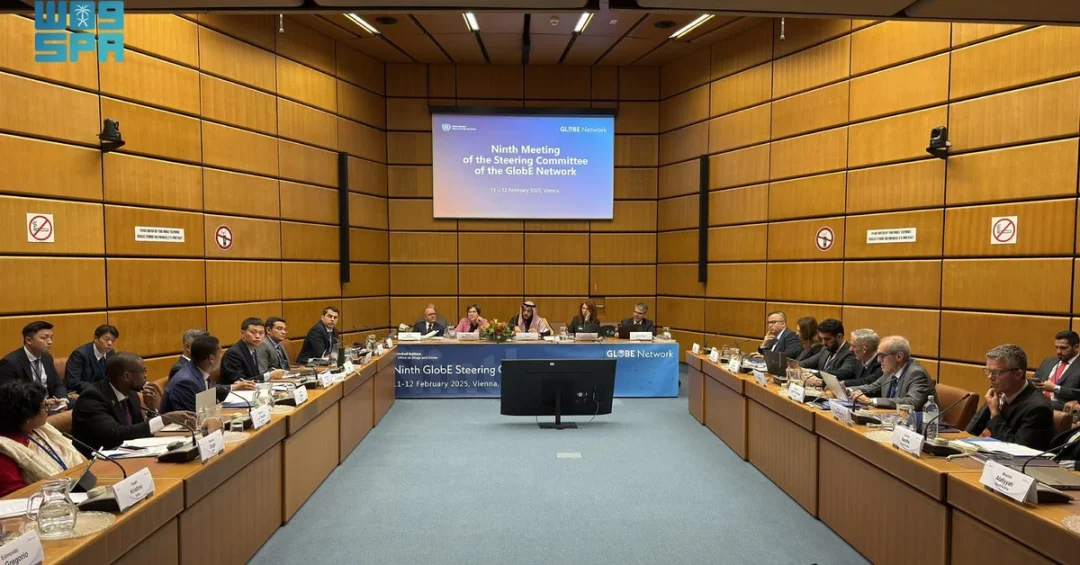
The Kingdom of Saudi Arabia has officially assumed the presidency of the Global Operational Network of Anti-Corruption Law Enforcement Authorities (GlobE Network) for the 2025–2027 term, following a handover ceremony at the United Nations headquarters in Vienna, Austria, on February 11, 2025. The Saudi Oversight and Anti-Corruption Authority (Nazaha) will lead the network, which comprises over 219 law enforcement agencies from more than 120 countries and numerous international organizations. Saudi Arabia’s unanimous election to the chair during a high-level meeting in Beijing, China, underscores international confidence in the Kingdom’s anti-corruption efforts and its commitment to fostering global cooperation against cross-border corruption.
Context and Background
Established in 2021 by the United Nations Office on Drugs and Crime (UNODC), the GlobE Network serves as the largest international platform for coordinating joint efforts among law enforcement agencies to investigate and combat corruption that transcends national borders. Saudi Arabia’s ascension to the presidency reflects its growing role in global governance and its alignment with international standards, particularly the United Nations Convention against Corruption (UNCAC). The handover ceremony saw Dr. Nasser bin Ahmed Aba Al-Khail, Deputy of the Saudi Oversight and Anti-Corruption Authority for International Cooperation, receive the presidency from the Chief Prosecutor of the Special Prosecutor’s Office against Corruption and Organized Crime of the Kingdom of Spain. The event was attended by representatives from UNODC and senior international officials.
Key Details
Dr. Nasser Aba Al-Khail, now Chairman of the GlobE Network, outlined the Kingdom’s priorities during its presidency. “The Kingdom seeks to create new strategies for asset recovery and initiate a secure communication platform to facilitate quicker and more efficient information exchange among member states,” he said. These initiatives are designed to enhance international cooperation, empower governments to tackle emerging challenges in combating corruption, refine asset recovery processes, and more effectively trace illicit funds across borders. Saudi Arabia’s leadership comes at a critical time when transnational corruption threatens global economic stability and security.
Implications and Impact
Saudi Arabia’s presidency of the GlobE Network positions the Kingdom as a central player in the fight against corruption, enhancing its diplomatic standing and reinforcing its commitment to transparency and accountability. The move is expected to bolster cross-border investigations, improve asset recovery mechanisms, and foster trust among member states. For the international community, Saudi Arabia’s leadership signals a robust partnership in addressing corruption-related challenges, including money laundering and illicit financial flows, which have far-reaching impacts on developing and developed economies alike.
Vision 2030 Alignment
This achievement aligns closely with Saudi Arabia’s Vision 2030, which prioritizes good governance, transparency, and institutional integrity as pillars of national transformation. By leading the GlobE Network, the Kingdom demonstrates its proactive role in building fair, just, and sustainable governance systems globally, further cementing its status as a responsible international actor committed to combating corruption and promoting the rule of law.
20 Questions
Q1. What is the GlobE Network?
A1. The GlobE Network is the Global Operational Network of Anti-Corruption Law Enforcement Authorities, a platform established by the UNODC to facilitate international cooperation among law enforcement agencies in combating corruption.
Q2. When did Saudi Arabia assume the presidency of the GlobE Network?
A2. Saudi Arabia officially assumed the presidency on February 11, 2025, during a ceremony at the United Nations headquarters in Vienna, Austria.
Q3. Which Saudi authority is leading the GlobE Network?
A3. The Saudi Oversight and Anti-Corruption Authority (Nazaha) is leading the network, representing the Kingdom’s commitment to anti-corruption efforts.
Q4. How long is Saudi Arabia’s presidency term?
A4. Saudi Arabia’s presidency term is for three years, from 2025 to 2027, following its unanimous election in Beijing, China.
Q5. How many countries are part of the GlobE Network?
A5. The network includes law enforcement agencies from over 120 countries, totaling more than 219 agencies.
Q6. What international organizations are involved in the GlobE Network?
A6. Numerous international organizations, including the United Nations Office on Drugs and Crime (UNODC), are part of the GlobE Network.
Q7. Who represented Saudi Arabia at the handover ceremony?
A7. Dr. Nasser bin Ahmed Aba Al-Khail, Deputy of the Saudi Oversight and Anti-Corruption Authority for International Cooperation, represented Saudi Arabia.
Q8. Who was the previous president of the GlobE Network?
A8. The previous president was the Chief Prosecutor of the Special Prosecutor’s Office against Corruption and Organized Crime of the Kingdom of Spain.
Q9. What is the primary goal of the GlobE Network?
A9. The primary goal is to enhance international cooperation among law enforcement agencies to investigate, prosecute, and prevent cross-border corruption effectively.
Q10. How does Saudi Arabia’s presidency benefit global anti-corruption efforts?
A10. Saudi Arabia aims to create new strategies for asset recovery and launch a secure communication platform to streamline information exchange, improving global anti-corruption operations.
Q11. What is the United Nations Convention against Corruption?
A11. The UNCAC is a multilateral treaty adopted by the UN to combat corruption, promoting prevention, criminalization, international cooperation, and asset recovery.
Q12. Why was Saudi Arabia elected to chair the network?
A12. Saudi Arabia was elected due to its recognized commitment to fighting corruption and its ability to advance global cooperation in prosecuting corruption offenses.
Q13. What is the significance of the GlobE Network’s secure communication platform?
A13. The platform will enable faster and more efficient information sharing among member states, facilitating quicker responses to corruption cases across borders.
Q14. How does the GlobE Network asset recovery strategy work?
A14. The strategy focuses on refining processes to trace and recover illicit funds across borders, ensuring that corrupt assets are returned to their rightful owners.
Q15. What challenges does the GlobE Network aim to address?
A15. It addresses emerging challenges such as money laundering, illicit financial flows, and evolving methods of transnational corruption.
Q16. How does Saudi Arabia’s presidency align with Vision 2030?
A16. It supports Vision 2030 goals of good governance, transparency, and institutional integrity, showcasing Saudi Arabia’s global leadership in governance reform.
Q17. What is the role of the UNODC in the GlobE Network?
A17. The UNODC serves as the secretariat and provides technical support to the network, facilitating its operations and coordination.
Q18. How does the GlobE Network improve cross-border investigation?
A18. It allows law enforcement agencies to collaborate directly, share intelligence, and coordinate operations to tackle corruption that spans multiple jurisdictions.
Q19. What is the impact of Saudi Arabia’s presidency on its international relations?
A19. It enhances Saudi Arabia’s diplomatic standing as a trusted partner in global governance and anti-corruption, fostering stronger ties with member states.
Q20. What is the next step under Saudi Arabia’s leadership?
A20. Saudi Arabia will implement new strategies, including the secure communication platform, and work with members to enhance asset recovery and information sharing.
Reader Feedback
We value your thoughts. Please share your feedback on this article.
Your feedback helps us improve our coverage.