


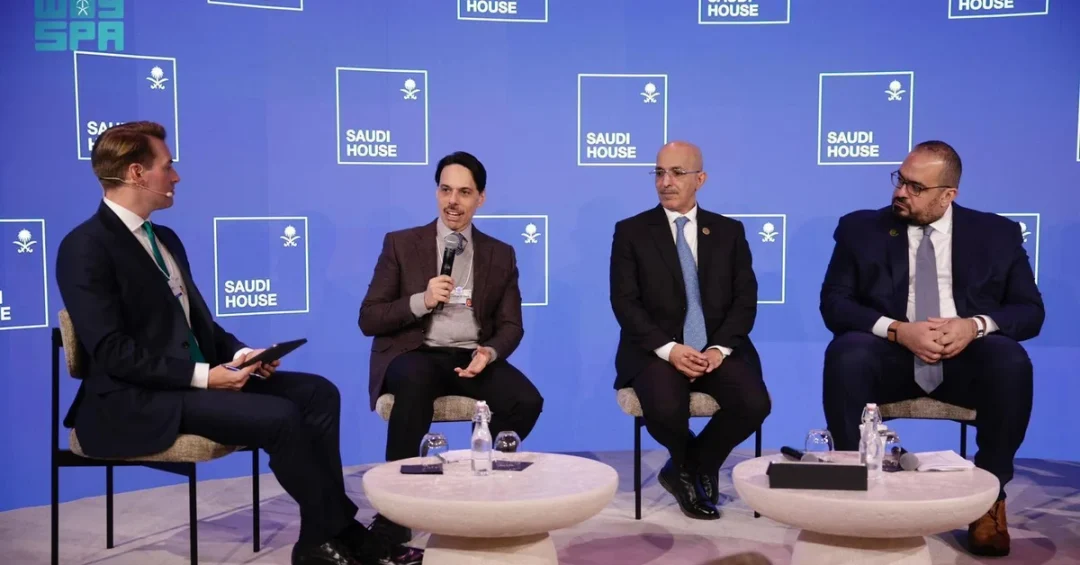
The Kingdom of Saudi Arabia has successfully concluded its participation in the 55th Annual Meeting of the World Economic Forum (WEF) in Davos, Switzerland, with the announcement that Riyadh will host a regular high-level WEF Global Meeting starting in Spring 2026. The conclusion, announced on January 25, 2025, capped a week of high-level engagement, where a Saudi delegation led by Minister of Foreign Affairs Prince Faisal bin Farhan bin Abdullah connected with global leaders to shape a prosperous future and deliver a message of hope and optimism for the region.
Context and Background
The Annual Meeting, held from 20-24 January, brought together global policymakers, business leaders, and innovators to address pressing challenges. Saudi Arabia’s delegation, comprising key ministers, emphasized the need for enhanced global collaboration to address fragmentation, rewrite the global economic playbook, steer sustainable transitions, and drive disruptive innovation. This engagement underscores the Kingdom’s role as a proactive partner in shaping international dialogue on economic and social transformation.
Key Details and Announcements
The Saudi delegation included prominent figures: Minister of Commerce Majid Al-Kassabi, Minister of Tourism Ahmed Al Khateeb, Minister of State for Foreign Affairs Adel Al-Jubeir, Minister of Investment Khalid Al-Falih, Minister of Finance Mohammed Al-Jadaan, Minister of Communications and Information Technology Abdullah Alswaha, Minister of Industry and Mineral Resources Bandar Alkhorayef, and Minister of Economy and Planning Faisal Alibrahim. They participated in sessions on topics ranging from the global economic outlook to AI governance and the future of growth. The Ministry of Economy and Planning hosted the first-ever Saudi House pavilion, which attracted over 5,000 visits and showcased the Kingdom’s social, economic, and human transformation under Vision 2030. Among key outcomes, the Global Cybersecurity Forum (GCF) and WEF signed an agreement to establish a Centre for Cyber Economics (CCE) in Riyadh, focusing on the economic dimensions of cybersecurity. Additionally, the Royal Commission for Jubail and Yanbu (RCJY) announced Jubail Industrial City as the first in the region to join WEF’s initiative to decarbonize industrial clusters. Salesforce announced a new regional headquarters in Riyadh and pledged to upskill 30,000 Saudi citizens by 2030, while also partnering with IBM to open an AI Innovation Center in the Kingdom.
Implications and International Impact
The decision to host a regular WEF Global Meeting in Riyadh from 2026 signals Saudi Arabia’s growing influence as a hub for global economic dialogue. The establishment of the CCE in Riyadh will enhance understanding of cybersecurity’s economic impact, fostering cross-sector collaboration and evidence-based frameworks. The inclusion of Jubail Industrial City in WEF’s decarbonization initiative highlights the Kingdom’s leadership in sustainable industrial practices. These developments reinforce Saudi Arabia’s role as a key player in addressing global challenges and capturing opportunities in a rapidly evolving world.
Vision 2030 Alignment
The outcomes from Davos directly support Saudi Arabia’s Vision 2030 goals by driving economic diversification, fostering innovation, and enhancing global partnerships. The new WEF Global Meeting in Riyadh will create a platform for continued dialogue on growth and transformation, while initiatives like the CCE and AI Innovation Center advance the Kingdom’s ambitions in technology and cybersecurity. As Saudi Arabia continues to open up to the world, its participation at WEF AM25 exemplifies a commitment to collaborative progress, sustainable development, and a prosperous future for the region and beyond.
20 Questions
Q1. What was the key announcement made by Saudi Arabia at the WEF Annual Meeting 2025?
A1. Saudi Arabia announced that Riyadh will host a regular high-level World Economic Forum Global Meeting starting in Spring 2026, highlighting its growing role in global economic dialogue.
Q2. Who led the Saudi delegation at the WEF Annual Meeting?
A2. The delegation was led by Minister of Foreign Affairs Prince Faisal bin Farhan bin Abdullah, representing the Kingdom’s commitment to international collaboration.
Q3. How many ministers were part of the Saudi delegation?
A3. The delegation included nine ministers, covering key sectors such as foreign affairs, commerce, tourism, investment, finance, and technology.
Q4. What was the Saudi House pavilion at the WEF Annual Meeting?
A4. The Saudi House pavilion was a platform hosted by the Ministry of Economy and Planning to showcase Saudi Arabia’s transformation under Vision 2030 and host dialogues on global challenges.
Q5. How many visits did the Saudi House pavilion attract?
A5. The Saudi House pavilion attracted over 5,000 visits during the Annual Meeting, introducing visitors to the Kingdom’s investment opportunities and social changes.
Q6. What is the Centre for Cyber Economics (CCE) announced at WEF?
A6. The CCE is a new center in Riyadh, established through an agreement between the Global Cybersecurity Forum and WEF, focused on the economic dimensions of cybersecurity.
Q7. What did Jubail Industrial City achieve at the WEF meeting?
A7. Jubail Industrial City became the first in its region to join WEF’s initiative to decarbonize industrial clusters, a step toward sustainable industrial practices.
Q8. What commitment did Salesforce make at the Saudi House session?
A8. Salesforce announced a new regional headquarters in Riyadh and pledged to upskill 30,000 Saudi citizens by 2030, supporting local talent development.
Q9. What partnership did Salesforce form with IBM?
A9. Salesforce partnered with IBM to open an AI Innovation Center in the Kingdom, advancing artificial intelligence capabilities and innovation.
Q10. What session topics did Saudi delegates participate in?
A10. Delegates participated in sessions on the global economic outlook, AI governance, future of growth, sustainable tourism, and industrial infrastructure, among others.
Q11. How does the WEF Global Meeting in Riyadh support Saudi Arabia’s goals?
A11. The meeting provides a regular platform for global economic dialogue, aligning with Vision 2030’s aim to position Saudi Arabia as a hub for international collaboration and innovation.
Q12. What sectors did the Saudi House pavilion represent?
A12. The pavilion featured entities from tourism, investment, transport, health, communications, and industrial development, reflecting comprehensive transformation efforts.
Q13. Why is the Centre for Cyber Economics important?
A13. It enhances understanding of cybersecurity’s economic impact, fostering global resilience and stability in the rapidly evolving cyber landscape.
Q14. What is the significance of the decarbonization initiative for Jubail Industrial City?
A14. It positions Jubail as a leader in sustainable industrial clusters, contributing to global efforts to reduce emissions and aligning with Saudi environmental goals.
Q15. How did the Saudi delegation emphasize collaboration at the meeting?
A15. The delegation called for doubling down on global collaboration to address fragmentation and rewrite the economic playbook for a more cohesive world.
A16. The delegation highlighted the need to drive disruptive innovation and steer sustainable transitions to unlock human potential globally.
A17. The Ministry of Tourism published an Investor White Paper and WEF released a briefing paper from Minister Al Khateeb on sustainable growth in travel and tourism.
A18. These initiatives support Vision 2030 by attracting investment, promoting sustainable tourism, and enhancing the Kingdom’s global competitiveness in the sector.
A19. The agreement provided a framework for the CCE, which will focus on cybersecurity economics, research, and cross-sector collaboration.
A20. The delegation included climate envoy Adel Al-Jubeir and held dialogues on safeguarding nature, demonstrating Saudi commitment to environmental sustainability and climate action.
Reader Feedback
We value your thoughts. Please share your feedback on this article.
Your feedback helps us improve our coverage.