


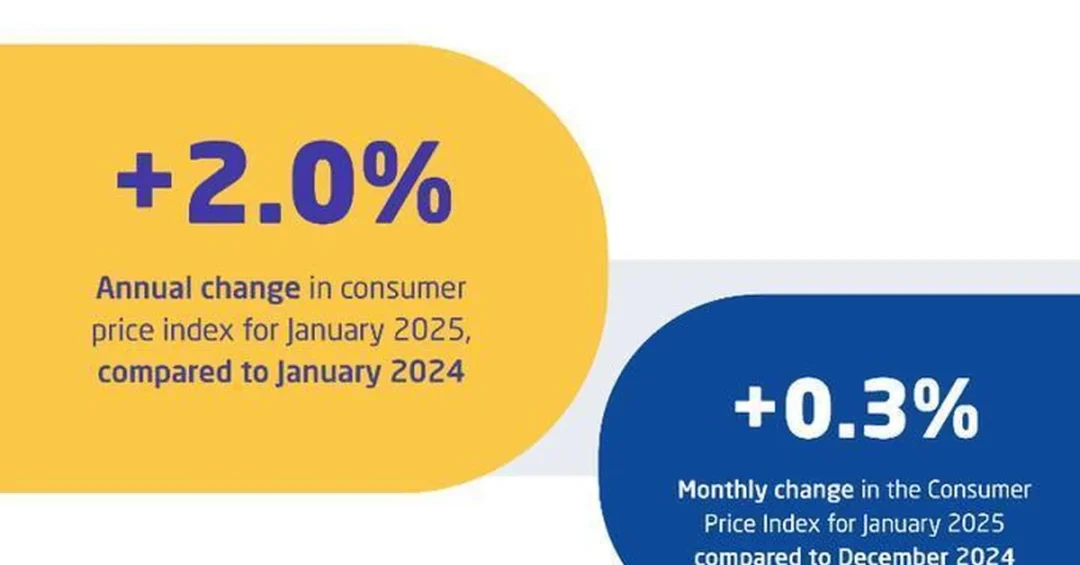
Saudi Arabia’s annual inflation rate reached 2.0% in January 2025, the lowest among G20 nations, according to data released by the General Authority for Statistics (GASTAT). The Consumer Price Index (CPI) report for January 2025, published on February 16, 2025, shows a measured increase of 2.0% compared to January 2024, reflecting the Kingdom’s continued economic stability and effective price control measures.
Context and Background
The CPI, which measures price changes for a fixed basket of 490 goods and services, is a key indicator of purchasing power and economic health. GASTAT compiles this data through regular point-of-sale field visits, ensuring accuracy and timeliness. The low inflation rate underscores Saudi Arabia’s success in maintaining price stability amid global economic pressures, a critical factor for sustaining consumer confidence and business investment.
Key Details
According to GASTAT, the 2.0% annual inflation rate is the lowest among all G20 countries, highlighting the effectiveness of Saudi economic policies. The basket of goods used for the CPI is based on the 2018 Household Income and Expenditure Survey, covering diverse categories from food and housing to transport and healthcare. Monthly CPI reports are released regularly to provide up-to-date economic insights.
Implications and Impact
Low inflation supports the purchasing power of Saudi citizens and residents, encouraging domestic consumption and economic growth. It also positions Saudi Arabia as a stable investment destination, attracting foreign capital aligned with Vision 2030’s goals. Within the G20, the Kingdom’s inflation performance provides a benchmark for other nations navigating global inflation trends.
Vision 2030 Alignment
This positive inflation data aligns with Vision 2030 objectives of economic diversification and sustainable growth. By maintaining low inflation, Saudi Arabia creates a favorable environment for private sector expansion, non-oil GDP growth, and improved living standards. As the Kingdom continues its transformation, such indicators demonstrate the success of prudent fiscal policies and structural reforms.
20 Questions
Q1. What is the inflation rate in Saudi Arabia for January 2025?
A1. The inflation rate in Saudi Arabia for January 2025 reached 2.0% compared to January 2024, as reported by GASTAT.
Q2. Which authority released the inflation data?
A2. The General Authority for Statistics (GASTAT) released the Consumer Price Index report for January 2025.
Q3. How does Saudi Arabia’s inflation compare to other G20 countries?
A3. Saudi Arabia’s inflation rate of 2.0% is the lowest among all G20 nations.
Q4. What does CPI stand for?
A4. CPI stands for Consumer Price Index, which measures the prices paid by consumers for a fixed basket of goods and services.
Q5. How many items are in CPI basket?
A5. The CPI basket consists of 490 items, based on the 2018 household income and expenditure survey.
Q6. How does GASTAT collect price data?
A6. GASTAT collects price data through regular point-of-sale field visits to ensure accuracy.
Q7. How often is the CPI report released?
A7. The CPI report is released monthly by GASTAT.
Q8. What is the base year for the CPI basket?
A8. The CPI basket is based on the 2018 household income and expenditure survey.
Q9. Is the inflation rate good or bad for consumers?
A9. A 2.0% inflation rate is considered low and positive, preserving purchasing power and supporting consumer spending.
Q10. How does low inflation affect Saudi businesses?
A10. Low inflation reduces cost uncertainty, encouraging business investment and economic growth.
Q11. Does low inflation attract foreign investment?
A11. Yes, low inflation signals economic stability, making Saudi Arabia more attractive to foreign investors.
Q12. Which sectors are covered in the CPI basket?
A12. The CPI basket covers sectors like food, housing, transport, healthcare, and others.
Q13. What is the significance of being the lowest among G20?
A13. It highlights Saudi Arabia’s effective economic policies and resilience compared to major economies.
Q14. How does inflation relate to Vision 2030?
A14. Low inflation supports economic diversification and sustainable growth, key goals of Vision 2030.
Q15. What was the inflation rate in January 2024?
A15. The inflation rate in January 2024 was the baseline for the year-on-year comparison, resulting in 2.0% increase by January 2025.
Q16. Does the CPI include all goods and services?
A16. The CPI includes a representative basket of 490 goods and services, not all items.
Q17. How is the CPI calculated?
A17. The CPI is calculated by tracking price changes of the fixed basket over time.
Q18. Why is point-of-sale data collection important?
A18. Point-of-sale data ensures actual transaction prices, improving accuracy of inflation measurements.
Q19. What impact does inflation have on wages?
A19. Low inflation helps maintain real wage levels, benefiting workers and households.
Q20. Where can the full CPI report be found?
A20. The full report is available through GASTAT’s official channels, including its website and press releases.
Reader Feedback
We value your thoughts. Please share your feedback on this article.
Your feedback helps us improve our coverage.