


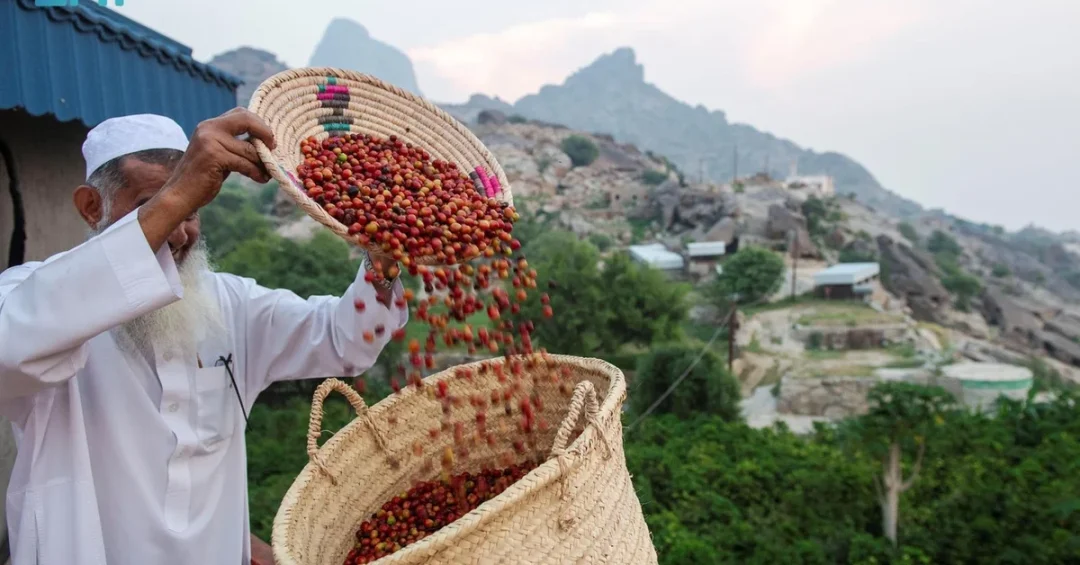
Saudi Arabia, one of the world’s top coffee-consuming nations, marked International Coffee Day on October 1, 2024, with a series of events and initiatives that underscored the Kingdom’s deep-rooted coffee culture and its growing economic ambitions in the sector. Observed annually, the day highlights the cultural significance of Saudi coffee, known as ‘qahwa,’ which serves as a symbol of hospitality and warm reception across the Kingdom. Official activities, organized in coordination with local authorities, celebrated the diverse traditions that make Saudi coffee unique.
Context and Background
Saudi Arabia’s love for coffee is not a recent phenomenon; it is a centuries-old tradition deeply embedded in the social fabric of the nation. Each region of the Kingdom boasts its own distinctive coffee-making customs. In the central Najd region, cardamom and saffron are added to the brew, while the southern region incorporates cloves, ginger, and cinnamon. In Hail, a blend of cardamom, saffron, and cloves is preferred, and in the western region, only cardamom is used. These regional variations reflect the rich cultural diversity of Saudi Arabia. The serving of coffee also follows specific etiquette: the dallah (traditional coffee pot) is held in the left hand and poured, while the cup is presented to the guest with the right hand, reinforcing the values of respect and generosity.
Key Details
The Ministry of Environment, Water, and Agriculture has been a driving force in expanding coffee cultivation within the Kingdom. As part of the nation’s efforts to boost self-sufficiency and diversify the economy, the Ministry has implemented programs to support local coffee farmers and enhance production. Saudi coffee, particularly the high-quality Khawlani beans grown in the Jazan region, has gained international recognition. The focus on coffee cultivation is not only a cultural endeavor but also an economic one, aimed at increasing the non-oil sector’s contribution to the gross domestic product (GDP). Events held on International Coffee Day included workshops on traditional brewing methods, exhibitions showcasing regional coffee varieties, and campaigns promoting the consumption of locally grown coffee.
Implications and Impact
The celebration of International Coffee Day in Saudi Arabia carries significant implications for both the domestic economy and the Kingdom’s international image. By highlighting its unique coffee culture, Saudi Arabia strengthens its soft power and cultural diplomacy, attracting tourists and coffee enthusiasts from around the world. The expansion of coffee cultivation supports rural development and creates jobs in the agricultural sector, aligning with broader goals of economic diversification under Vision 2030. Furthermore, the Kingdom’s focus on self-sufficiency in coffee production reduces reliance on imports and positions Saudi Arabia as a potential exporter of premium coffee in the global market. This development also complements the growing tourism sector, as international visitors are increasingly drawn to experiences that showcase authentic Saudi traditions, including coffee ceremonies.
Vision 2030 Alignment
Saudi Arabia’s commitment to celebrating its coffee culture is a testament to the nation’s broader ambitions under Vision 2030, which seeks to build a vibrant society, a thriving economy, and an ambitious nation. By investing in coffee cultivation and preserving traditional practices, the Kingdom is not only honoring its heritage but also creating new economic opportunities that contribute to a sustainable, diversified future. As Saudi Arabia continues to open its doors to the world, its coffee culture stands as a welcoming and dynamic symbol of the nation’s progress, blending tradition with modernity in every cup.
20 Questions
Q1. When is International Coffee Day celebrated?
A1. International Coffee Day is observed annually on October 1, as recognized by the International Coffee Organization and celebrated by member nations including Saudi Arabia.
Q2. What is the cultural significance of coffee in Saudi Arabia?
A2. Saudi coffee, known as qahwa, is a cultural symbol representing hospitality and warm reception, deeply embedded in the social traditions of the Kingdom.
Q3. How do different regions in Saudi Arabia prepare coffee?
A3. In Najd, cardamom and saffron are added; in the south, cloves, ginger, and cinnamon; in Hail, cardamom, saffron, and cloves; and in the west, only cardamom is used.
Q4. What is the traditional coffee pot called in Saudi Arabia?
A4. The traditional coffee pot used in Saudi Arabia is called a dallah, which is an iconic symbol of Saudi hospitality and coffee culture.
Q5. How is coffee traditionally served in Saudi Arabia?
A5. The dallah is held in the left hand for pouring, and the coffee cup is presented to the guest with the right hand, following long-standing etiquette.
Q6. What is the Ministry of Environment, Water, and Agriculture’s role in coffee cultivation?
A6. The Ministry focuses on expanding coffee cultivation to achieve future self-sufficiency and support the non-oil sector’s contribution to GDP as part of Vision 2030.
Q7. What is Vision 2030?
A7. Vision 2030 is Saudi Arabia’s strategic framework to diversify the economy, reduce reliance on oil, and develop public service sectors such as agriculture, tourism, and culture.
Q8. What type of coffee bean is famously grown in Saudi Arabia?
A8. The Khawlani coffee bean, grown primarily in the Jazan region of southwestern Saudi Arabia, is known for its high quality and unique flavor profile.
Q9. Why is expanding coffee cultivation important for Saudi Arabia’s economy?
A9. It boosts economic returns, supports rural development, creates jobs, and increases the non-oil GDP contribution, aligning with economic diversification goals.
Q10. How does International Coffee Day benefit Saudi Arabia’s tourism sector?
A10. It showcases the Kingdom’s unique coffee traditions to international visitors, enhancing cultural tourism and attracting those interested in authentic Saudi experiences.
Q11. What are some events held on International Coffee Day in Saudi Arabia?
A11. Events include workshops on traditional brewing methods, exhibitions of regional coffee varieties, and campaigns promoting locally grown coffee consumption.
Q12. Is Saudi Arabia a major coffee consumer?
A12. Yes, Saudi Arabia is one of the world’s top coffee-consuming countries, with a strong tradition of daily coffee drinking and hospitality-focused offerings.
Q13. What spices are commonly added to Saudi coffee?
A13. Common spices include cardamom, saffron, cloves, ginger, and cinnamon, varying by region to create distinct flavor profiles.
Q14. How does Saudi coffee culture promote hospitality?
A14. Serving coffee is a gesture of welcome and generosity, often accompanied by dates, and is a central part of social gatherings in Saudi households and events.
Q15. What is the goal of Saudi Arabia’s coffee self-sufficiency program?
A15. The goal is to reduce reliance on imported coffee by increasing domestic production, thereby strengthening food security and economic sustainability.
Q16. How does coffee cultivation support Saudi Arabia’s rural development?
A16. It provides income opportunities for farmers in regions like Jazan and promotes sustainable agricultural practices, contributing to community development.
Q17. What is the international recognition of Saudi coffee?
A17. Saudi Khawlani coffee has gained global attention for its quality, and the Kingdom participates in international coffee events to share its unique heritage.
Q18. Are there any traditional coffee-related crafts in Saudi Arabia?
A18. Yes, the craftsmanship of making dallahs, finjan cups, and other coffee-serving utensils is part of Saudi Arabia’s intangible cultural heritage.
Q19. How does International Coffee Day align with Saudi Arabia’s cultural preservation goals?
A19. It promotes and preserves traditional coffee-making practices, ensuring they are passed to future generations while being shared with the world.
Q20. What is the future outlook for Saudi Arabia’s coffee sector?
A20. The sector is expected to grow through investments in farming, technology, and marketing, making Saudi Arabia a significant player in the global coffee industry.
Reader Feedback
We value your thoughts. Please share your feedback on this article.
Your feedback helps us improve our coverage.