


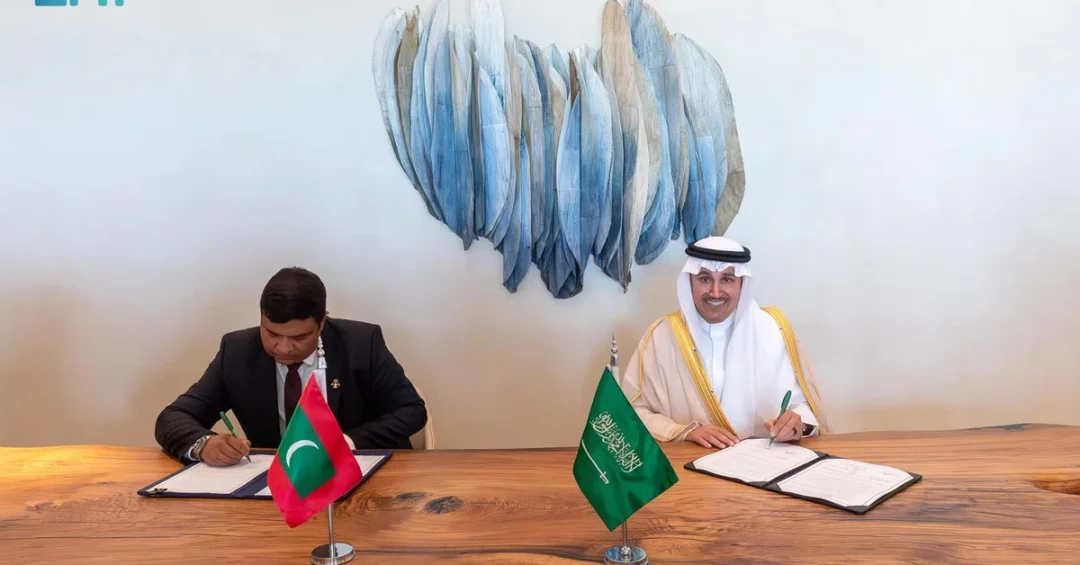
Saudi Arabia and the Maldives signed a Memorandum of Understanding (MoU) on seaplanes and airstrips, aiming to enhance cooperation in safe air transport and align with international best practices. The agreement was signed by Eng. Saleh bin Nasser Al-Jasser, Minister of Transport and Logistic Services and Chairman of the Board of Directors of the General Authority of Civil Aviation (GACA), and Mohamed Ameen, Minister of Transport and Civil Aviation of the Maldives, during a visit by a Maldivian delegation to the Red Sea Destination in Tabuk on August 29, 2024.
Context and Background
The MoU underscores the growing collaboration between Saudi Arabia and the Maldives, both nations with significant maritime and tourism interests. The Kingdom, under Vision 2030, is diversifying its economy and developing world-class tourism infrastructure, including the Red Sea Destination, a luxury sustainable tourism project by Red Sea Global (RSG). The Maldives, with its established seaplane operations for island connectivity, offers valuable expertise in this niche sector.
Key Details
The MoU focuses on regulations for the safety and security of seaplane operations and airstrips, aiming to foster a safe air transport environment. It highlights the Red Sea International Airport, a key gateway for luxury tourism that operates entirely on renewable energy. The airport features a dedicated seaplane runway and a private passenger lounge, supporting Fly Red Sea, the Kingdom’s first seaplane company, owned by RSG, which connects visitors to resorts across the Red Sea islands.
Implications and Impact
This agreement positions Saudi Arabia as a leader in innovative and sustainable air transport solutions for tourism. By partnering with the Maldives, a global leader in seaplane tourism, the Kingdom can accelerate the development of its own seaplane infrastructure, enhancing connectivity to remote coastal destinations. This collaboration supports the growth of the Red Sea Destination as a premium global tourism hub, attracting high-end visitors and investments.
20 Questions
Q1. What did Saudi Arabia and Maldives sign?
A1. The two countries signed a Memorandum of Understanding (MoU) on seaplanes and airstrips to enhance cooperation in safe air transport, following international best practices.
Q2. Who signed the MoU on Saudi Arabia’s behalf?
A2. Eng. Saleh bin Nasser Al-Jasser, Minister of Transport and Logistic Services and Chairman of the Board of Directors of GACA, signed the MoU.
Q3. Who signed for the Maldives?
A3. Mohamed Ameen, Minister of Transport and Civil Aviation of the Maldives, signed the MoU.
Q4. Where was the MoU signed?
A4. The MoU was signed in Tabuk, Saudi Arabia, on the sidelines of a visit by a Maldivian delegation to the Red Sea Destination.
Q5. What is the main purpose of the MoU?
A5. The MoU aims to enhance cooperation in seaplanes and airstrips, providing a safe air transport environment aligned with international standards.
Q6. How does the MoU relate to safety?
A6. It focuses on implementing regulations to ensure the safety and security of seaplane operations and their development.
Q7. What is the Red Sea Destination?
A7. The Red Sea Destination is a luxury sustainable tourism project in Saudi Arabia, developed by Red Sea Global (RSG), featuring resorts and a renewable-energy airport.
Q8. What is Fly Red Sea?
A8. Fly Red Sea is the first seaplane company in the Kingdom, owned by RSG, connecting visitors to resorts via seaplanes from Red Sea International Airport.
Q9. Which airport serves the Red Sea Destination?
A9. Red Sea International Airport, which operates entirely on renewable energy and has a dedicated seaplane runway and private lounge.
Q10. How does the Maldives contribute to this partnership?
A10. The Maldives brings extensive experience in seaplane operations for island tourism, offering valuable expertise to Saudi Arabia.
Q11. What kind of tourism does the Red Sea Destination target?
A11. The Red Sea Destination targets luxury tourism, aiming to attract high-end visitors with sustainable, world-class facilities.
Q12. Is the Red Sea International Airport sustainable?
A12. Yes, the airport operates entirely on renewable energy, aligning with Saudi Arabia’s commitment to sustainable development.
Q13. What role does GACA play in this MoU?
A13. GACA, through its board chairman, facilitated the signing and will oversee regulatory cooperation on seaplane safety and standards.
Q14. When was the MoU signed?
A14. The MoU was signed on August 29, 2024, during a Maldivian delegation visit to the Red Sea Destination.
Q15. Who attended the signing ceremony?
A15. GACA President Abdulaziz bin Abdullah Al-Duailej was present during the signing ceremony.
Q16. How does the MoU support Vision 2030?
A16. It supports Vision 2030 by enhancing tourism infrastructure, attracting international visitors, and promoting sustainable economic diversification.
Q17. What are airstrips in the context of the MoU?
A17. The MoU covers airstrips, referring to small landing areas for seaplanes and other aircraft, to improve connectivity in coastal regions.
Q18. Will the MoU create new jobs?
A18. The development of seaplane operations and airstrips is expected to create jobs in aviation, tourism, and related services in Saudi Arabia.
Q19. How does this benefit Saudi Arabia’s global image?
A19. It positions the Kingdom as an innovator in sustainable tourism and aviation, enhancing its reputation as a forward-looking global partner.
Q20. What is the next step after the MoU?
A20. Both countries will work on implementing regulations and sharing expertise to develop safe, efficient seaplane operations and airstrips.
Vision 2030 Alignment
The MoU directly supports Vision 2030 by enhancing Saudi Arabia’s tourism sector, developing sustainable infrastructure, and fostering international partnerships. By leveraging the expertise of the Maldives and promoting the Red Sea Destination as a luxury eco-tourism hub, the Kingdom strengthens its global position as a leader in innovation and sustainable development. This collaboration paves the way for expanded seaplane networks, boosting connectivity to remote areas and driving economic growth in line with national ambitions.
Reader Feedback
We value your thoughts. Please share your feedback on this article.
Your feedback helps us improve our coverage.