


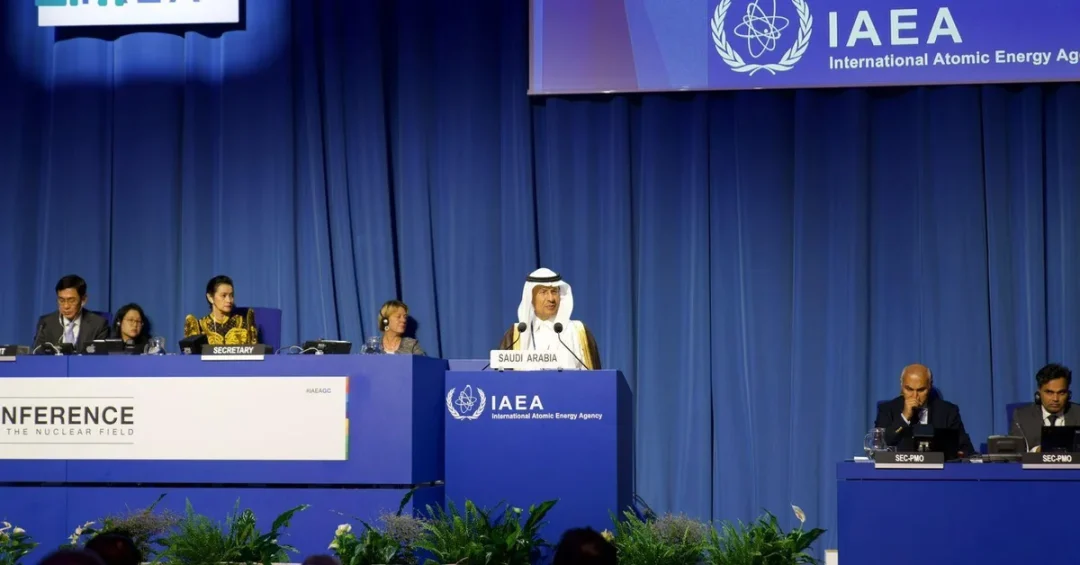
Saudi Arabia has reaffirmed its commitment to the global nuclear security and safety framework while announcing its strategic move to develop nuclear energy and radiation applications exclusively for peaceful purposes. In a statement delivered at the 68th Session of the General Conference of the International Atomic Energy Agency (IAEA) in Vienna, HRH Prince Abdulaziz bin Salman, Minister of Energy, Chairman of the Board of Directors of King Abdullah City for Atomic and Renewable Energy, and Chairman of the Board of Directors of the Nuclear and Radiological Regulatory Commission, underscored that the responsibility for maintaining robust nuclear security and safety systems rests entirely with each state, guided by national requirements and international obligations.
Context and Background
The statement, reported by the official Saudi Press Agency (SPA), comes as the Kingdom accelerates its national nuclear energy project under Vision 2030. Saudi Arabia is moving to diversify its energy mix, reduce reliance on hydrocarbons, and achieve sustainable development goals. The Kingdom’s peaceful nuclear program is part of a broader strategy to enhance energy security and support economic growth, with construction of the first nuclear power plant already underway. Saudi Arabia has long been an active IAEA member state, contributing to global non-proliferation efforts.
Key Details
HRH Prince Abdulaziz bin Salman highlighted that Saudi Arabia has completed essential administrative preparations for its nuclear regulatory framework and is implementing the Comprehensive Safeguards Agreement. In July 2024, the Kingdom formally requested to rescind the Small Quantities Protocol, moving toward full implementation of the safeguards agreement. The Kingdom is working with the IAEA to finalize subsidiary arrangements, with the target of effectively rescinding the protocol by the end of December 2024. Additionally, on August 7, 2024, Saudi Arabia deposited its instrument of acceptance for the IAEA Agreement on the Privileges and Immunities, further demonstrating its commitment to international legal instruments related to nuclear security, safety, and safeguards.
International Cooperation and Leadership
The Kingdom announced it will host an international conference on nuclear emergencies in Riyadh at the end of 2025. This conference, building on the IAEA’s work and its International Emergency Center, aims to enhance global response to nuclear and radiological emergencies. Saudi Arabia is also contributing to radiological monitoring and early warning capabilities by offering its national resources to the IAEA’s global system. The Kingdom has benefited from the IAEA’s Integrated Regulatory Review Service (IRRS) mission in October 2023, which praised Saudi Arabia’s commitment to radiation safety standards and regulatory progress.
Implications and Impact
Saudi Arabia’s actions reinforce its role as a responsible global actor in nuclear non-proliferation and security. The move to rescind the Small Quantities Protocol and adopt a full safeguards agreement strengthens transparency and trust with the international community. Hosting the nuclear emergencies conference positions the Kingdom as a leader in emergency preparedness, particularly in the Middle East. The Kingdom’s collaborative efforts with the IAEA, including its key contribution to establishing the Agency’s International Nuclear Security Training Center, showcase its dedication to building human capacity and technical expertise across member states.
Vision 2030 Alignment
Saudi Arabia’s peaceful nuclear energy project is directly aligned with Vision 2030, the Kingdom’s transformative economic and social reform plan. By integrating nuclear power into the national energy mix, Saudi Arabia aims to achieve sustainable development, reduce carbon emissions, and create new economic opportunities. The project supports the diversification of energy sources and enhances the Kingdom’s global competitiveness. Through rigorous adherence to international standards and active cooperation with the IAEA, Saudi Arabia is positioning itself as a model for responsible nuclear energy development, contributing to long-term prosperity and stability both domestically and internationally.
20 Questions
Q1. What did Saudi Arabia emphasize at the 68th IAEA General Conference?
A1. Saudi Arabia emphasized the importance of the nuclear security and safety system, noting that responsibility for maintaining this system rests entirely with each state based on national needs and international obligations.
Q2. Who represented Saudi Arabia at the conference?
A2. HRH Prince Abdulaziz bin Salman, Minister of Energy, Chairman of the Board of Directors of King Abdullah City for Atomic and Renewable Energy, and Chairman of the Board of Directors of the Nuclear and Radiological Regulatory Commission, delivered the statement.
Q3. What is the purpose of Saudi Arabia’s nuclear energy initiative?
A3. The Kingdom is moving toward benefiting from nuclear energy and radiation applications for peaceful purposes to support social and economic development as part of its national energy mix.
Q4. When did Saudi Arabia submit a request to rescind the Small Quantities Protocol?
A4. The Kingdom submitted the request to the IAEA in July 2024 to rescind the Small Quantities Protocol and implement the full Comprehensive Safeguards Agreement.
Q5. How is Saudi Arabia addressing nuclear safeguards?
A5. Saudi Arabia is working with the IAEA to finalize subsidiary arrangements so the Small Quantities Protocol can be effectively rescinded by the end of December 2024.
Q6. What international agreement did Saudi Arabia accept in August 2024?
A6. On August 7, 2024, the Kingdom deposited its instrument of acceptance for the IAEA Agreement on the Privileges and Immunities, showing its commitment to international nuclear law.
Q7. When will Saudi Arabia host an international conference on nuclear emergencies?
A7. The Kingdom will host the international conference on nuclear emergencies at the end of 2025 in Riyadh, building on the IAEA’s work.
Q8. What is the goal of the nuclear emergencies conference?
A8. The conference aims to enhance the global response to nuclear and radiological emergencies by fostering international cooperation and preparedness.
Q9. How is Saudi Arabia contributing to radiological monitoring?
A9. Saudi Arabia is strengthening radiological monitoring and early warning capabilities by offering its national resources to the IAEA’s global system and International Emergency Center.
Q10. What is the IAEA’s role in Saudi Arabia’s nuclear program?
A10. The IAEA provides technical support, assesses regulatory frameworks through missions like IRRS, and helps build human capacity in nuclear technology and regulation.
Q11. What is the Integrated Regulatory Review Service (IRRS)?
A11. The IRRS is an IAEA mission that evaluates national nuclear regulatory efforts. Saudi Arabia hosted an IRRS mission in October 2023, which commended its commitment to safety standards.
Q12. What progress did the IRRS mission note?
A12. The mission noted progress in the Kingdom’s nuclear and radiological regulatory framework and its commitment to continuously developing practices per international standards.
Q13. Why is Saudi Arabia building its first nuclear power plant?
A13. The plant will contribute to the national energy mix, support sustainable development, and help achieve Vision 2030 goals by diversifying energy sources and reducing carbon emissions.
Q14. How does Saudi Arabia ensure nuclear security?
A14. The Kingdom follows national legislation and institutional infrastructure that satisfy requirements for controlling nuclear materials and technology, regulating exports, and fulfilling non-proliferation obligations.
Q15. What is the IAEA’s International Nuclear Security Training Center?
A15. It is an IAEA initiative to train member states in nuclear security. Saudi Arabia was the main contributor to its establishment and funding, showing commitment to global nuclear security.
Q16. How does hosting the emergencies conference benefit Saudi Arabia?
A16. It positions the Kingdom as a leader in nuclear emergency preparedness, strengthens its partnership with the IAEA, and enhances regional security capabilities.
Q17. What is the Comprehensive Safeguards Agreement?
A17. It is an IAEA agreement requiring states to accept safeguards on all nuclear material for peaceful purposes. Saudi Arabia is moving to implement it fully after rescinding the Small Quantities Protocol.
Q18. How does Saudi Arabia’s nuclear project align with Vision 2030?
A18. It supports economic diversification, sustainable development, and energy security, key pillars of Vision 2030, by introducing clean, reliable nuclear power to the Kingdom’s energy mix.
Q19. What international instruments does Saudi Arabia commit to?
A19. The Kingdom is committed to instruments on nuclear security, safety, and safeguards, including the IAEA Agreement on Privileges and Immunities and the Joint Convention on Spent Fuel and Radioactive Waste Management.
Q20. What is the Joint Convention on Safety of Spent Fuel Management?
A20. It is an international treaty focused on the safety of managing spent fuel and radioactive waste. Saudi Arabia is collaborating with the IAEA to host a workshop to promote universality of this convention.
Reader Feedback
We value your thoughts. Please share your feedback on this article.
Your feedback helps us improve our coverage.